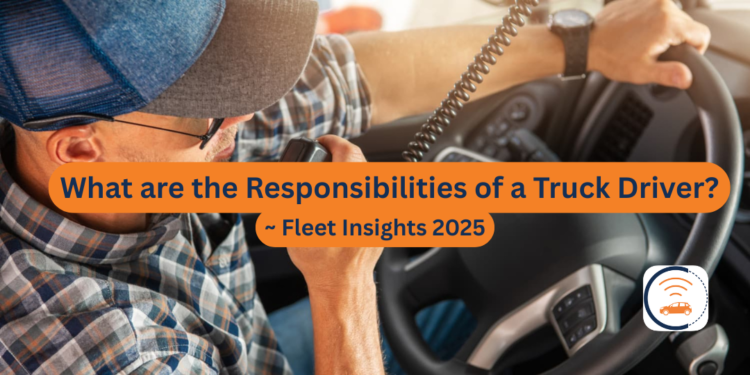
What are the Responsibilities of a Truck Driver? Fleet Insights 2025

The year was 2025. In the quiet, dark hours just before dawn, the Gateway Motorway was mostly empty. Then, a truck swerved and crashed. It was a terrible accident, and the man behind the wheel lost his life.

This incident shows us a hard truth. The role of a truck driver demands immense responsibility, and perfect safety and precision are not optional.

Truck drivers are the backbone of Australian logistics. Their job goes far beyond driving; they are professionals who must safely and efficiently deliver the nation’s goods, all while navigating changing rules and challenges.

This article breaks down the core duties of this vital profession and explores the tools that are making it safer and more manageable.

What are the Responsibilities of a Truck Driver?

A truck driver’s day is built on a foundation of critical tasks that ensure safety, compliance, and the integrity of the cargo. Far from a simple job of driving, it is a multifaceted role requiring vigilance and skill.

1. Drive Long Distances:

This is the primary task, involving hours behind the wheel to transport goods across Australia’s vast landscapes. It demands constant focus to navigate varying road conditions while adhering to strict delivery schedules.

Truck Driver Duties and Responsibilities
A long-haul driver navigates a sprawling Australian highway at dawn, clocking up the kilometres. | Image Source: Atech Logistics & Distribution

2. Report Any Incidents Encountered on the Road to a Dispatcher:

If an accident, breakdown, or any other road incident occurs, the driver’s first step is crucial. They must immediately contact their dispatcher to report what happened and coordinate the response.

3. Follow All Applicable Traffic Laws as per NHVR:

Compliance with all road rules is essential. This includes adhering to new regulations, such as the August 2025 rules that introduced stricter penalties for mobile phone use and required slowing to 40 km/h when passing emergency vehicles in certain states.

4. Secure Cargo for Transport:

Before a truck even leaves, the driver must safely load and secure all the cargo. Moreover, they use the right equipment, like straps and chains, to prevent anything from shifting or being damaged on the road.

What are Responsibilities of a Truck Driver? Fleet Insights 2025
A driver expertly secures a load with straps and chains before a long journey. | Image Source: Straight Shot Express

5. Inspect Their Trailers Before and After the Trip and Record Any Defects:

Conducting pre-start and post-trip inspections is a mandatory safety procedure. Also, drivers must check their vehicle’s condition and log any defects to ensure it is roadworthy.

6. Maintain a Driver’s Log of Their Working and Rest Hours:

Drivers must follow strict fatigue management regulations. So, this means they have to accurately log their work and rest hours to prove they are staying within the legal driving limits.

7. Report Serious Fleet Maintenance Issues to Fleet Manager or Transport Operator:

If an inspection finds a major vehicle fault, the driver must report it right away. They need to tell their manager or maintenance team so repairs can be arranged to prevent a breakdown or accident.

Truck Driver Duties and Responsibilities, Fleet Insights 2025
A driver points out a serious mechanical fault to the fleet manager/transport operator in a workshop. | Image Source: Whip Around

8. Keep Their Trucks and Associated Equipment Clean and In Good Working Order:

A driver’s daily tasks include basic upkeep and cleaning the truck. This routine is essential because it keeps the vehicle running smoothly and protects its long-term value.

What is It Like to be a Truck Driver in Australia?

Life as a truck driver is a unique blend of freedom and formidable challenge, both physically and mentally.

It’s a career that keeps you on the move, offering scenic views and a sense of independence on the open road. However, the reality behind the wheel is demanding.

Physically, the job involves more than just sitting. It requires heavy lifting, awkward postures during loading and unloading, and prolonged periods of vibration and sitting, which contribute to high rates of chronic pain and musculoskeletal injuries.

Duties and Responsibilities of a Truck Driver in Australia
A truck driver finds a moment of quiet reflection at a remote rest stop, capturing the solitary beauty and mental challenge of life on the Australian road. | Image Source: Cloud Trucks

Mentally, drivers face psychological stress and isolation, particularly on long-haul routes away from family and friends. Tight deadlines and irregular shifts can lead to chronic fatigue, with more than 60% of drivers reporting feeling tired at work.

Despite these hardships, many find deep satisfaction in the profession. It’s a well-paying job in Australia, with a median weekly earning of $1,780, and offers the reward of playing a critical role in the economy by keeping supply chains moving.

So, it’s a career that suits those who value independence and can manage the inherent physical and mental strains.

Is Truck Driving a Dangerous Job?

Truck driving is indeed one of Australia’s more dangerous professions. The physical risks are clear; in a recent 12-month period, 157 people died in crashes involving heavy trucks.

However, the dangers extend beyond collisions. A hidden health crisis reveals that only 17% of lost work time results from crashes.

The remaining 83% of injuries are not from traffic accidents. Instead, they are physical or psychological, like back injuries from lifting or mental health struggles worsened by the stress and isolation of the job.

What are the responsibilities of a truck driver in Australia?
A tense moment on a wet highway, illustrating the ever-present physical risks that make truck driving one of Australia’s most dangerous professions. | Image Source: Dispatch Circle

Becoming a truck driver in Australia requires specific qualifications. First, while a formal degree isn’t necessary, most drivers complete a Certificate III in Driving Operations. The second and mandatory step is to get a heavy vehicle licence from state authorities.

Moreover, the path is demanding, but for many, the stability and essential nature of the work make it a viable and important career choice.

Manage Vehicle Driver App: Making the Job Easier for Australian Truck Drivers

Technology is now a key ally in helping drivers manage their complex responsibilities safely and efficiently. The Manage Vehicle Driver app is an all-in-one fleet and compliance management solution built for Australian transport operators.

MV Driver app streamlines a driver’s workflow by digitizing many daily tasks:

  • Vehicle Inspection: Complete pre-start inspections with easy digital checklists directly from your phone.
  • Fault and Incident Reporting: Instantly report vehicle faults, delays, or accidents for a quicker resolution.
  • Work and Rest Hour Management: Log your hours seamlessly within the app to stay compliant with fatigue management regulations.
  • Digital Toolbox and Training: Access training materials and toolbox talks to stay updated on safety practices.
  • Proof of Delivery (POD): Digitize delivery documentation with features like e-signatures for faster and more accurate confirmation.
Every Truck Driver's Trusted Fleet Compliance Management App, Manage Vehicle
A truck driver uses the Manage Vehicle app on his phone to complete a digital vehicle inspection, streamlining compliance and saving time. | Image Source: Simform

The Manage Vehicle driver app combines all these essential tasks into one simple tool. Moreover, this reduces paperwork, improves safety, and lets drivers keep their focus on the road.

Become part of the growing number of Australian drivers who trust Manage Vehicle for better fleet compliance management. Discover the difference today. Sign up today and get 30 days free trial for smooth fleet management operations.

Aussie Truck Driver Quiz: 10 Riddles to Test Your Road Knowledge

The life of a truck driver is a demanding journey, testing patience and skill while navigating from city grids to the isolated outback.

A truck driver must master everything from dense city traffic to the long, lonely outback highways. It is a job that is never simple.

It pays to keep the rule book fresh in your mind. Let’s dive into 10 random questions that every professional truck driver in Australia should be able to answer confidently.

1. A Fire Truck Approaches Behind You with its Flashing Lights and Siren On. What Should You Do?

When you see those flashing lights and hear that siren in your mirrors, your primary duty is to get out of the way safely and predictably. Panic is your worst enemy.

The key is to signal your intentions clearly and move to the left as much as you can to create a clear path for the emergency vehicle.

First, check your mirrors and assess your surroundings. If you’re on a multi-lane road, indicate left and move into the left-most lane, or even onto the road shoulder if it’s safe and wide enough for your rig.

Driving Tips, Fleet Safety, Compliance
Panic is the real danger. The key is to be predictable: signal your intentions and move left where safe. Never break the law to get out of the way! | Image Source: Dreamstime

If you’re on a single-lane road, slow down and pull over to the left as far as possible, even coming to a complete stop if necessary.

Never break the law to get out of the way, like running a red light, but do everything within the legal road rules to facilitate their passage.

Remember, every second counts for that emergency vehicle. Your calm and decisive action ensures they can get to where they’re needed without delay, potentially saving lives and property.

2. If it’s Getting Dark or it Starts Raining, Which Lights Should You Use?

The golden rule for using lights in deteriorating conditions is simple: see and be seen. As soon as visibility drops, whether from fading light, rain, or even smoke, you must switch on your headlights.

In these situations, you should not be using your parking lights alone, as they are insufficient for both your vision and for making your large vehicle visible to others. For rain, fog, or dust, you must dip your headlights to low-beam.

Fleet Management, Driver Safety, Aussie Truckie Quiz
Don’t be the driver creating a dangerous glare. In rain, fog, or at dusk, your low-beam headlights are your best tool for maximum visibility without blinding others. | Image Source: Adobe Stock

Using high-beam in these conditions is not only illegal but dangerously counterproductive.

The bright light reflects off water droplets or particles. This creates a blinding glare that drastically reduces your own vision and dazzles oncoming truck drivers.

Using your low-beam lights with your tail lights makes your truck highly visible from all angles. This combination provides the best overall illumination and significantly reduces collision risk.

3. Do You Have to Give Way to Pedestrians Crossing the Road You’re Turning Into?

Yes, absolutely. This is a fundamental and non-negotiable rule across Australia.

Whenever you are turning left or right at an intersection, and pedestrians are crossing the road you are entering, you must give way to them. This applies even if there are no marked pedestrian crossings.

Road Safety, Driver Responsibility, Road Rules
It’s not just a courtesy; it’s the law. Failure to give way at intersections carries heavy penalties for a reason. Ensure you’re always in the right. | Image Source: YouTube Channel, Conquer Driving

As a professional truckie, you have a greater responsibility due to the size and potential for harm your vehicle carries. Always approach intersections with extra caution, scanning the footpaths and road edges for pedestrians about to cross.

A moment of patience ensures everyone’s safety. Remember, the person on foot always has the right of way in this scenario, and failing to give way can result in severe penalties and, tragically, even worse outcomes.

4. The Weather is Foggy and There is a Car 100 meters in front of you. Which Lights can You Use?

In dense fog, your goal is to maximise your vehicle’s visibility without impairing your own or others’ vision. The correct lights to use are your low-beam headlights and your fog lights, if your truck is equipped with them.

Your low-beams are angled to light up the road directly in front of you without causing excessive glare in the fog.

Road Safety, Driving Tips, Fleet Safety
Fog creates a blinding wall of light if you use the wrong setting. The correct choice? Your low-beam headlights are essential for seeing the road, not just the fog. | Image Source: Les Schwab

Crucially, you must avoid using your high-beam headlights. High-beams illuminate the fog itself, creating a solid, blinding wall of white light. This wall reflects back at you, making it impossible to see the car 100 metres ahead.

Your fog lights are specifically designed with a wide, low-cut beam to light up the road edges and improve side visibility without causing glare.

And don’t forget your tail lights, they are essential for allowing the vehicle behind you to see you from a safe distance.

5. The Vehicle Ahead is Travelling at 85 Kilometer Per Hour Speed. Can You Legally Overtake This Vehicle?

This question hinges on one critical piece of information: what’s the signed speed limit?

You can legally attempt to overtake if the speed limit is 100 or 110 km/h. However, you must also ensure it is safe and that there is a clear, designated overtaking lane. You must complete the manoeuvre without exceeding the posted speed limit.

Road Rules, Overtaking, Driver Safety
Don’t just check your speedometer, check the signs. The legality of your overtake hinges on the speed limit and heavy vehicle regulations. Know the rule before you make the move. | Image Source: YouTube Channel, mylicensesa

However, you must also consider the specific road rules for heavy vehicles, which may have lower speed limits than cars on certain roads. Furthermore, the practicality of overtaking is vital.

Overtaking in a heavily laden truck at a closing speed of only 15km/h will take a long time. As a result, you will need a significant stretch of clear road.

Always assess the situation thoroughly, is it worth the risk and fuel for a minimal gain in speed? Often, it’s safer and more efficient to maintain a safe following distance.

6. Who is Allowed to Use a T3 Lane Without Restriction?

A T3 lane (Transit Lane) is reserved for vehicles carrying a minimum of three occupants including buses, motorcycles, and bicycles. The purpose of these lanes is to encourage carpooling and ease traffic congestion.

The only vehicles that can always use a T3 lane without restriction are buses, motorcycles, bicycles, and taxis. However, taxi rules can vary slightly by state, even though they are generally permitted.

T3 Lane Driving Test, Fleet Safety, Road Rules
Not everyone can use that lane! T3 lanes have strict rules. As a truck driver, you can only enter if you meet the passenger requirement, unlike buses, motorcycles, and bikes. | Image Source: News.com.au

As a truck driver, you are only allowed to enter and use a T3 lane if you and your vehicle meet the minimum occupancy requirement of three people. Driving in a T3 lane as a single-occupant truck is a traffic offence and can result in a fine.

7. Both You and Another Vehicle Want to Turn right, But the Road You are On is Ending. Who Gives Way?

The road rules clearly define this common right-of-way scenario. At a T-intersection where two oncoming vehicles are both turning right, neither truck driver has priority. This is the straightforward rule for this specific situation.

In this situation, both vehicles must turn right, passing in front of each other. The correct and safest procedure is for both drivers to turn behind the other vehicle.

Driving Tips, Roads Safety, Truck Driver Life
Who goes first? This classic intersection scenario tests your knowledge of right-of-way procedures. The correct, safest path is for both drivers to turn behind each other. | Image Source: Shutterstock

This means you should steer to the right and pass behind the oncoming vehicle as you complete your turn. It is crucial to make eye contact (if possible), signal clearly, and proceed with caution, ensuring you do not cut in front of the other driver’s path.

8. You are Pulled Over by Police. Can You Legally Refuse a Roadside Breath Test?

The law mandates that drivers must submit to a roadside breath test upon request. Under Australian law, driving is a privilege that comes with responsibilities, and one of those is agreeing to breath testing when lawfully requested by a police officer.

A roadside breath test is a standard procedure used to enforce drink-driving laws and keep the roads safe.

Truck Driver Responsibility, Fleet Safety, Road Rules
No refusal, no excuses. Compliance is mandatory. A roadside test is a standard procedure, and refusing it will cost you your licence. | Image Source: Australia Breathalysers

Refusing to undergo a breath test when directed by a police officer is a serious offence. The penalties for refusal are typically just as severe, if not more severe, than those for driving over the legal alcohol limit.

You will likely face heavy fines, immediate licence disqualification, and potentially a criminal record. Compliance is not just a legal requirement but a professional obligation for every truck driver, especially those operating heavy vehicles.

9. How Does Using a Phone While Driving Cause Inattentional Blindness?

This statement is completely true. Inattentional blindness is a specific psychological phenomenon: you fail to see something in plain sight because your attention is focused elsewhere.

Your brain becomes primarily engaged in the conversation or task when you use a mobile phone while driving, even for a few seconds. This means it is not focused on the complex and dynamic environment of the road.

Truck Driver, Distracted Driving, Fleet Safety
Your phone makes you blind to danger. Inattentional blindness is the real reason a simple text can lead to a major accident. For your safety and everyone else’s, keep your full attention on the road. | Image Source: Shutterstock

For a truck driver, the consequences are magnified. Your vehicle requires a much longer stopping distance and has significant blind spots.

When you look at a phone, you take your eyes and mind off the road. This means you might completely miss a car changing lanes, a pedestrian stepping out, or traffic signals changing.

This Cognitive Distraction is why hands-free is not risk-free, and why physically handling a phone is so explicitly and heavily outlawed.

10. Is it Legal to Drive Through a Red Light to Make Way for a Police Vehicle?

No, it is not legal. You must never break the law to make way for an emergency vehicle.

While the law requires you to move out of their path as safely as possible, this does not extend to committing a traffic offence like running a red light or speeding.

Truck Driver, Fleet Safety, Driving Test
This is a common misconception. You must not drive through a red light for any emergency vehicle. They are trained to find a way around you; you are responsible for your own legal actions. | Image Source: CarsGuide

The correct action is to slow down, indicate, and move as far left as you can without proceeding through the red signal. If you are stopped at a red light and cannot move left any further, you must remain stationary.

Instructors train emergency vehicle drivers to anticipate these situations, and they will find a way around you. Their maneuvers may include mounting a kerb or using the wrong side of the road.

If you illegally enter an intersection to get out of their way, you risk causing a serious crash, and you will face liability for any offence you commit.

Manage Vehicle: Your Partner on the Road to Compliance and Safety

Tired of the stress that comes with road inspections and the constant battle against driver fatigue? Let Manage Vehicle be the co-driver you can always count on.

Our cloud-integrated app, Manage Vehicle is built for you, the Australian truckie. It seamlessly tracks your compliance logs, manages fatigue, and keeps your vehicle in check. This helps you avoid heavy penalties and stay safe on those long hauls.

Manage Vehicle, All-in-One Fleet Compliance Management Software Built for Australian Truck Drivers
Compliance, made simple. Safety, made certain. That’s the Manage Vehicle promise. Your essential partner on the road. | Image Source: Cartrack

Stop worrying and start driving with confidence. Sign up for our 30-Day Free Trial on Manage Vehicle app and experience the peace of mind that comes with having a true partner in your journey.

Pro Tips for Driving Safely Near Oversized Load Vehicles

Driving safely is essential no matter where you are in Australia, especially when sharing the road with trucks carrying oversized loads. Heavy vehicles carry large items, requiring extra caution from drivers.

The National Heavy Vehicle Regulator worked with Centurion, Queensland Police Service, and Working iT Pilots to make these videos.

Thank you to Ares Group, The Drone Way, ODLS, and Queensland House Removers for providing extra footage of oversized load transports.

Why Driving Safely around Oversized Loads is Crucial?

Oversized loads measure at least 2.5 meters in width and occupy more than half of the roadway. Due to their size, these loads typically require escort or pilot vehicles.

A pilot vehicle will always display an ‘Oversize Load Ahead’ sign and have yellow flashing lights on its roof.

An escort vehicle may have warning lights of a different colour, depending on its type (police or transport enforcement) and the region in Australia.

These convoys can extend over several kilometres. However, one thing remains constant everywhere: your response when encountering an oversized vehicle on the road. First and foremost, stay calm! Reduce your speed and wait for instructions.

#1 Pro Tips for Driving Safely from a Veteran Escort, Craig

For nearly three decades, Craig from the Queensland Police Service has been escorting oversized loads to ensure their safe transport across Queensland.

Mr Craig says, “The key point is that wide loads are an everyday occurrence on our roadways. Other drivers need to acknowledge this and respect that these loads are challenging to pass.”

How to Respond When an Oversized Load is Heading Towards You?

  • If an oversized load is approaching you with a pilot or escort vehicle leading it, they will indicate for you to slow down, move to the shoulder, and come to a stop.
  • If you have a UHF radio, they may contact you on Channel 40 for further instructions. Once the load has passed safely, you can proceed.

#2 Pro Tips for Driving Safely from a Pilot Driver, Robyn

Robyn has spent 18 years working as a pilot driver and has travelled extensively throughout Australia. She shared her insights on sharing the road with oversized loads.

“The reality is you won’t succeed against a truck of that size. If you have a radio, please turn it on, communicate with us, and be polite and respectful so that we can all navigate safely,” Mrs Robyn said.

What’s the Safest Way to Overtake an Oversized Load?

  • When driving behind an oversized load with a pilot or escort vehicle, slow down, maintain a safe distance, and await directions.
  • Only attempt to overtake when you receive a signal to do so and don’t linger while passing. Proceed quickly without exceeding the speed limit.
  • If there is no pilot or escort vehicle, only overtake if it is a long, straight stretch of road where you can clearly see ahead.
  • Do not attempt to overtake the pilot or escort vehicle trailing the load, as this can create dangerous conditions for everyone involved.

Explore More: How E-Commerce has Changed Logistics Industry in Australia?

#3 Pro Tips for Driving Safely from Truck Driver, Darren

Darren has transported oversized loads for over 15 years. He wants to stress how important it is to share the road with these vehicles.

Mr Darren stated, “It is crucial to coexist on the road with wide loads. We make every effort to pass others as safely as possible, using common sense and patience to ensure everyone returns home safely.”

Why Overtaking an Oversized Load can be Dangerous?

  • Attempting to overtake a wide load without permission from the pilot or escort or merging back onto the road before the load has ultimately passed could result in being forced off the road or worse. The truck driver might not see you.
  • Oversized vehicles may need to move towards the centre of the road to traverse a bridge, navigate under power lines or tree limbs, or avoid obstacles like guardrails, road signs, and power poles situated at the roadside.
  • Additionally, they cannot maneuver easily! When turning, they may sweep across multiple lanes, making passing at corners extremely hazardous.
  • Lastly, never cut in front of an oversized vehicle, as they are unable to stop quickly.

Did You Know? Australian Government Unveils New Rest Stops for Truck Drivers

Very Large Transport Operation on the Move: Avoid Area for Safety

Do you know about a very large transport operation on the move in Victoria? If you haven’t heard about it, then let’s take a glance right now.

Wherever you drive in Australia, you cannot miss seeing a truck with an oversized load. It could be moving an old house from one place to another, moving equipment into the mines or construction sites, or moving gigantic turbines for some wind farm.

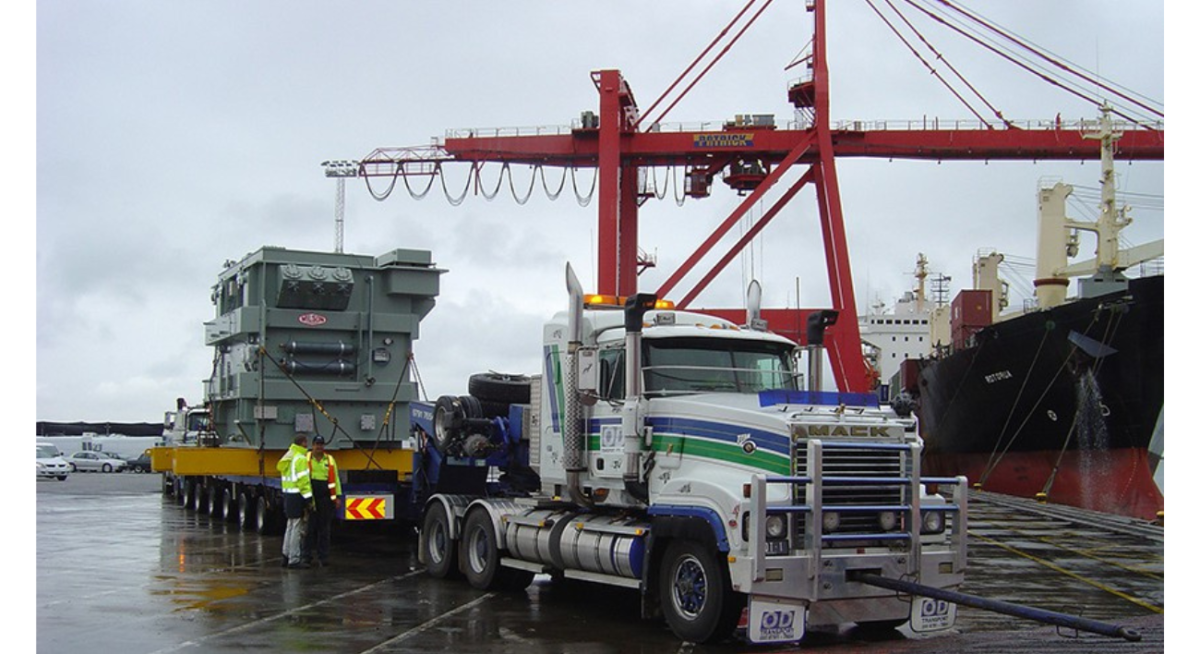
A vast power transformer leaves Appleton Dock, Port of Melbourne, at 11 pm on Tuesday, 14th January 2025. It will reach Plumpton by 5 am on Wednesday, 15th January 2025.

The length of the heavy vehicle is about 78 metres long, and its width is about 4.5 metres wide. Moreover, it is suitable for transporting the transformer.

Staying at a safe distance when the load is travelling or parked is the best way to avoid a mishap since this is quite a tricky operation. If driving out is necessary during this time, plan to ensure a scarce source of delays or take another route.

The Journey of Very Large Transport Operation on the Move

As part of the transport operation, escort vehicles and co-driver teams will follow closely. They will escort the load at the front and behind the car to ensure road safety during and after the move. It will be travelling at night to mitigate the impact on the road network.

For taking a ride in transport, the average speed is 45 kilometres per hour. Meanwhile, there are circumstances, especially when crossing bridges and corners, and they have to further slow down to around 5 km/hr.

For a brief time, a temporary road closure will occur from Sunshine Avenue between Rutherglen Way to Santa Monica. Moreover, it is vital for the time taken for the heavy vehicle to negotiate a tight roundabout within the vicinity.

Ensuring Road Safety during a Very Large Transport Operation on the Move

Transport operations will be running at significantly reduced speeds. Plan for the travel in advance and allow extra time. There will be some places where traffic police will supervise the underpass.

When you notice a pilot or an escort vehicle equipped with “Oversize Load Ahead” signage and yellow flashing lights, slow down and move as far to your left as possible. All drivers should prepare to stop after receiving any instructions.

If you are coming from the rear, slow down and wait for the transport operation. You will be able to overtake it again when it is safe to follow through.

You can only overtake when instructed to do so. Do not overtake the pilot or escort vehicle, juncture the load, and get stuck in between. It makes it difficult for everyone to do an efficient job, and you put yourself and others in harm’s way.

Also Read: How Much Do Truck Drivers Earn in Australia? Salary & Wages

Maintain Safety While Parking the Oversized Vehicle and Power Transformer

HVNL law says that you should not stop on a freeway to look at the load when it is parked, both for your safety and that of other road users. Stopping on a freeway is illegal and dangerous both for oneself and other road users, including passengers in one’s vehicle.

Victoria Police and the National Heavy Vehicle Register can impose penalties if caught. Moreover, there would be no opportunities for viewing. It is for everyone’s safety, including any children who may accompany you.

Plan Ahead of the Very Large Transport Operation on the Move

That’s a lot of arrangement. It involves a big crew of specialists in the transport, and their safety and your safety are the areas of focus. Kindly plan your trip earlier and stay away from the vicinity.

Visit the VicTraffic website for live travel recommendations; don’t forget to allow yourself plenty of flexible time to make it to your destination.

Explore More: Olympic Highway Accident: Truck Driver Charged in Riverina Crash

Fatigue Breaches: Work, Rest, Penalties Under HVNL Rules 2025

Fatigue breaches are violations of work-rest hours for heavy vehicle drivers as laid down by the Heavy Vehicle National Law (HVNL). These rules are very pivotal to the safety of the road and to the prevention of accidents caused by driver fatigue.

Negligence towards these rules and regulations can bring hefty fines and demerit points and seriously endanger public safety. Heavy vehicle drivers need to know the rules to avoid these severe repercussions.

The HVNL, with its changes and updates in 2025, emphasizes the need for comprehension of these rules.

This knowledge empowers heavy vehicle drivers to keep from being a recipient of harsh legal consequences, hence making the lives of the drivers and others safer on the road.

This article delves into the nuances of work and rest regulations, fatigue risk categories, and the implications of breaches for both solo and two-up drivers.

Fatigue Breaches and Contraventions of Standard Hours

Do you know how fatigue breaches? If drivers do not avoid driving while he is fatigued during any vehicle operations, then they have to pay the maximum penalty or infringement penalty up to $8000. Also, the demerit pints penalty will be 3 points.

In a nutshell, there are three work and rest options available:

  • Standard Hours
  • Basic Fatigue Management (BFM)
  • Advanced Fatigue Management (AFM)

If you haven’t undertaken one of the units of competency mentioned above and gained fatigue management accreditation, you must only operate under the Standard hours fatigue breaches.

This also applies to drivers if the business they work for does not hold BFM or AFM accreditation. So, here’s some important points that every solo and two-up drivers needs to follow-up to save themselves from fatigue breaches and infringement.

Standard Hours for Solo Drivers

1. What if a Solo Driver Works More than the Standard Working Hours?

  • Minor: if a solo driver works more than 5 ¼ hours in 5 ½ hours, or 7 ½ hours in 8 hours, 10 hours in 11 hours, or 12 hours and up to 12 ¾ hours in 24 hours, or 72 hours and up to 73 ½ hours in 7 days, or 144 hours and up to 145 ½ hours in 14 days – it is a minor fatigue risk breach.
  • Substantial: if a solo driver works more than 10 ¾ hours in 11 hours, or 12 ¾ hours and up to 13 ¼ hours in 24 hours, or 73 ½ hours and up to 74 ½ hours in 7 days, or 145 ½ hours and up to 146 ½ hours in 14 days – it is a substantial fatigue risk breach.
  • Severe: if a solo driver works more than 13 ¼ hours and up to 13 ½ hours in 24 hours, or 74 ½ hours and up to 75 hours in 7 days, or 146 ½ hours and up to 147 hours in 14 days – it is a severe fatigue risk breach.
  • Critical: if a solo driver works more than 13 ½ hours in 24 hours, or 75 hours in 7 days, or 147 hours in 14 days – it is a critical fatigue risk breach.

2. What if a Solo Driver Continuously Rests Less than The Standard Hours?

  • Minor: if a solo driver continuously rests less than 7 hours stationary rest in 24 hours, or 24 hours stationary rest in 7 days – it is a minor fatigue risk breach.
  • Substantial: if a solo driver continuously rests less than 6 ¼ hours stationary rest in 24 hours, or 23 ¼ hours stationary rest in 7 days – it is a substantial fatigue risk breach.
  • Severe: if a solo driver continuously rests less than 5 ¾ hours stationary rest in 24 hours, or 22 ¾ hours stationary rest in 7 days – it is a severe fatigue risk breach.
  • Critical: if a solo driver continuously rests less than 5 ½ hours stationary rest in 24 hours, or 22 ½ hours stationary rest in 7 days – it is a critical fatigue risk breach.

3. What if a Solo Driver takes Night Rest Breaks with Less Than the Standard Hours?

  • Minor: If a solo driver takes night rest breaks with less than 7 hours of stationary rest in 14 days – it is a minor fatigue risk breach.
  • Substantial: If a solo driver takes night rest breaks with less than 6 ¼ hours of stationary rest in 14 days – it is a substantial fatigue risk breach.
  • Severe: if a solo driver takes night rest breaks with less than 5 ¾ hours of stationary rest in 14 days – it is a severe fatigue risk breach.
  • Critical: if a solo driver takes night rest breaks with less than 5 ½ hours of stationary rest in 14 days – it is a critical fatigue risk breach.

4. What if a Solo Driver takes Consecutive Night Rest Breaks with Less Than the Standard Hours?

  • Minor: if a driver takes consecutive night rest breaks with less than 7 hours of stationary rest in 14 days – it is a minor fatigue risk breach.
  • Substantial: if a driver takes consecutive night rest breaks with less than 6 ¼ hours of stationary rest in 14 days – it is a substantial fatigue risk breach.
  • Severe: if a driver takes consecutive night rest breaks with less than 5 ¾ hours of stationary rest in 14 days – it is a severe fatigue risk breach.
  • Critical: if a driver takes consecutive night rest breaks with less than 5 ½ hours of stationary rest in 14 days – it is a critical fatigue risk breach.

As Per HVNL Penalty and Infringement Laws for Driver Fatigue Breaches

Operating under Standard Hours – Solo Drivers

  1. If there’s a minor fatigue risk breach, solo drivers have to pay $5,300 in maximum penalty and $530 in infringement penalty.
  2. If there’s a substantial fatigue risk breach, solo drivers have to pay $8,000 in maximum penalty and $800 in infringement penalty.
  3. If there’s a severe fatigue risk breach, solo drivers have to pay $13,310 in maximum penalty, $1,331 in infringement penalty and three demerit points penalty.
  4. If there’s a critical fatigue risk breach, solo drivers have to pay $20,000 in maximum penalty and four demerit points penalty.

Standard Hours for Two-up Drivers

1. What if Two-Up Drivers Work More than the Standard Working Hours?

  • Minor: if two-up drivers work more than 5 ¼ hours in 5 ½ hours, or 7 ½ hours in 8 hours, or 10 hours in 11 hours, or 12 hours and up to 12 ¾ hours in 24 hours, or 60 hours and up to 61 ½ hours in 7 days, or 120 hours and up to 121 ½ hours in 14 days – it is a minor fatigue risk breach.
  • Substantial: if two-up drivers work more than 10 ¾ hours in 11 hours, or 12 ¾ hours and up to 13 ¼ hours in 24 hours, or 61 ½ hours and up to 62 ½ hours in 7 days, or 121 ½ hours and up to 122 ½ hours in 14 days – it is a substantial fatigue risk breach.
  • Severe: if two-up drivers work more than 13 ¼ hours and up to 13 ½ hours in 24 hours, or 62 ½ hours and up to 63 hours in 7 days, or 122 ½ hours and up to 123 hours in 14 days – it is a severe fatigue risk breach.
  • Critical: if two-up drivers work more than 13 ½ hours in 24 hours, or 63 hours in 7 days, or 123 hours in 14 days – it is a critical fatigue risk breach.

2. What if Two-Up Drivers Continuously Rest Less Than the Standard Hours?

  • Minor: if two-up drivers continuously rest less than 5 hours stationary rest in 24 hours, or 10 hours stationary rest in 52 hours, or 24 hours stationary rest in 7 days – it is a minor fatigue risk breach.
  • Substantial: if two-up drivers continuously rest less than 4 ¼ hours stationary rest in 24 hours, or 9 ¼ hours stationary rest in 52 hours, or 23 ¼ hours stationary rest in 7 days – it is a substantial fatigue risk breach.
  • Severe: if two-up drivers continuously rest less than 3 ¾ hours stationary rest in 24 hours, or 8 ¾ hours stationary rest in 52 hours, or 22 ¾ hours stationary rest in 7 days – it is a severe fatigue risk breach.
  • Critical: if two-up drivers continuously rest less than 3 ½ hours stationary rest in 24 hours, or 8 ½ hours stationary rest in 52 hours, or 22 ½ hours stationary rest in 7 days – it is a critical fatigue risk breach.

3. What if Two-Up Drivers Take Night Rest Breaks with Less Than the Standard Hours?

  • Minor: if two-up drivers take night rest breaks with less than 7 hours of stationary rest in 14 days – it is a minor fatigue risk breach.
  • Substantial: if two-up drivers take night rest breaks with less than 6 ¼ hours of stationary rest in 14 days – it is a substantial fatigue risk breach.
  • Severe: if two-up drivers take night rest breaks with less than 5 ¾ hours of stationary rest in 14 days – it is a severe fatigue risk breach.
  • Critical: if two-up drivers take night rest breaks with less than 5 ½ hours of stationary rest in 14 days – it is a critical fatigue risk breach.

4. What if Two-Up Drivers Take Consecutive Night Rest Breaks with Less Than the Standard Hours?

  • Minor: if two-up drivers take consecutive night rest breaks with less than 7 hours of stationary rest in 14 days – it is a minor fatigue risk breach.
  • Substantial: if two-up drivers take consecutive night rest breaks with less than 6 ¼ hours of stationary rest in 14 days – it is a substantial fatigue risk breach.
  • Severe: if two-up drivers take consecutive night rest breaks with less than 5 ¾ hours of stationary rest in 14 days – it is a severe fatigue risk breach.
  • Critical: if two-up drivers take consecutive night rest breaks with less than 5 ½ hours of stationary rest in 14 days – it is a critical fatigue risk breach.

Penalties for Two-Up Driver Fatigue Breaches

Operating under Standard Hours – Two-Up Drivers

  1. Minor Fatigue Risk Breach: Two-up drivers are subject to a maximum penalty of $5,300 and an infringement penalty of $530.
  2. Substantial Fatigue Risk Breach: Two-up drivers are subject to a maximum penalty of $8,000 and an infringement penalty of $800.
  3. Severe Fatigue Risk Breach: Two-up drivers face a maximum penalty of $13,310, an infringement penalty of $1,331, and 3 demerit points.
  4. Critical Fatigue Risk Breach: Two-up drivers face a maximum penalty of $20,000 and a four demerit points penalty.

Also Read: Current Scenario of International Driving Conversion in Australia

Understanding BFM Hours Fatigue Breaches and Contraventions

Managing drowsiness is critical for ensuring road safety, and fatigue breaches in BFM hours can have profound implications for drivers.

This guide explores the various categories of risk for solo and two-up drivers under the Heavy Vehicle National Law (HVNL).

Fatigue Breaches in BFM Hours

1. Exceeding the BFM Hours Limit

  • Minor Breach: If a solo driver drives more than 6 hours in 6 ¼ hours, 8 ½ hours in 9 hours, 11 hours in 12 hours, or 14 hours to 14 ¾ hours in 24 hours, that would be considered a minor breach.

    It also includes working over 36 long/night hours in 7 days or 144 to 145 ½ hours in 14 days.
  • Substantial Breach: If a driver works for over 11 three-quarter hours within 12 hours or over 14 three-quarter hours within a 15-quarter-hour time over a 24-hour space, we deem it as a substantial breach.

    Additionally, working over 36 ¾ long/night hours in 7 days or 145 ½ to 146 ½ hours in 14 days falls under this category.
  • Severe Breach: If a solo driver works over 15 ¼ to 15 ½ hours in 24 hours, it is a severe breach. It includes working over 37 ¼ long/night hours in 7 days or 146 ½ to 147 hours in 14 days.
  • Critical Breach: If a solo driver works over 15 ½ hours in 24 hours, 37 ½ long/night hours in 7 days, or 147 hours in 14 days, it constitutes a critical breach.

2. Insufficient Rest Leads to Driver Fatigue Breaches

  • Minor Breach: If a solo driver takes less than 7 hours of stationary rest in 24 hours, it is a minor breach. It also applies to taking less than 24 hours of stationary rest after no more than 84 hours of work in 14 days.
  • Substantial Breach: If a solo driver takes less than 6 ¼ hours of stationary rest in 24 hours or less than 23 ¼ hours of stationary rest in 14 days, it is a substantial breach.
  • Severe Breach: If a solo driver takes less than 5 ¾ hours of stationary rest in 24 hours or less than 22 ¾ hours of stationary rest in 14 days, it is a severe breach.
  • Critical Breach: If a solo driver takes less than 5 ½ hours of stationary rest in 24 hours or less than 22 ½ hours of stationary rest in 14 days, it is a critical breach.

3. Night Rest Breaks Result in Driver Fatigue Breaches

  • Minor Breach: If a solo driver takes night rest breaks with less than 7 hours of stationary rest in 14 days, authorities classify it as a minor breach.
  • Substantial Breach: If a solo driver takes night rest breaks with less than 6 ¼ hours of stationary rest in 14 days, it is a considerable breach.
  • Severe Breach: If a solo driver takes night rest breaks with less than 5 ¾ hours of stationary rest in 14 days, it is a severe breach.
  • Critical Breach: If a solo driver takes night rest breaks with less than 5 ½ hours of stationary rest in 14 days, it is a critical breach.

Penalties and Infringement Violation in BFM Hours

  • Minor Breach: Drivers may face a maximum penalty of $5,300 and an infringement penalty of $530.
  • Substantial Breach: Drivers may face a maximum penalty of $8,000 and an infringement penalty of $800.
  • Severe Breach: Drivers may face a maximum penalty of $13,310, an infringement penalty of $1,331, and 3 demerit points.
  • Critical Breach: Drivers may face a maximum penalty of $20,000 and 4 demerit points.

Fatigue Breaches in BFM Hours for Two-Up Drivers

1. What Happens after the BFM Hours Limit Exceeds?

  • Minor Breach: If a two-up driver works more than 14 to 14 ¾ hours in 24 hours, authorities classify it as a minor breach. It also includes working over 70 to 71 ½ hours in 7 days or 140 to 141 ½ hours in 14 days.
  • Substantial Breach: If two-up drivers work over 14 ¾ to 15 ¼ hours in 24 hours, it is a considerable breach. Additionally, working over 71 ½ to 72 ½ hours in 7 days or 141 ½ to 142 ½ hours in 14 days falls under this category.
  • Severe Breach: If two-up drivers work over 15 ¼ to 15 ½ hours in 24 hours, it is a severe breach. It includes working over 72 ½ to 73 hours in 7 days or 142 ½ to 143 hours in 14 days.
  • Critical Breach: If two-up drivers work over 15 ½ hours in 24 hours, 73 hours in 7 days, or 143 hours in 14 days, it constitutes a critical breach.

2. How Insufficient Rest Steers Driver Fatigue Breach?

  • Minor Breach: If two-up drivers take less than 10 hours of stationary rest in 82 hours or less than 24 hours of stationary rest in 7 days, it is a minor breach.
  • Substantial Breach: If two-up drivers take less than 9 ¼ hours of stationary rest in 82 hours or less than 23 ¼ hours of stationary rest in 7 days, it is a substantial breach.
  • Severe Breach: If two-up drivers take less than 8 ¾ hours of stationary rest in 82 hours or less than 22 ¾ hours of stationary rest in 7 days, it is a severe breach.
  • Critical Breach: If two-up drivers take less than 8 ½ hours of stationary rest in 82 hours or less than 22 ½ hours of stationary rest in 7 days, it is a critical breach.

What is Maximum Fines for Two-Up Drivers in BFM Hours?

  1. Minor Breach: Drivers may face a maximum penalty of $5,300 and an infringement penalty of $530.
  2. Substantial Breach: Drivers may face a maximum penalty of $8,000 and an infringement penalty of $800.
  3. Severe Breach: Drivers may face a maximum penalty of $13,310, an infringement penalty of $1,331, and 3 demerit points.
  4. Critical Breach: Drivers may face a maximum penalty of $20,000 and 4 demerit points.

Explore: Australia’s EV Transition: Key Wins and Challenges Ahead of 2025

Risk Classification of Contraventions in AFM Hours

Thresholds for Escalated Risk Contraventions in AFM Hours

An elevated limit violation takes place when AFM hours go above a certain defined threshold. In addition, exceeding set threshold values for AFM hours indicates increased safety risks involved.

Within Any 24-Hour Period

  • A driver is not allowed to work for more than 15 ½ hours of total work time within any 24 hours.
  • Within 24 consecutive hours, a driver must receive at least 7 hours of uninterrupted period without motion. For the two-up driving arrangement, such a period might also include either seven continuous hours not spent moving or sleeping in an approved sleeper berth in a moving vehicle.

In Any 14-Day Period (336 Hours)

  • A driver must not exceed 154 hours of total work time within any 14 days.
  • A driver is required to take a stationary rest of 30 hours in every 14 days. The conditions of this rest are that it will include two consecutive nights during which there are two timeframes from midnight to 6:00 relative to the time zone of the base.

In 28-Day Period (672 Hours)

  • A driver must not exceed 288 hours of total work time within any 28 days.

Contraventions for Escalated Risk in AFM Hours

In Any Period of Less Than 7 Days

If a driver works beyond the maximum allowable work time or rests less than the minimum required rest time:

  • A substantial breach occurs when the driver exceeds the maximum work time by up to 15 minutes.
  • A severe breach occurs when the driver exceeds the maximum work time by 15 to 30 minutes.
  • A critical breach occurs when the driver exceeds the maximum work time by more than 30 minutes.

In Any Period of More Than 7 Days

If a driver exceeds the maximum work time:

  • A substantial breach occurs when the driver exceeds the maximum work time by up to 30 minutes.
  • A severe breach occurs when the driver exceeds the maximum work time by 30 minutes to 1 hour.
  • A critical breach occurs when the driver exceeds the maximum work time by more than 1 hour.

Penalties and Infringement (As per HVNL Laws for Driver Fatigue Breaches)

  • For a substantial breach, the driver is liable to pay a maximum penalty of $8,000 and an infringement penalty of $800.
  • For a severe breach, the driver faces a maximum penalty of $13,310 and 3 demerit points on their record.
  • For a critical breach, the driver is subject to a maximum penalty of $20,000 and 4 demerit points.

Other Contraventions in AFM Hours

Any Period of Less Than 7 Days

If a driver fails to meet the required rest time:

  • A minor breach occurs when the driver misses the required rest time by up to 45 minutes.
  • A substantial breach occurs when the driver misses the needed rest time by 45 to 75 minutes.
  • A severe breach occurs when the driver misses the required rest time by 75 to 90 minutes.
  • A critical breach occurs when the driver misses the time of necessary rest by more than 90 minutes.

Any Period of More Than 7 Days

If a driver exceeds the maximum allowable work time:

  • A minor breach occurs when the driver exceeds the work time by up to 1 ½ hours.
  • A substantial breach occurs when the driver exceeds the work time by 1 ½ to 2 ½ hours.
  • A severe breach occurs when the driver exceeds the work time by 2 ½ to 3 hours.
  • A critical breach occurs when the driver exceeds the work time by more than 3 hours.

Penalties and Infringement (As per HVNL Laws for Driver Fatigue Breaches)

  • For a minor breach, the driver faces a maximum penalty of $5,300 and an infringement penalty of $530.
  • For a substantial breach, the driver is liable to pay a maximum penalty of $8,000 and an infringement penalty of $800.
  • For a severe breach, the driver faces a maximum penalty of $13,310 and 3 demerit points.
  • For a critical breach, the driver is subject to a maximum penalty of $20,000 and 4 demerit points.

Exemption Hours in AFM

Any Period of Less Than 7 Days

In the event that a driver does not meet a minimum rest time requirement:

  • A minor breach occurs when the driver is short of the required rest time by up to 45 minutes.
  • A substantial breach occurs when the driver is short of the necessary rest time by 45 to 75 minutes.
  • A severe breach occurs when the driver is short of the essential rest time by 75 to 90 minutes.
  • A critical breach occurs when the driver is short of the necessary rest time by more than 90 minutes.

Any Period of More Than 7 Days

If a driver exceeds the maximum work time allowance:

  • A minor breach occurs when the driver exceeds the maximum work time by up to 1 ½ hours.
  • A substantial breach occurs when the driver exceeds the maximum work time by 1 ½ to 2 ½ hours.
  • A severe breach occurs when the driver exceeds the maximum work time by 2 ½ to 3 hours.
  • A critical breach occurs when the driver exceeds the maximum work time by more than 3 hours.

Penalties (As per HVNL Laws for Exemption Hours)

  • For a minor breach, the driver faces a maximum penalty of $5,300 and an infringement penalty of $530.
  • For a substantial breach, the driver is liable to pay a maximum penalty of $8,000 and an infringement penalty of $800.
  • For a severe breach, the driver faces a maximum penalty of $13,310 and 3 demerit points.
  • For a critical breach, the driver is subject to a maximum penalty of $20,000 and 4 demerit points.

The new HVNL fatigue management framework provides greater road safety and health for heavy vehicle operators. It is a must that drivers and operators understand these regulations to avert penalties, ensure compliance, and put public safety first.

Trending: Chain of Responsibility 2.0: Accountability Can’t Be Outsourced

Current Scenario of International Driving Conversion in Australia

International driving conversion among truck drivers has become a serious challenge for Australia, given that its trucking industry suffers from a severe driver shortage.

Seeing the outdated practices and systemic issues in the trucking industry deters drivers from straining this critical economic sector in the first place.

With over 26,000 vacancies threatening the supply chain, Australia is revising its international driving conversion process by [implementing stricter training and licensing requirements and promoting fair treatment of all drivers] to tackle the crisis.

Let’s take a glimpse of the current scenario of the trucking industry below:

Current Scenario of International Driving Conversion in Australia

The Australian trucking industry faces the most burning issue today: the severe disruption from a critical driver shortage.

These factors result in delays to the shipment of goods, leading to an ever-expanding explosion in the cost of freight and, ultimately, all the ripple effects throughout the economy.

The intense compliance practices, unprepared training of international drivers and discontent from local truck drivers worsen the plight.

A Looming Crisis

On December 12, Big Rigs Newspaper highlighted the case of Greg Davies, a seasoned truck driver fined $580 for failing to record a date in his logbook.

This situation was neglecting an obvious mistake during the time of taking care of his wife after she had recently suffered a heart attack.

Despite his clean record, compliance officers displayed no leniency, issued a fine, and treated him with hostility.

Greg Davies’ story resulted in one bitter incident among truck drivers, with many commenting that it discourages newcomers and makes many leave the field.

Community Feedback: Voices of Truck Drivers

Manage Vehicle’s Facebook page, Truckers Australia shared a comment from former truckie Roy Bate, who quit the industry citing poor conditions and the lack of skilled international driving conversions:

“This sort of thing is why I gave the game away. No wonder younger people don’t want to do the job. The more things change, the more they stay the same.”

The post garnered significant attention, with many Aussies sharing their views.

Feedback from the Aussies

Annmarie Close proposed a temporary requirement that an experienced Australian driver should drive foreign drivers for three months before allowing them to drive alone.

Others echoed similar sentiments, emphasising emphasising stricter training and licensing requirements.

Discussions on Reddit

Redditors also weighed in on the challenges in the trucking industry:

  • Nuclearwormwood highlighted that driver shortages have turned heavy vehicle operations into low-wage jobs in Western Australia.
  • Outrageous_Ranger619 criticised companies offering licenses to international drivers with minimal training, putting road safety at risk.
  • Repsol93, a veteran truck driver, stated that wage disparities exist between union and nonunionized companies and that poor salaries and conditions keep drivers from staying in the industry.

The overarching sentiment is clear: addressing driver shortages requires fair wages, improved training standards for international drivers, and a more respectful approach toward truckies from compliance officers.

Now, let’s hear the other side of the story!

Racism in Australian Trucking: The Issue of ‘Aussie Banter’

Big Rigs Newspaper recently published a story by Jaswinder Boparai regarding the disturbing plight of immigrant truck drivers in Australia.

Jaswinder has been driving trucks across Australia since 2014, with most of his work involving interstate routes. Throughout these years, he has maintained an impeccable driving record, free from accidents or other incidents.

He has always adhered to the rules and regulations of the road.

Many other Indian-origin drivers like Jaswinder Boparai also maintain excellent records – far outnumbering the ‘bad apples.’

Jaswinder has been safe and responsible with his driving for years but has continually faced a painful issue that has devastated and infuriated him. Moreover, he has faced constant racism directed at Indian-origin truck drivers.

This racism is not an occasional occurrence; it happens daily. Jaswinder often keeps his truck’s radio off because people frequently hijack the UHF channels, which should be used for important road information, to hurl racist slurs instead.

Jaswinder has been the target of derogatory names such as ‘towelhead,’ ‘black c**t,’ and ‘curry muncher’ by others. The abuse extends beyond the radio and is rampant on social media as well.

The UHF radio, made to guarantee safety and communication, has become a platform for hate speech against Indian-origin drivers. Facebook groups engage in this toxic behaviour daily without doing anything to deter it.

Under the guise of ‘Aussie banter,’ [which often includes derogatory and racist remarks], this racism is left unchecked and unchallenged.

Addressing the Problem: A Call to Action

Jaswinder heartily appreciated the National Road Freighters Association (NRFA) for speaking up and recognising the fight against discrimination meted out to Indian-origin drivers. However, he emphasised the urgent need for a collective response:

  • Blaming Stereotypes: The weird habit of UHF radio users always attributing faults to Indian drivers in road incidents is evidence of this trend. Such blanket blame is neither fair nor constructive.
  • Industry Accountability: Jaswinder called for authorities and industry leaders to actively condemn such behaviour and address these issues in driver training programs.
  • Promoting Inclusion: He urged stakeholders to engage with the Indian-Australian community and truck driver associations to understand the challenges better and develop targeted solutions.

“Racism, indeed, is a defilement of fundamental human rights, and it flaunts the principles of diversity, inclusion as well as equality that Australia itself boasts about.

Addressing this issue should be a priority, and by promoting respect and addressing these concerns within the trucking industry, we can create a safer and more inclusive environment for all drivers,” Jaswinder says.

This side of the story was part of a speech delivered by Jaswinder, a Melbourne-based fleet owner and NRFA member, during an industry roundtable at Parliament House on September 6, 2024, under the theme ‘Keeping Our Roads and HV Drivers Safe.’

By amplifying voices like Jaswinder’s, the trucking industry can work towards meaningful change and rebuild its reputation as an inclusive and equitable field.

How International Driving Conversion Manages Foreign Licenses?

Driving heavy vehicles in Australia with an international driver’s license involves meeting specific requirements and complying with the Heavy Vehicle National Law (HVNL).

This process guarantees safety for all road users and sets the stage for the future facilitation of foreign drivers into the Australian transport system. Furthermore, that is how the conversion process effectively manages everyone:

Requirements for International Drivers

Valid International Driver’s License (IDL)

Foreign drivers must possess a valid IDL along with their overseas license. An official translation is required if the original license is not in English. This ILD ensures clarity and uniformity for law enforcement and regulatory bodies.

Vehicle Class Alignment

The type of heavy vehicle operated should correlate with the IDL classification. Vehicle classes include Light Rigid (LR), Medium Rigid (MR), Heavy Rigid (HR), Heavy Combination (HC), and Multi Combination (MC).

Proper alignment means drivers will be skilled enough to operate the vehicles assigned to them safely.

License Validity Period

However, an international driver’s permit can be valid for 3 months in Australia. After this time frame, they must obtain a local license through knowledge testing and practical assessments to help them understand Australian road laws.

Understanding HVNL for Effective Operations

Awareness of Road Laws

Local traffic regulations differ from state to state and territory to territory. Drivers should then take the time to learn and know these variations to avoid suffering legal ramifications and to guarantee the safety of motoring in that place.

Knowledge Tests and Compliance

The conversion procedure usually involves examining HVNL, such as ensuring drivers understand the following:

  • Chain of Responsibility (CoR): Extending accountability across the transport supply chain.
  • Safe Driving Plans: Mandated for long-distance heavy vehicle operations.
  • Fatigue Management: Regulated through logbook requirements.

Roadworthiness and Load Security

All drivers should take care of their vehicles and keep them in a roadworthy condition for safer driving on their parts, avoiding accidents due to a shift in load as per the Load Restraint Guide.

Benefits of International Driving Conversion

By mandating compliance with HVNL and other local regulations, the conversion process provides:

  • Road Safety Increase: All drivers function according to Australian standards.
  • Simplified Legal Procedures: Clear the air about doubts regarding the veracity of foreign and foreign licenses.
  • Enhanced Professional Standards: Promoting responsible driving among heavy vehicle drivers.

Access to resources like the National Heavy Vehicle Regulator (NHVR) further supports drivers in transitioning smoothly into the Australian driving system, making the conversion process a cornerstone of proper management.

Australia’s International Driver Licence Conversion — Who Will It Impact?

Australia plans to change the procedure regarding international driver’s licenses by the year twenty-twenty-five.

Thus, specific overseas residents seeking to transfer their licences to Australian ones must obtain an Australian licence. Changing this would not affect visitors who currently hold valid overseas licences.

Key Points:

  1. The overseas licence conversion process will change in 2025.
  2. Licence holders from certain countries will need to undergo additional training and testing.
  3. These updates will not impact visitors driving with overseas licences.

How Does the Current System Work?

Permanent residents from recognised countries can now convert their overseas-issued licenses to Australian dwell at set qualifications under the present Recognised Country Scheme.

As Austroads defined, this scheme usually allows for less hassle in processing applicants from recognised overseas countries and may have exemptions from additional testing.

  • Recognised Country Status: Individuals from these countries can transfer their car or motorcycle licences without taking knowledge or driving tests.
  • Experienced Driver Recognition Status: Drivers from countries meeting partial requirements are eligible for this status. If they are over 25, they may convert their licences without further training or testing.

Drivers from countries outside these categories, or those under 25 holding licences from experienced driver countries, must undergo testing to acquire an Australian licence.

What Is Changing with the International Driving Conversion in Australia?

Most Australian states and territories will phase out the Experienced Driver Recognition status starting April 30, 2025, with a nationwide rollout expected in subsequent months.

This change means:

  • Drivers from countries with Experienced Driver Recognition status will no longer benefit from streamlined conversions.
  • Before the scheme ends, they must transition to Australian licences or face further training and testing requirements.
  • Austroads has encouraged countries currently under the Experienced Driver Recognition category to apply for Recognised Country Status. Also, to ensure smoother transitions for their drivers.

Visitors are Exempt from These Changes

The changes will not apply to visitors in Australia who hold a valid overseas licence. Visitors can continue driving on Australian roads, provided they meet the conditions of their overseas licence.

“These changes do not apply to visitors to Australia who will continue to be able to drive on Australian roads if they hold a valid overseas licence and comply with all conditions of that licence,” said Geoff Allan, Austroads CEO.

By reinforcing the conversion process, Australia aims to improve road safety standards. Meanwhile, each state or territory will start to maintain a fair system for residents and visitors navigating its roads.

Improving International Driving Conversion for a Stronger Supply Chain

Most upcoming changes in the international driving conversion process leading to Australia are a commitment to safety. But, this must not apply without care since it can deepen a shortage of drivers.

Such discrimination would have to be addressed systemically along with all other rigidity of regulation associated with the suppression of wages.

The trucking industry would much better attract and retain local and international drivers in Australia if it created this supportive and inclusive atmosphere. Similarly, it was about ensuring the supply chain’s resilience.

For individuals seeking to convert their overseas licences, contacting the licensing authority in their respective state or territory is advisable for detailed information on the new requirements.

Interesting: ZEV Rebate Scheme Gains $9.5M Boost from Western Australia

How to Get a Heavy Truck Driving License in Australia?

Embarking on a heavy truck driver career in Australia offers a rewarding profession. A heavy truck driving license allows you to transport goods across the country. Each state has unique licensing requirements managed by local authorities.

You must meet the age and license requirements for a heavy truck driving license. Training and assessments are necessary for all applicants. Each state tailors the process to local safety standards and road conditions.

Getting a Heavy Truck Driving License in Australia

Heavy vehicle licensing and procedures, including training, tests, and endorsements, are managed by Australian state and territory road authorities under the National Heavy Vehicle Regulator (NHVR).

A particular specific need exists for each jurisdiction concerning local road conditions and safety standards. For detailed information about the licensing process in your state or territory, refer to the relevant authority listed below.

Australian Capital Territory (ACT)

All new drivers who want to obtain a license for heavy vehicles in the ACT must comply with specific requirements. These requirements differ according to the class of heavy license application.

In all cases, an applicant must possess a full Australian driver’s license and have a defined minimum period of driving experience.

For instance, to upgrade to a Medium Rigid (MR) or Heavy Rigid (HR) license, you must have held a lower-grade permit for at least 12 months. The process begins with passing a heavy vehicle knowledge test.

Completing practical driving assessments with approved assessors is also necessary to gauge the candidates’ competence to operate heavy vehicles.

Medical tests will also validate that an individual can drive heavy machinery equipment, which is in the ACT Government’s interest in ensuring road safety.

New South Wales (NSW)

In New South Wales, the heavy vehicle licensing system requires applicants to progress through competency-based training and assessments. Individuals must have held a Class C (car) license for at least one year.

For classes such as Light Rigid (LR), Medium Rigid (MR), and Heavy Rigid (HR), applicants need to pass a Heavy Vehicle Knowledge Test, an eyesight test, and complete a Heavy Vehicle Competency-Based Assessment (HVCBA) with an accredited provider.

NSW also allows a supervised logbook-based approach for some license upgrades, providing flexibility to learners. Comprehensive guides, including required documents and steps, are accessible via the Service NSW website.

Northern Territory (NT)

The Northern Territory simplifies heavy vehicle licensing by categorising it into distinct classes, from Light Rigid (LR) to Multi-Combination (MC). Applicants for an HR license must have held a C-class (car) license for at least two years.

The process includes passing a theory test that assesses knowledge of road rules and heavy vehicle operation.

After passing the test, candidates undergo a practical driving assessment conducted by accredited assessors. In addition, a medical check is necessary to ensure physical and mental fitness for driving heavy vehicles safely.

Queensland (QLD)

Queensland’s licensing system for heavy vehicles is well-formulated with safety and skill acquisition in mind.

Having been stipulated as part of licensing application requirements, an applicant must hold a current Queensland driver’s license and demonstrate a minimum level of experience concerning that license class.

For example, upgrading to an HR license requires holding a Class C license for at least two years (Queensland Government). The procedure includes a cognitive examination, a driving test, and a medical exam.

The practical tests will be conducted by accredited assessors so that the drivers are pretty as confident in their skill in handling heavy vehicles.

South Australia (SA)

South Australia’s heavy vehicle licensing system offers a clear pathway for aspiring drivers. To acquire LR, MR, or HR licenses, applicants must satisfy minimal experience requirements, such as having a car license for a set length of time.

An HC license requires prior holding of an MR or HR license. The process involves a written knowledge test, a medical fitness declaration, and a practical driving assessment.

Nothing can ever substitute for additional training courses administered to holders of MC licenses to capably manage the challenges that multi-combination vehicles create in the roadways.

Read Also: Beavis Party Hire Space with Hino 300 Series for Event Success

Tasmania

In Tasmania, obtaining a heavy vehicle license requires minimum experience and fitness requirements. Applicants must have held a full driver’s license for at least 12 months.

First, you have a theory test and practical training by an accredited heavy vehicle instructor.

Once completing the training, candidates must pass a driving test that assesses their competency in real-world scenarios. Road Safety is the priority for Tasmania’s licensing system, ensuring preparedness for heavy vehicle operations among drivers.

Victoria

Victoria has a systematic method for heavy vehicle licensing, which requires applicants to have completed a recognised Victorian driver’s license. One must also have the necessary driving experience for the relevant class.

The upgrade process involves passing a theory test and completing the practical training with a registered provider.

Additional competency assessments are needed for courses like HC or MC to ensure drivers can manage intricate vehicle combinations. The applicant can access VicRoads for information and resources.

Western Australia (WA)

Western Australia’s heavy vehicle licensing requirements emphasise both theoretical knowledge and practical skills. An individual who has held a C-class license for the last two years can apply for an HR license.

The licensing process involves passing a heavy vehicle theory test, completing practical training with an accredited provider, and passing a practical driving test.

It is necessary within WA that a medical declaration accompanies the fundamental assessment of the physical fitness of a driver. It ensures meeting health standards, which are essential for heavy vehicle operation.

Your Path to Obtaining a Heavy Truck Driving License

Aspiring drivers travel a long journey to obtain this license, according to the specific state or territory they belong to in Australia.

The specifications differ according to local safety regulations, and a heavy vehicle operator needs to be adequately trained and competent for working in the profession.

Whatever state you start your journey in, Queensland or elsewhere for upgrading licenses in South Australia, success will depend on knowing the specific procedures and requirements.

With all this coupled with training, preparation, and good guidance, one may become a member of the professional truck-driving fraternity. Last but not least, upcoming new fleet drivers will help to add to the wealth of Australia’s busy transport industry.

Explore More: ZEV Rebate Scheme Gains $9.5M Boost from Western Australia

The Benefits of Using a Driver Management Software

A study found that more than two-thirds of commercial vehicle companies want to reduce their fuel costs. They feel they are spending too much time managing the fleet. If you are looking for a solution to these problems, consider getting driver management software. 

Driver management software is one that controls the hire, selection, training, and performance of existing drivers. It can manage the day-to-day activities of the company, and this is done by either keeping track of the drivers or by allowing the drivers to report their working hours electronically.

The Purpose Of Driver Management Software

The basic purpose of a driver management application is to manage a company’s fleet of vehicles. This is done by having the ability to manage the hiring, the training, and the performance of the drivers.

The driver management software and tracking systems are used to keep track of the drivers and their activities, and this allows the company to control their costs. The driver management system will also help to control the fuel, maintenance, and wear and tear of the vehicles.

Benefits of Using Driver Management Software

1 – Real-Time Alerts

This is a feature that alerts the company when the driver is spending too much time on the road. The software will also send alerts when the driver is in a dangerous area.

2 – Driver Route Tracking

This allows the company to know how many miles a driver can go and how many stops he or she has to make.

3 – Performance Management

The software will monitor the driving skill of the driver and identify any major problems. It will also motivate the driver to improve his or her performance.

4 – Fuel and Maintenance Optimization

A driver management software will alert the company to the amount of fuel used on the trip. It will also send alerts on the maintenance that is needed.

5 – Driver Recruitment

The software will show the company all its new hires. It will identify the driver’s skill level, the license they have, and any special requirements.

6 – Greater Driver Efficiency

A driver management software will allow the driver to report their working hours in real-time. This will help the company to plan and optimize the fleet operations.

7 – Electronic Road Book

The software has an electronic roadbook that automatically searches for the fastest and shortest route. This will save a great amount of time for the driver and for the company.

8 – Improved Maintenance Optimization

A driver management system will show the maintenance requirements, and it will automatically send the reports to the service centre. It will also allow the driver to report problems.

Conclusion

Driver management software will help your business manage drivers and vehicles. It can also help you to save money and prevent accidents. This software has lots of benefits, and you will be able to find one that suits your business needs.

Get the best fleet GPS tracking systems from Manage Vehicle. We offer fleet management software for large and small fleets, monitor fleet compliance and maintenance, and reduce fuel costs.