Steep Descents in Australia: NHVR Warns Drivers To Be Cautious!

According to National Heavy Vehicle Regulator (NHVR) released an urgent national alert about steep descents across Australia that expose heavy vehicle operators to deadly conditions.

Fatal crashes, together with almost catastrophic accidents, show that steep slopes require absolute compliance with protective measures.

According to the NHVR, proper safety measures remain vital during operations in demanding conditions.

Recent Incidents Highlighting the Dangers of Steep Descents

Death-causing accidents from heavy vehicles increasingly occur at New South Wales locations Bulli Pass and Mount Ousley. Two fatal crashes during the previous year at Bulli Pass led to multiple deaths with serious physical injuries.

The truck encountered control troubles before breaking through barriers at a backward curving slope on the mountainside.

Data shows that truck drivers now use safety ramps and arrester beds, which have successfully prevented major trucking accidents.

NHVR’s Safety Recommendations upon Steep Descents

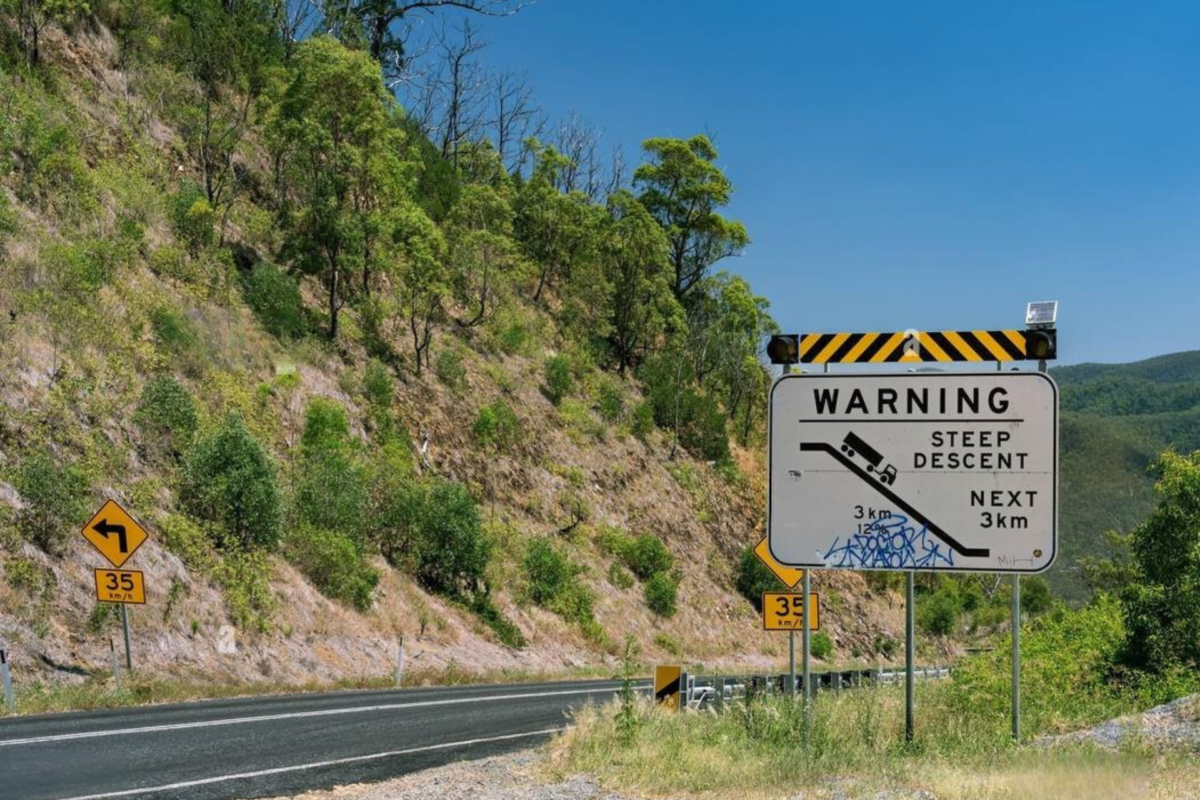
According to the NHVR, drivers must follow steep descent warning markers and then select the gear to lower before initiating a sloping descent. The approach protects control systems by lowering brake operations and stopping heat buildup.

New South Wales truck and bus drivers must follow regulations that require them to use gears suitable for controlled speed maintenance instead of principal brake operation.

Repeated heavy use of brakes results in excessive heat generation, causing decreased performance of brake mechanisms while simultaneously elevating the potential for vehicle accidents.

Importance of Vehicle Maintenance and Driver Training

The safety of all driver operations depends on frequent inspections combined with regular maintenance work on braking systems.

Drivers experience significant impairments in stopping ability when their brakes do not operate correctly, mainly when they should make urgent stopping stops.

A vital part of operator responsibility includes driver training to safely handle steep descents as well as warning them about safety risks during these routes.

Route allocation decisions must carefully take into account drivers’ driving abilities and experience when they handle difficult descent sections.

Planning and Preparedness Ahead of Steep Descents

Safety depends on the effectiveness of planning journeys. After considering steep descents, all drivers need to schedule proper rest stops to maintain attention levels.

Through early knowledge of dangerous areas such as Bulli Pass, drivers can develop heightened caution levels.

Sticking to road signs on the one hand and following directions on the other while maintaining strict speed limits set up an essential safety protocol for protecting everyone using the roads.

Read More: Heavy Vehicle Detours: Updates Near Wallendbeen Bridge

Enhancing Road Safety on Steep Descents in Australia with Fleet and Compliance Software

Steep descents in Australia present significant challenges for heavy vehicle operators. Recent NHVR alerts highlight the core importance of correct equipment operation alongside vehicle upkeep, complete driver education, and detailed planning steps for routes.

The accident-prevention capabilities of Manage Vehicle’s advanced fleet and compliance software are essential for any safety strategy.

The systems evaluate vehicle speed combined with brake system activity and driver fatigue levels in live operation to notify fleet administrators about dangers that are beginning to intensify.

When drivers use these safety measures to handle dangerous geographic conditions, they achieve safer journeys, reduced accident probabilities, and more substantial road safety outcomes.

The reduction of risks for steep descents depends on safety protocols, vehicle maintenance, and driver readiness preparation.

The system combines our fleet and compliance software to improve safety because it tracks driver routes and speeds and sends immediate maintenance messages.

Discover: Why Driver Fatigue Is a Serious Risk for Transportation Businesses

Why Choose Manage Vehicle’s Fleet and Compliance Software?

The NHVR’s proactive stance serves as a critical reminder of the responsibilities shared by drivers and operators in ensuring the safety of Australia’s roads. Our fleet and compliance software alerts drivers to potential near-fatal accidents while descending.

Your fleet business advancement is now reachable through our current SaaS solutions. Talk to us right now about our modern fleet management software that will modernize your operations and protect your safety and compliance.

Contact us right now to utilize our state-of-the-art SaaS solutions, which will revolutionize your fleet operations.

Heavy Vehicle Detours: Updates Near Wallendbeen Bridge

Truck drivers require urgent route modifications to bypass the Wallendbeen Bridge area because recent structural damage has created major heavy vehicle detours problems near this location.

Static detours need complete understanding to prevent disruption of efficient supply chain operations and protect active security.

Heavy Vehicle Detours: Current Status of Wallendbeen Bridge

A December 2024 truck collision destroyed the Burley Griffin Way temporary one-lane bridge at Wallendbeen, permanently shutting it down.

The bridge underwent installation in October 2021 to serve as an emergency replacement after severe weather struck the primary structure.

Freight transportation has suffered a significant disruption since the bridge closure limited access from the Hume Highway to the Olympic and Newell highways.

Designated Detour Routes for Heavy Vehicles

Officials implemented designated detour paths for heavy traffic vehicles when they shut down the route. An official detour route takes truck operators from Wallendbeen to Stockinbingal through Cootamundra.

Vehicle traffic operating at Higher Mass Limits (HML) of 26 meters can use the Olympic Highway together with Silo Road through this designated detour route.

How Does Heavy Vehicle Detours Impact on Freight Operations?

The set detour routes have caused both longer trips and higher operational expenses for freight transportation businesses. Each deviation enforced by L & M Transport caused a 30-minute delay per journey that strained operating times and elevated fuel costs, according to Louie Pittari.

Operational challenges intensify in harvest seasons because quick delivery remains essential.

Also Read: Why Driver Fatigue Is a Serious Risk for Transportation Businesses

Community and Industry Response upon Heavy Vehicle Detours

Long-term highway closure, together with the utilisation of temporary measures, has caused resident dissatisfaction and business frustration in the affected areas.

State Member for Cootamundra, Steph Cooke, has elaborated on the permanent replacement project’s lack of progress over time while highlighting the worsening difficulties sustained by local farmers and residents across extended harvest cycles.

Why are Heavy Vehicle Detours Essential in Australia?

Our nation confronts repetitive heavy vehicle detour alerts because of both maintenance requirements and physical infrastructure repairs and developmental work.

South Australian officials face criticism for the Roseworthy roundabout due to its unsafe design, which makes large vehicles choose alternative routes at more significant financial expense.

The Bruce Highway closure after a truck accident resulting in an explosion in Queensland produced major freight flow disruptions that revealed the necessity of sound emergency planning systems.

Authoritative teams paired with proactive infrastructure maintenance enable the heavy vehicle industry to avoid detours that preserve uninterrupted national goods transport.

Do You Know? Transportation Management Software: How It Optimises Logistics?

Australian Government Unveils New Rest Stops for Truck Drivers

New rest stops are opened to truck drivers by the Australian Government, ensuring the long-haul routes are safer and more comfortable. This initiative promises better development of infrastructure for the road transport industry.

There are new rest stops emerging with increased demand for better facilities addressing preeminent challenges. What does this mean for the future of road safety? Stay tuned until the end.

Truckies can Take a Load Off at New Rest Stops

The Australian Government, in a steadfast commitment to road safety, is making significant strides to ensure all truck drivers and all road users are safe. The announcement of six new projects under the fourth HVRA round shows this plan in action.

These projects are part of a $17.4 million joint investment between the Federal and state, territory and local governments, with the Australian Government contributing $9.7 million.

The HVRA program has $140 million in federal funding over 10 years to build and upgrade heavy vehicle rest areas, address the shortage of rest stops in key locations, and improve road safety for large and small fleet drivers.

Trance Four Projects: New Rest Stops Across Australia

Projects funded under tranche four include new rest areas with toilets and picnic areas, resurfacing, line marking and bitumen sealing. The funded projects are:

  1. Maranoa Shire Council, Queensland: Resurface the heavy vehicle truck stop at the Roma Truck Stop Area.
  2. Queensland: Design and build a new heavy vehicle rest area at Homestead West on Flinders Highway.
  3. Narromine Shire Council (NSW): Upgrade Tomingley heavy vehicle rest area.
  4. New South Wales: Upgrades to Ravensworth Eastbound and Westbound rest areas on Sturt Highway.
  5. Yarriambiack Shire Council (VIC): Upgrades to nine existing truck parking bays in the Yarriambiack Shire.
  6. South Australia: Stuart Highway Rest Area Upgrade at Arcoona and new heavy vehicle rest area at Pimba.

“These are just another example of the Australian Government’s commitment to driver safety and the road transport industry,” said Heavy Vehicle Rest Area Steering Committee Chair, Senator Glenn Sterle.

Mr. Sterle further said, “I am pleased the Heavy Vehicle Rest Area initiative is delivering heavy vehicle user safety and productivity through new and upgraded rest areas.

We are committed to keeping our freight operators and communities safe. These new and upgraded rest stops will help truckies manage their fatigue as they do their job of keeping our country moving.”

Now Trending: How E-Commerce has Changed Logistics Industry in Australia?

One of the New Rest Stops Replacing the Old ‘Dust Bowl’

After the ‘Dust Bowl’ on the Hume Highway at Menangle, NSW, was closed nearly a year ago, construction has started on a new rest area for truckies.

The Dust Bowl, an unofficial parking bay and rest area, was closed in February 2024, much to the dismay of truckies.

Transport for NSW (TfNSW) has now started building a new oversized, overmass and heavy vehicle rest area on the northbound side of the Hume Motorway at Menangle, opposite the Partridge VC Rest Area.

“We have promised truck drivers hard-working truck drivers that facilities and options in and around Sydney will get better,” said Minister for Roads John Graham.

Mr. Graham also said, “By replacing the informal Dust Bowl rest area, we are providing a safer place for truckies to stop, park and stage their long hauls.”

The construction team expects to finish the site by the end of June 2025, weather permitting. According to TfNSW, the new rest area will also feature safety installations such as acceleration and deceleration lanes. The Moolgun Creek stopping area will remain open for OSOM drivers during this time.

Work will be done between 7 am and 5 pm, Monday to Friday, from January to March. An 80 km/h speed limit will apply through the Hume Motorway construction zone during standard hours, 40 km/h near live traffic or during night work.

Furthermore, Mr. Graham said, “Northbound lanes will close for concrete barriers and line marking, with a 3km contraflow to keep traffic moving. Thanks for your patience!”

It is one of many projects Transport is doing to improve heavy vehicle facilities in Western Sydney, including our promise to deliver a new Western Sydney rest stop. We’ve listened to industry feedback and are looking at six potential sites for the new rest stop,” Graham said.

Joint Media Release upon Kyeamba Gap Work Rest Areas Upgrades

Drivers can look forward to seeing significantly improved rest stop facilities on the Hume Highway between Tarcutta and Holbrook. This month, work will commence on the Kyeamba Gap Work Rest Areas, promising a better experience for all road users.

A $1.8 million investment from the Albanese and Minns Labor Governments will see the northbound rest stop’s composting toilet replaced with flushing toilets, disabled access, and improved lighting.

The southbound rest stop currently has only bins and will have a new toilet block with disability access.

Both rest stops will have new lighting and extra parking for heavy vehicles. Work will start on the northbound rest area first and will be finished by March 2025, weather permitting. To reduce inconvenience, we will be installing portable toilets for everyone’s use.

The southbound rest area will be closed later in 2025, and alternative rest areas will be available at North Billabong (southbound) and South Tarcutta (northbound).

The team expects to finish the site by the end of June 2025, weather permitting.

They will permit property access during construction work. They will also install safety measures like ropes, fences, and signs. The measures ensure that all drivers maintain safety during the upgrading process.

Leaders Support on Upgrading Kyeamba Gap Rest Areas

In a statement, Senator Anthony Chisholm told, “these will make a big difference to drivers and truckies on the Hume Highway with toilets now open, new lighting and more parking.”

During the interview, Jenny Aitchison, NSW Minister for Regional Transport and Roads, stated, “Driver fatigue is one of the top three causes of fatal crashes on NSW roads. These projects will improve facilities and encourage drivers to rest.”

Dr Joe McGirr, one of the NSW members for Wagga Wagga, also said, “Factor rest into every journey. These Kyeamba Gap rest stops are a reminder to drivers to stop and refuel before you go.”

Explore More: Very Large Transport Operation on the Move: Avoid Area for Safety

Very Large Transport Operation on the Move: Avoid Area for Safety

Do you know about a very large transport operation on the move in Victoria? If you haven’t heard about it, then let’s take a glance right now.

Wherever you drive in Australia, you cannot miss seeing a truck with an oversized load. It could be moving an old house from one place to another, moving equipment into the mines or construction sites, or moving gigantic turbines for some wind farm.

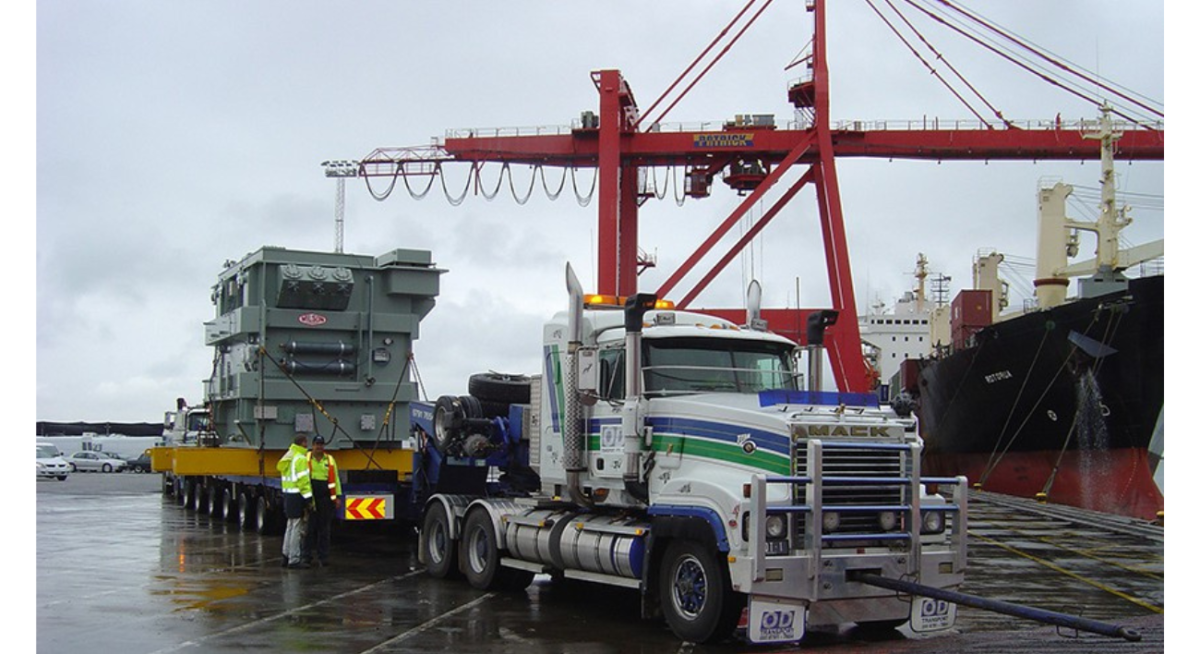
A vast power transformer leaves Appleton Dock, Port of Melbourne, at 11 pm on Tuesday, 14th January 2025. It will reach Plumpton by 5 am on Wednesday, 15th January 2025.

The length of the heavy vehicle is about 78 metres long, and its width is about 4.5 metres wide. Moreover, it is suitable for transporting the transformer.

Staying at a safe distance when the load is travelling or parked is the best way to avoid a mishap since this is quite a tricky operation. If driving out is necessary during this time, plan to ensure a scarce source of delays or take another route.

The Journey of Very Large Transport Operation on the Move

As part of the transport operation, escort vehicles and co-driver teams will follow closely. They will escort the load at the front and behind the car to ensure road safety during and after the move. It will be travelling at night to mitigate the impact on the road network.

For taking a ride in transport, the average speed is 45 kilometres per hour. Meanwhile, there are circumstances, especially when crossing bridges and corners, and they have to further slow down to around 5 km/hr.

For a brief time, a temporary road closure will occur from Sunshine Avenue between Rutherglen Way to Santa Monica. Moreover, it is vital for the time taken for the heavy vehicle to negotiate a tight roundabout within the vicinity.

Ensuring Road Safety during a Very Large Transport Operation on the Move

Transport operations will be running at significantly reduced speeds. Plan for the travel in advance and allow extra time. There will be some places where traffic police will supervise the underpass.

When you notice a pilot or an escort vehicle equipped with “Oversize Load Ahead” signage and yellow flashing lights, slow down and move as far to your left as possible. All drivers should prepare to stop after receiving any instructions.

If you are coming from the rear, slow down and wait for the transport operation. You will be able to overtake it again when it is safe to follow through.

You can only overtake when instructed to do so. Do not overtake the pilot or escort vehicle, juncture the load, and get stuck in between. It makes it difficult for everyone to do an efficient job, and you put yourself and others in harm’s way.

Also Read: How Much Do Truck Drivers Earn in Australia? Salary & Wages

Maintain Safety While Parking the Oversized Vehicle and Power Transformer

HVNL law says that you should not stop on a freeway to look at the load when it is parked, both for your safety and that of other road users. Stopping on a freeway is illegal and dangerous both for oneself and other road users, including passengers in one’s vehicle.

Victoria Police and the National Heavy Vehicle Register can impose penalties if caught. Moreover, there would be no opportunities for viewing. It is for everyone’s safety, including any children who may accompany you.

Plan Ahead of the Very Large Transport Operation on the Move

That’s a lot of arrangement. It involves a big crew of specialists in the transport, and their safety and your safety are the areas of focus. Kindly plan your trip earlier and stay away from the vicinity.

Visit the VicTraffic website for live travel recommendations; don’t forget to allow yourself plenty of flexible time to make it to your destination.

Explore More: Olympic Highway Accident: Truck Driver Charged in Riverina Crash

Bruce Highway Upgrade: $7.2B Boost for Queensland Roads 2025

Reform will hit the Bruce Highway upgrade, a vital millstone running from Brisbane to Cairns. The Australian Government just announced a $7.2 billion investment in this project.

This investment will go a long way toward addressing concerns that have lingered for far too long. It will improve the whole infrastructure of Queensland’s prime north-south corridor.

Government’s Commitment to Road Safety with the Bruce Highway Upgrade Plan in 2025

Prime Minister Anthony Albanese has underscored the immediacy of the work on Bruce Highway in view of the dangerous accident statistics associated with it.

By way of illustration, Australia has recorded 43 deaths due to an accident on the highway in 2024, and it has become one of the most precarious roads in Australia.

The government’s investment seeks to elevate the highway’s safety rating from two to three stars, aligning with national road safety standards.

The overall improvement plan includes safety barriers, broadening road shoulders, constructing overtaking lanes, and upgrading road surfaces to withstand inclement weather.

Thus, the improvements are said to bring down the high number of crashing incidents and better the experience of driving by truckies.

Economic and Regional Development Implications

Improvements in safety are making this highly anticipated event-grade expansion of Bruce Highway. Presumably, it will lead to a substantial economic profit.

Moreover, this project will strengthen links between major regional hubs such as Bundaberg, Rockhampton, Mackay, Townsville, and Cairns. The efficient movement of goods and people in Queensland is possible.

The growth of local economies is brightening the future for millions, with manifold prospects of increased jobs. Besides, initiatives for regional development are about to undergo enhancement in this regard.

The federal government’s commitment to fund 80% of the project, with the Queensland Government contributing the remaining 20%, reflects a collaborative approach to infrastructure development.

So, it accentuates the socio-economic importance of the highway to the state.

Now Trending: Southbound Lanes Reopen After Fatal Gundagai Truck Accident

Community and Political Reactions on the Bruce Highway Upgrade

That declaration raised varied reactions from political leaders and local community representatives.

David Crisafulli, Premier of Queensland, described the government’s financial commitment as a victory for Queensland, majorly drawn through vigorous lobbying evidenced by the state and the federal government.

Crisafulli said it was now important that the changes start as soon as possible to address immediate safety concerns.

However, some politicians from the region say different things; they want equitable distribution of funds. For instance, the leaders of North Queensland are asking for especially hazardous priority sections, such as between Townsville and Mackay.

They stress the importance of ensuring that the investment benefits all regions along the highway’s extensive route.

Bruce Highway Upgrade: Roads Australia CEO Highlights Urgency for Continued Investment

Roads Australia’s Chief Executive, Ehssan Veiszadeh, pinned strong emphasis on the need to mitigate safety risks on the Bruce Highway, saying that 2024 was the year’s deadliest for Queensland in 15 years on account of very high fatal crash rates.

Veiszadeh also commended the Australian Government investment program for upgrading the Bruce Highway, which was possible to enhance safety and community outcomes along the highway.

Veiszadeh has now called for a continuation of investment in Australia’s national transport network to diminish road deaths, which increased by 6.1% last year.

The investment pipeline at the national front also suffered $32 billion, which was an urgent need to upgrade infrastructure with a focus on road safety and education to reduce the increasing mortalities.

Mr Veiszadeh stated, “Australian transport connection requires immediate investment as its population increases freight volume due to climate-change-driven disasters, additionally, there is a backlog with rising maintenance levels.”

Driving Queensland’s Future – A Road to Safety, Growth and Connectivity

With 7.2 billion dollars spent on the Bruce Highway upgrade, Queensland says a clear, loud ‘Yes’ to investment in its infrastructure. The objective is to improve road safety, promote economic development, and enhance statewide connectivity.

The project is so much acclaimed. Implementation of the project requires complete cooperation between the federal and state governments with careful consideration of regional needs and priorities.

Stakeholders and local communities will closely watch how these funds will be helpful throughout the project along the highway. They will tag along the construction timetable to see if the expected benefits are delivered on time and equitably shared.

Read More: How Much Do Truck Drivers Earn in Australia? Salary & Wages

NHVR Prioritize Road Safety for All Drivers This Christmas Season

Road safety is paramount during this festive season as the National Heavy Vehicle Regulator (NHVR) takes steps to ensure that all drivers are safe on the road.

As the NHVR advises, with all the rising traffic and soon-to-come holiday travel, this is the time when people need to be most careful and follow safety rules to preserve life and avoid accidents.

In collaboration with state authorities, the NHVR launched Operation Omega, a nationwide initiative that will continue throughout December.

In this operation, hundreds of officers from New South Wales, Queensland, New Zealand, Victoria, South Australia, and Tasmania are brought in to conduct inspections for regulatory compliance vis-a-vis road safety.

A key focus is combating driver fatigue, a leading cause of accidents, by monitoring work and rest requirements for heavy vehicle drivers.

NHVR CEO Sal Petroccitto OAM stated, “Fatigue remains one of the deadliest risks on our roads – which is why we are doing everything in our power to ensure all road users get home safe this Christmas.”

NHVR Prioritises Road Safety for All Drivers This Christmas Season

Road safety is at the forefront of the National Heavy Vehicle Regulator’s (NHVR) agenda this Christmas season.

With the holiday period leading to increased traffic on Australia’s roads, the NHVR emphasises the importance of caution and consideration among all drivers to ensure a safe journey for everyone.

The NHVR has been proactive throughout 2024, delivering safety campaigns to educate road users on best practices.

Their “We All Need Space” campaign educates light vehicle drivers on how to drive safely around heavy vehicles, offering practical tips to promote safer interactions on the road.

Increased Traffic During the Festive Season

There is typically an increase in road traffic during the holiday seasons, with many Australians travelling to visit family and friends.

However, this increase comes with drivers who are sometimes not too familiar with the highways or rural roads and will thus increase the chances of accidents.

The NHVR reminds all drivers that it is time to brush up on their road safety knowledge, especially regarding dealings with heavy vehicles.

Operation Omega: Combating Driver Fatigue

In December, the NHVR, in collaboration with police across multiple states, launched Operation Omega to address the critical issue of driver fatigue among heavy vehicle operators.

Under this initiative, hundreds of inspecting officers ensure compliance with work and rest requirements, working towards reducing fatigue incidents.

Alarmingly, over 120 fatal crashes involving heavy vehicles have occurred in Australia this year, resulting in 135 lives lost.

More than 3,000 fatigue-related offences were recorded in the heavy vehicle sector from January to October. So, it stresses the requirement for continuation of vigilance and enforcement in the strictest of senses.

Key Road Safety Tips for the Holiday Season

The NHVR urges all motorists to observe the following safety measures:

  1. Maintain Safe Distances: Stay safe from heavier vehicles to preclude collisions.
  2. Avoid Blind Spots: Aware of the limitations of vision of the vehicle driver to recognise the blind spots of a truck for visibility.
  3. Do Not Overtake Turning Trucks: Trucks require more space to turn; overtaking them during this maneuver can be hazardous.

With these directions, the NHVR goes on organizing its aspirational public safety campaigns towards responsible use of the roads by heavy vehicles.

Increased Enforcement and Safety Campaigns

In addition to Operation Omega, the NHVR conducts roadside checks, inspects logbooks, and monitors driving behaviour to identify and prevent fatigue-related incidents.

This NHVR notice is a full-on concern for heavy vehicles and normal motorists with their regards to compliance with standards and safety norms to reduce accidents during peak travel.

Drive Safely This Holiday Season

The NHVR’s commitment to road safety during Christmas underscores the importance of collective responsibility among all road users.

Drivers can safeguard an entire travel environment to reach vacation destinations by following safety guidelines and staying alert.

For more information on the NHVR’s safety initiatives and tips for driving around heavy vehicles, visit their official website.