What are the Responsibilities of a Truck Driver? Fleet Insights 2025

The year was 2025. In the quiet, dark hours just before dawn, the Gateway Motorway was mostly empty. Then, a truck swerved and crashed. It was a terrible accident, and the man behind the wheel lost his life.

This incident shows us a hard truth. The role of a truck driver demands immense responsibility, and perfect safety and precision are not optional.

Truck drivers are the backbone of Australian logistics. Their job goes far beyond driving; they are professionals who must safely and efficiently deliver the nation’s goods, all while navigating changing rules and challenges.

This article breaks down the core duties of this vital profession and explores the tools that are making it safer and more manageable.

What are the Responsibilities of a Truck Driver?

A truck driver’s day is built on a foundation of critical tasks that ensure safety, compliance, and the integrity of the cargo. Far from a simple job of driving, it is a multifaceted role requiring vigilance and skill.

1. Drive Long Distances:

This is the primary task, involving hours behind the wheel to transport goods across Australia’s vast landscapes. It demands constant focus to navigate varying road conditions while adhering to strict delivery schedules.

Truck Driver Duties and Responsibilities
A long-haul driver navigates a sprawling Australian highway at dawn, clocking up the kilometres. | Image Source: Atech Logistics & Distribution

2. Report Any Incidents Encountered on the Road to a Dispatcher:

If an accident, breakdown, or any other road incident occurs, the driver’s first step is crucial. They must immediately contact their dispatcher to report what happened and coordinate the response.

3. Follow All Applicable Traffic Laws as per NHVR:

Compliance with all road rules is essential. This includes adhering to new regulations, such as the August 2025 rules that introduced stricter penalties for mobile phone use and required slowing to 40 km/h when passing emergency vehicles in certain states.

4. Secure Cargo for Transport:

Before a truck even leaves, the driver must safely load and secure all the cargo. Moreover, they use the right equipment, like straps and chains, to prevent anything from shifting or being damaged on the road.

What are Responsibilities of a Truck Driver? Fleet Insights 2025
A driver expertly secures a load with straps and chains before a long journey. | Image Source: Straight Shot Express

5. Inspect Their Trailers Before and After the Trip and Record Any Defects:

Conducting pre-start and post-trip inspections is a mandatory safety procedure. Also, drivers must check their vehicle’s condition and log any defects to ensure it is roadworthy.

6. Maintain a Driver’s Log of Their Working and Rest Hours:

Drivers must follow strict fatigue management regulations. So, this means they have to accurately log their work and rest hours to prove they are staying within the legal driving limits.

7. Report Serious Fleet Maintenance Issues to Fleet Manager or Transport Operator:

If an inspection finds a major vehicle fault, the driver must report it right away. They need to tell their manager or maintenance team so repairs can be arranged to prevent a breakdown or accident.

Truck Driver Duties and Responsibilities, Fleet Insights 2025
A driver points out a serious mechanical fault to the fleet manager/transport operator in a workshop. | Image Source: Whip Around

8. Keep Their Trucks and Associated Equipment Clean and In Good Working Order:

A driver’s daily tasks include basic upkeep and cleaning the truck. This routine is essential because it keeps the vehicle running smoothly and protects its long-term value.

What is It Like to be a Truck Driver in Australia?

Life as a truck driver is a unique blend of freedom and formidable challenge, both physically and mentally.

It’s a career that keeps you on the move, offering scenic views and a sense of independence on the open road. However, the reality behind the wheel is demanding.

Physically, the job involves more than just sitting. It requires heavy lifting, awkward postures during loading and unloading, and prolonged periods of vibration and sitting, which contribute to high rates of chronic pain and musculoskeletal injuries.

Duties and Responsibilities of a Truck Driver in Australia
A truck driver finds a moment of quiet reflection at a remote rest stop, capturing the solitary beauty and mental challenge of life on the Australian road. | Image Source: Cloud Trucks

Mentally, drivers face psychological stress and isolation, particularly on long-haul routes away from family and friends. Tight deadlines and irregular shifts can lead to chronic fatigue, with more than 60% of drivers reporting feeling tired at work.

Despite these hardships, many find deep satisfaction in the profession. It’s a well-paying job in Australia, with a median weekly earning of $1,780, and offers the reward of playing a critical role in the economy by keeping supply chains moving.

So, it’s a career that suits those who value independence and can manage the inherent physical and mental strains.

Is Truck Driving a Dangerous Job?

Truck driving is indeed one of Australia’s more dangerous professions. The physical risks are clear; in a recent 12-month period, 157 people died in crashes involving heavy trucks.

However, the dangers extend beyond collisions. A hidden health crisis reveals that only 17% of lost work time results from crashes.

The remaining 83% of injuries are not from traffic accidents. Instead, they are physical or psychological, like back injuries from lifting or mental health struggles worsened by the stress and isolation of the job.

What are the responsibilities of a truck driver in Australia?
A tense moment on a wet highway, illustrating the ever-present physical risks that make truck driving one of Australia’s most dangerous professions. | Image Source: Dispatch Circle

Becoming a truck driver in Australia requires specific qualifications. First, while a formal degree isn’t necessary, most drivers complete a Certificate III in Driving Operations. The second and mandatory step is to get a heavy vehicle licence from state authorities.

Moreover, the path is demanding, but for many, the stability and essential nature of the work make it a viable and important career choice.

Manage Vehicle Driver App: Making the Job Easier for Australian Truck Drivers

Technology is now a key ally in helping drivers manage their complex responsibilities safely and efficiently. The Manage Vehicle Driver app is an all-in-one fleet and compliance management solution built for Australian transport operators.

MV Driver app streamlines a driver’s workflow by digitizing many daily tasks:

  • Vehicle Inspection: Complete pre-start inspections with easy digital checklists directly from your phone.
  • Fault and Incident Reporting: Instantly report vehicle faults, delays, or accidents for a quicker resolution.
  • Work and Rest Hour Management: Log your hours seamlessly within the app to stay compliant with fatigue management regulations.
  • Digital Toolbox and Training: Access training materials and toolbox talks to stay updated on safety practices.
  • Proof of Delivery (POD): Digitize delivery documentation with features like e-signatures for faster and more accurate confirmation.
Every Truck Driver's Trusted Fleet Compliance Management App, Manage Vehicle
A truck driver uses the Manage Vehicle app on his phone to complete a digital vehicle inspection, streamlining compliance and saving time. | Image Source: Simform

The Manage Vehicle driver app combines all these essential tasks into one simple tool. Moreover, this reduces paperwork, improves safety, and lets drivers keep their focus on the road.

Become part of the growing number of Australian drivers who trust Manage Vehicle for better fleet compliance management. Discover the difference today. Sign up today and get 30 days free trial for smooth fleet management operations.
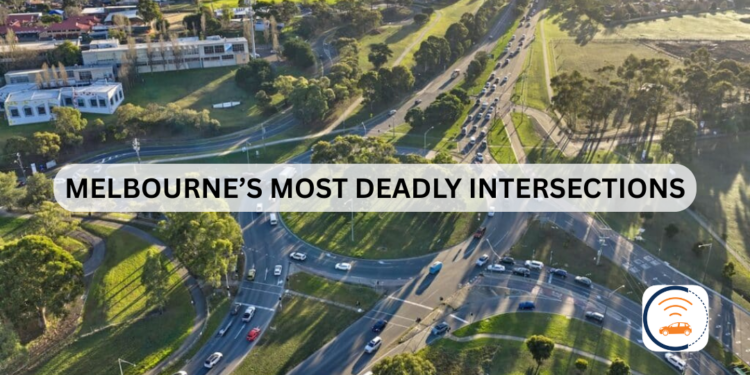
Melbourne Deadly Intersections: A Truck Driver’s Guide for Safety

For truck drivers, navigating Melbourne deadly intersections is a daily challenge that poses a significant threat to both safety and efficiency.

The RACV’s My Melbourne Road campaign surveyed over 12,000 road users. The results identified several key trouble spots across the city.

These locations are notorious for their complex designs, high traffic volumes, and confusing layouts that can lead to dangerous situations, especially for larger vehicles.

Your Guide to Melbourne Deadly Intersections

Before we detail the specific trouble spots, it’s crucial to understand why these intersections are so hazardous.

Experts and drivers identify these intersections where design flaws and traffic patterns create serious risks. So, knowing these spots helps truck drivers defend against danger.

1. North-Eastern Melbourne Intersection:

This roundabout presents a difficult multi-lane challenge on a slope. Also, its poor design often encourages risky and unsafe driving behaviours.

Melbourne Deadly Intersections
North-Eastern Melbourne: from Greensborough Bypass and Diamond Creek Road Roundabout in Greensborough is the most dangerous intersection. | Image Source: Nearmap

2. North-Western Melbourne Intersection:

A complex roundabout forms where Mount Alexander, Keilor, and Lincoln Roads meet. Henceforth, navigating it is made more difficult by turning trams in the busy centre.

Melbourne Deadly Intersections
North-Western Melbourne intersection includes Mount Alexander Road, Keilor Road and Lincoln Road in Essendon. | Image Source: Engage Victoria

3. Western Melbourne Intersection:

The Western Freeway ramps at Hopkins Road feature an unsignalised intersection. Moreover, this design forces conflicting right-turn traffic into dangerous crossing paths.

Melbourne Deadly Intersections
Western Melbourne Intersections from Western Freeway On and Off Ramps at Hopkins Road is one of the most dangerous intersections in Victoria. | Image Source: Moving Melton

4. Eastern Melbourne Intersection:

The junction of Mountain Highway, Wantirna Road, and Boronia Road is plagued by high speeds and difficult turning movements. So, compounding this is its unpredictable traffic signal timing.

Melbourne Deadly Intersections
Eastern Melbourne Intersection is facing issues with high speeds, complex turning points and inconsistent traffic signals made it deadly for truck drivers. | Image Source: Bicycle Network

5. Inner South-Eastern Melbourne Intersection:

Drivers at Dandenong and Warrigal Road face a double threat. Furthermore, the intersection features dangerously short slip lanes and inadequate green light time for right-hand turns.

Melbourne Deadly Intersection
Inner South-Eastern Melbourne from Dandenong Road (Princes Highway intersection is deadly for vehicles to turn right and short slip lanes. | Image Source: Real Commercial

6. Outer South-Eastern Melbourne Intersection:

The complex convergence of Princes Highway, Springvale Road, and Centre Road in Springvale causes severe intersection queuing and low visibility. So, this creates a high-risk environment for all road users and pedestrians.

Melbourne Deadly Intersections
Outer South-Eastern Melbourne from Princes Highway/Springvale Road faces low visibility, over-speeding and deadly for pedestrians. | Image Source: VicTraffic

7. Inner Melbourne Intersection:

The intersection at Flemington Road and Racecourse Road is a major traffic bottleneck. Similarly, drivers must maintain constant vigilance for trams, cyclists, and erratic behaviour from other motorists.

Melbourne Deadly Intersection
Flemington Road creates interaction with trams and bike riders; traffic build-up with driver behaviour. | Image Source: HUON

For truck drivers, the first step to safety is awareness. So, knowing these hotspots helps mitigate the dangers they present.

A Call for Action: Urgent Investment Needed for Safer Intersections

More than 12,000 Victorian drivers voted to name Melbourne’s most dangerous and frustrating intersections. So, RACV is now urging the government to take immediate action.

“We know that around 40 per cent of crashes in Melbourne occur at intersections,” stated RACV Head of Policy, James Williams.

Melbourne Deadly Intersections
RACV Head of Policy James Williams shares insight on regional road intersections in Victoria. | Image Source: 7News Melbourne

Mr. Williams also emphasised that to achieve the goal of halving road deaths by 2030,

“government needs to invest in fixing these intersections.”

Furthermore, RACV has provided evidence-based solutions for these high-risk locations. Fixing them is critical, as Williams notes,

“While improved driver behaviour and vehicle safety technologies are crucial, we will not reach our Towards Zero targets without investing in safer roads.”

The message is clear. Therefore, we need proactive investment to save lives and reduce daily driver stress across Melbourne and regional Victoria.

Here’s How Manage Vehicle Tackles Melbourne Dangerous Intersections

While you can’t change dangerous road designs, you can change how you navigate them. Moreover, Manage Vehicle app empowers truck drivers with smarter tools, using advanced route planning to identify and avoid known dangerous intersections.

Manage Vehicle Software Tackling Melbourne Deadly Intersections
Manage Vehicle Software improves route optimisation and real-time location tracking. | Image Source: Trinetra

Real-time tracking provides live updates on traffic and accidents, allowing for dynamic re-routing away from trouble spots. So, this gives you greater control for safer, more predictable road operations.

Navigate smarter and safer. Start your 30-day free trial of the Manage Vehicle app today.

Sydney Road Maintenance: Navigating Transport Challenges

A $200 million road maintenance blitz is transforming Sydney’s driving experience. NSW Government investment is targeting potholes and road repairs across Sydney, bringing the total 2025/26 maintenance budget to $488 million.

For transport operators, navigating this maintenance is essential for safety, efficiency, and protecting assets.

This maintenance blitz is a direct response to one of Sydney’s wettest winters, which caused severe road damage. The government has already filled over 5,100 potholes since August, highlighting a major problem for transport.

For the industry, this means greater vehicle damage risks, unpredictable delays, and supply chain disruptions that hurt business and customer satisfaction.

Recent Incident Highlights Urgent Need for Sydney Road Maintenance

The consequences of poor road conditions became clear when metal shards shut down the M1. The resulting chaos for commercial vehicles was a stark warning.

The incident occurred around 5am when a truck carrying scrap metal lost part of its load. Thousands of sharp metal pieces were scattered across the M1 motorway between Palmdale and the Mooney Mooney Bridge.

Sydney Road Maintenance Blitz
The reason behind NSW Government’s $200 million initiative are potholes and lack of road maintenance that caused heavy vehicles in causing accidents.

The result was nearly 300 vehicles with punctured tires, creating a 30-kilometre stretch of road closures and traffic tailbacks stretching up to 40 kilometres.

This incident highlights Sydney’s broader road challenges. Hundreds of vehicles suffered multiple tire punctures in a single incident.

For fleets, the severe financial impact extends beyond delays to include costly replacements, vehicle downtime, and missed deadlines.

Key Statistics from Sydney Road Maintenance Program

Maintenance MetricAchievement
Total Maintenance Funding (2025 to 2026)$488 Million
Recent Accelerated Funding$200 Million
Potholes repaired (August to September)5,100+
Road Surface Resurfaced (Previous Year)~1 Million Square Meters
Equivalent Football Fields Resurfaced125+
Data Source: NSW Government, MHD Supply Chain News

Understanding Current Sydney Road Maintenance Challenges

Sydney’s extensive maintenance program is strategically targeting high-traffic and critical freight corridors.

The program prioritizes work based on traffic volume, damage severity, and network importance to maximize impact on vital commercial routes.

Sydney Road Maintenance Challenges
Aerial view of road maintenance crews in orange vests performing asphalt repair and pothole patching. | Source: Infrastructure Magazine

A “perfect storm” of factors has damaged Sydney’s roads, including an 8% traffic increase, major infrastructure projects, and severe wet weather.

For transport operators, this means longer commute times, higher operating costs, and greater scheduling complexity.

Poor road conditions have a substantial economic impact. Surveys show most businesses are affected by congestion, with Sydney companies facing similar challenges.

Delays from roadworks and potholes can deter customers, disrupt deliveries, and directly impact revenue.

Manage Vehicle Software: Strategic Navigation During Ongoing Maintenance

For transport operators, comprehensive fleet management software is the key to navigating Sydney’s road maintenance.

Fleet management software like Manage Vehicle combine real-time GPS tracking, route optimization, and maintenance alerts to maintain efficiency despite poor road conditions.

Manage Vehicle for Smarter Routes and Optimised Locations
Manage Vehicle can assist you with real-time route planning and optimised locations to reach your destination on time.

Manage Vehicle provide multiple benefits during periods of extensive road maintenance:

  • Real-time vehicle tracking that allows managers to monitor exact vehicle locations and respond immediately to disruptions.
  • Route optimization that automatically calculates the most efficient paths considering current traffic conditions.
  • Geofencing capabilities that trigger alerts when vehicles enter or leave designated areas.
  • Driver behavior analysis that identifies practices leading to increased vehicle wear.
  • Maintenance scheduling that ensures vehicles remain in optimal condition despite challenging road surfaces.

Manage Vehicle tackles pothole damage with proactive routing. Its system uses real-time data and hazard alerts to steer drivers clear of road damage, reducing both maintenance costs and vehicle downtime.

Don’t Let Road Maintenance Slow You Down! Get a free trial and see how Manage Vehicle’s real-time tracking and location optimisation can protect your vehicles and your schedule.

The Big Switch to Electric Trucks in Freight and Logistics Industry

The big switch in the freight and logistics industry is coming in 2026, and it’s accelerating faster than many expected. For transport operators and drivers, the future is not just on the horizon, it’s rolling into the depot today.

Right now, major logistics companies and forward-thinking operators are already trailing electric trucks on urban delivery routes and regional runs.

From the streets of Melbourne to the highways of Queensland, these zero-emission vehicles are proving their mettle, moving goods without a drop of diesel. This isn’t a distant dream; it’s a real-world testing phase that’s setting the stage for a nationwide transformation.

What’s Happening in Freight and Logistics Industry?

Australian freight and logistics industry is firmly in the pilot phase. Companies are deploying electric trucks for specific, suitable tasks like last-mile deliveries in metropolitan areas and fixed short-to-medium haul routes.

These electric trials are crucial. They’re helping manufacturers understand battery performance in our unique conditions and are giving fleets real data on running costs, maintenance, and charging cycles.

what is happening in freight and logistics industry?!
Australian freight and logistics industry is taking pace into transitioning the electric vehicles with the trial run.

You’re likely to start spotting these sleek, silent machines more frequently, they’re the vanguard of a cleaner, more efficient freight industry.

The Challenge: Roadblocks on the Australian Highway

Let’s be frank, this transition isn’t without its potholes. The two biggest hurdles are cost and infrastructure.

The upfront price of an electric truck is significant, and the national network of heavy vehicle charging stations is still in its infancy, creating serious “range anxiety” for interstate hauls.

Furthermore, Australia’s patchwork of state-based regulations presents a unique headache. The weight regulations change at each state border.

High Vehicle Cost and Infrastructure in Australian Trucking Industry
The real challenge for operators and drivers is high vehicle repairing cost and infrastructure in the process of EV transition.

Electric trucks, with their heavy battery packs, often weigh more than their diesel counterparts. This can lead to complex compliance issues, forcing operators to choose between carrying less cargo or facing potential penalties when crossing borders, a logistical nightmare that eats into profitability.

The Solution: Smarter Management for a Smarter Fleet

Navigating this new landscape requires more than just a new truck; it requires a new way of thinking. This is where Manage Vehicle comes in. We understand that your operation’s efficiency is paramount, especially when adopting new technology.

Our all-in-one, cloud-based fleet and compliance management software is designed specifically for Australian operators tackling these exact challenges. How does it help?

  • Manage Vehicle (MV) Simplifies Compliance:

Get real-time insights into vehicle mass and dimensions. Plan routes with confidence, knowing our system helps you stay across varying state-based rules, reducing the risk of costly compliance breaches at weigh stations and borders.

  • MV Enhance Safety and Efficiency:

Our platform integrates seamlessly with advanced dash cameras and 4-channel fatigue and distraction detection AI cameras. It alerts drivers with seat vibrators to combat drowsiness, making every journey, especially long, unfamiliar electric routes safer.

Easy Compliance, Driver Safety and Vehicle Efficiency in Real-Time Data
Manage Vehicle is the solution to your freight and logistics with easy compliance, safety and efficiency within real-time vehicle navigation.
  • MV Gives Total Real Time Control:

Whether you’re in the office or on the road, the MV Driver and MV Operator apps give you live tracking of your vehicle’s location, battery status (integrated with telematics), and driver performance. Optimise routes, manage charging schedules, and maximise uptime.

Manage Vehicle turns the complexity of the electric fleet transition into a manageable, streamlined process, putting you firmly in control.

Manage Vehicle Software for Your Transport and Logistics Business
Manage Vehicle ensures you in this EV transition for smoother compliance, and real-time insights for your fleet.

The road to 2026 is being paved right now. Don’t get left behind in the dust of the diesel era. Embrace the future of freight with the management tools built to support it.

Ready to future-proof your fleet? Sign up for a 30-day free trial of Manage Vehicle today and experience how effortless the switch to smarter, compliant, and safer fleet management can be. Let’s navigate the electric future, together.

Electric Fleets: New Data on TCO | Manage Vehicle Software

Do you know? The roar of diesel engines is fading, replaced by the quiet hum of 10,265 electric trucks hit the U.S. roads in 2023 alone, after a fivefold surge happened in 2022.

While this revolution started globally, Australia’s transport industry is now accelerating toward electrification, driven by rising fuel costs, stringent environmental regulations, and compelling data proving EVs’ cost superiority.

For truck drivers and transport operators, the question is no longer if but how to transition, and the key lies in harnessing Total Cost of Ownership (TCO) insights through advanced fleet management system like Manage Vehicle Software.

The Game-Changing Moment: Electric Trucks Dominate Fleet Deployments

The pivotal shift occurred in 2023 when major logistics players like Amazon, Frito-Lay, and Ryder Systems deployed thousands of electric trucks across their operations.

This wasn’t just a sustainability move, it was a financial masterstroke. Electric trucks slashed operating costs by 60% compared to diesel equivalents, thanks to lower fuel and maintenance expenses.

Manage Vehicle Software for Electric Trucks
Manage Vehicle Software has all the game-changing features that a transport or logistic business needs.

For Australian operators, this global trend signals an opportunity where electrifying fleets isn’t just eco-friendly, it’s a strategic advantage in an industry grappling with volatile fuel prices and tightening emissions standards.

TCO Breakdown: Why EVs Outperform Diesel Trucks

The year 2025 data reveals a historic crossover, whereas electric commercial vehicles now boast a lower TCO than diesel trucks across most segments and here’s why:

  • Fuel and Energy Savings: Electricity costs are 50 to 70% lower than diesel per kilometer.
  • Maintenance Reduction: EVs have fewer moving parts, cutting maintenance costs from 25 to 30 percents.
  • Tax Incentives: Australia’s evolving policies mirror global trends, with exemptions and rebates for zero-emission vehicles.
  • Resale Value: As demand grows, EVs retain value better than aging diesel fleets.
Cost CategoryDiesel TruckElectric Truck
Fuel/Energy (per miles)$0.85$0.76
Maintenance (on average, per year)$4,999$3,499
Tax Penalties and Incentives+28% TCO-70% BiK Reduction
Total 7-Year TCOHigher by 15%Lower by 11%
Source: Adapted from Arval Mobility Observatory 2025.

Why Australian Fleets Must Evolve with TCO Data?

Many Australian fleets lack the real-time analytics to track EV-specific metrics. Modern trucks must integrate with:

  • Energy Consumption Monitoring: Track kWh usage, charging patterns, and grid demand costs.
  • Predictive Maintenance Alerts: Flag battery health and motor issues before failures occur.
  • Carbon Footprint Reporting: Align with Australia’s CSR mandates and emission tracking.
  • Charging Infrastructure Management: Optimize depot charging schedules to avoid peak tariffs.
MV Software Integrated with Cloud Features Suitable for Your Transport Business
Electric fleets need to have to checkout these factors when choosing EV fleet management software like Manage Vehicle.

Without these features, operators risk underestimating EV savings and overlooking operational bottlenecks.

Manage Vehicle Software: The All-in-One Solution for Australian Fleets

Manage Vehicle stands out as Australia’s premier fleet management software, designed for heavy vehicle operators navigating the EV transition. Its features directly address 2025 TCO challenges:

  • Real Time Telematics: GPS tracking and driver behavior analysis reduce energy waste by 12%.
  • Maintenance Automation: Schedule EV specific servicing based on battery cycles, not arbitrary deadlines.
  • Compliance Tools: Digitize fatigue management, mass reports, and emissions logging to avoid penalties.
  • Cost Analytics: Compare diesel vs. EV TCO in real time, factoring in fuel, maintenance, and incentives.
MV FeaturesBenefits for Electronic Fleets
Live Charging StatusPrevents Downtime by Alerting Low-Battery Vehicles
Route OptimizationAvoids Routes Lacking Charging Infrastructure
Driver ScorecardsPromotes Efficient Driving to Extend Range
Regulatory Compliance ModulesAuto Generates Reports for Australian Driving Standards
Source: Manage Vehicle’s EV-Specific Features

Why Australian Operators Choose Manage Vehicle Software?

Manage Vehicle’s unique advantages resonate with local needs:

  • Built for Australian Heavy Vehicle Regulations: Supports NHVR guidelines, fatigue laws, and state specific EV policies.
  • Scalability: Works for owner-drivers and large fleets alike, with modular pricing.
  • Integration with Telematics: Partners with leading hardware providers for seamless EV monitoring.
  • Proven ROI: Users report 20% lower fuel costs and 30% fewer maintenance incidents .

Electrify Your Fleet with the Right Choice, Manage Vehicle Software

The data is clear! EVs are the future, and Manage Vehicle software is the tool that unlocks their full potential. For Australian truck drivers and transport operators, delaying the transition means missing out on TCO savings and competitive edges.

Electrify Your Vehicle with MV Features
Manage Vehicle Software is cloud-driven where you can get to use these features during fleet operations.

Ready to future proof your fleet? Explore Manage Vehicle’s EV Suite Today

Join 50,000 plus industry professionals who trust Manage Vehicle Software to streamline compliance, cut fleet costs, and lead the electric fleet revolution!