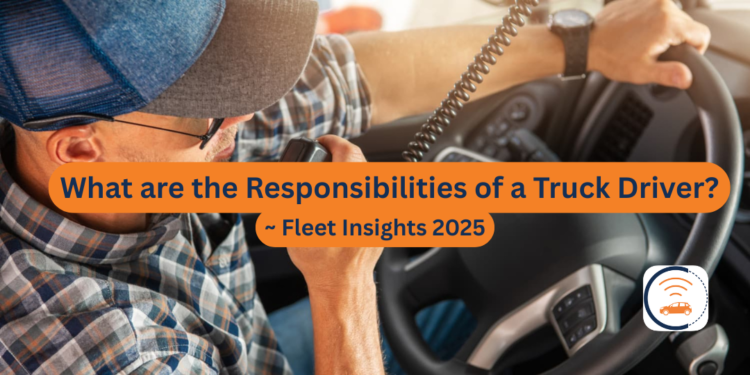
What are the Responsibilities of a Truck Driver? Fleet Insights 2025

The year was 2025. In the quiet, dark hours just before dawn, the Gateway Motorway was mostly empty. Then, a truck swerved and crashed. It was a terrible accident, and the man behind the wheel lost his life.

This incident shows us a hard truth. The role of a truck driver demands immense responsibility, and perfect safety and precision are not optional.

Truck drivers are the backbone of Australian logistics. Their job goes far beyond driving; they are professionals who must safely and efficiently deliver the nation’s goods, all while navigating changing rules and challenges.

This article breaks down the core duties of this vital profession and explores the tools that are making it safer and more manageable.

What are the Responsibilities of a Truck Driver?

A truck driver’s day is built on a foundation of critical tasks that ensure safety, compliance, and the integrity of the cargo. Far from a simple job of driving, it is a multifaceted role requiring vigilance and skill.

1. Drive Long Distances:

This is the primary task, involving hours behind the wheel to transport goods across Australia’s vast landscapes. It demands constant focus to navigate varying road conditions while adhering to strict delivery schedules.

Truck Driver Duties and Responsibilities
A long-haul driver navigates a sprawling Australian highway at dawn, clocking up the kilometres. | Image Source: Atech Logistics & Distribution

2. Report Any Incidents Encountered on the Road to a Dispatcher:

If an accident, breakdown, or any other road incident occurs, the driver’s first step is crucial. They must immediately contact their dispatcher to report what happened and coordinate the response.

3. Follow All Applicable Traffic Laws as per NHVR:

Compliance with all road rules is essential. This includes adhering to new regulations, such as the August 2025 rules that introduced stricter penalties for mobile phone use and required slowing to 40 km/h when passing emergency vehicles in certain states.

4. Secure Cargo for Transport:

Before a truck even leaves, the driver must safely load and secure all the cargo. Moreover, they use the right equipment, like straps and chains, to prevent anything from shifting or being damaged on the road.

What are Responsibilities of a Truck Driver? Fleet Insights 2025
A driver expertly secures a load with straps and chains before a long journey. | Image Source: Straight Shot Express

5. Inspect Their Trailers Before and After the Trip and Record Any Defects:

Conducting pre-start and post-trip inspections is a mandatory safety procedure. Also, drivers must check their vehicle’s condition and log any defects to ensure it is roadworthy.

6. Maintain a Driver’s Log of Their Working and Rest Hours:

Drivers must follow strict fatigue management regulations. So, this means they have to accurately log their work and rest hours to prove they are staying within the legal driving limits.

7. Report Serious Fleet Maintenance Issues to Fleet Manager or Transport Operator:

If an inspection finds a major vehicle fault, the driver must report it right away. They need to tell their manager or maintenance team so repairs can be arranged to prevent a breakdown or accident.

Truck Driver Duties and Responsibilities, Fleet Insights 2025
A driver points out a serious mechanical fault to the fleet manager/transport operator in a workshop. | Image Source: Whip Around

8. Keep Their Trucks and Associated Equipment Clean and In Good Working Order:

A driver’s daily tasks include basic upkeep and cleaning the truck. This routine is essential because it keeps the vehicle running smoothly and protects its long-term value.

What is It Like to be a Truck Driver in Australia?

Life as a truck driver is a unique blend of freedom and formidable challenge, both physically and mentally.

It’s a career that keeps you on the move, offering scenic views and a sense of independence on the open road. However, the reality behind the wheel is demanding.

Physically, the job involves more than just sitting. It requires heavy lifting, awkward postures during loading and unloading, and prolonged periods of vibration and sitting, which contribute to high rates of chronic pain and musculoskeletal injuries.

Duties and Responsibilities of a Truck Driver in Australia
A truck driver finds a moment of quiet reflection at a remote rest stop, capturing the solitary beauty and mental challenge of life on the Australian road. | Image Source: Cloud Trucks

Mentally, drivers face psychological stress and isolation, particularly on long-haul routes away from family and friends. Tight deadlines and irregular shifts can lead to chronic fatigue, with more than 60% of drivers reporting feeling tired at work.

Despite these hardships, many find deep satisfaction in the profession. It’s a well-paying job in Australia, with a median weekly earning of $1,780, and offers the reward of playing a critical role in the economy by keeping supply chains moving.

So, it’s a career that suits those who value independence and can manage the inherent physical and mental strains.

Is Truck Driving a Dangerous Job?

Truck driving is indeed one of Australia’s more dangerous professions. The physical risks are clear; in a recent 12-month period, 157 people died in crashes involving heavy trucks.

However, the dangers extend beyond collisions. A hidden health crisis reveals that only 17% of lost work time results from crashes.

The remaining 83% of injuries are not from traffic accidents. Instead, they are physical or psychological, like back injuries from lifting or mental health struggles worsened by the stress and isolation of the job.

What are the responsibilities of a truck driver in Australia?
A tense moment on a wet highway, illustrating the ever-present physical risks that make truck driving one of Australia’s most dangerous professions. | Image Source: Dispatch Circle

Becoming a truck driver in Australia requires specific qualifications. First, while a formal degree isn’t necessary, most drivers complete a Certificate III in Driving Operations. The second and mandatory step is to get a heavy vehicle licence from state authorities.

Moreover, the path is demanding, but for many, the stability and essential nature of the work make it a viable and important career choice.

Manage Vehicle Driver App: Making the Job Easier for Australian Truck Drivers

Technology is now a key ally in helping drivers manage their complex responsibilities safely and efficiently. The Manage Vehicle Driver app is an all-in-one fleet and compliance management solution built for Australian transport operators.

MV Driver app streamlines a driver’s workflow by digitizing many daily tasks:

  • Vehicle Inspection: Complete pre-start inspections with easy digital checklists directly from your phone.
  • Fault and Incident Reporting: Instantly report vehicle faults, delays, or accidents for a quicker resolution.
  • Work and Rest Hour Management: Log your hours seamlessly within the app to stay compliant with fatigue management regulations.
  • Digital Toolbox and Training: Access training materials and toolbox talks to stay updated on safety practices.
  • Proof of Delivery (POD): Digitize delivery documentation with features like e-signatures for faster and more accurate confirmation.
Every Truck Driver's Trusted Fleet Compliance Management App, Manage Vehicle
A truck driver uses the Manage Vehicle app on his phone to complete a digital vehicle inspection, streamlining compliance and saving time. | Image Source: Simform

The Manage Vehicle driver app combines all these essential tasks into one simple tool. Moreover, this reduces paperwork, improves safety, and lets drivers keep their focus on the road.

Become part of the growing number of Australian drivers who trust Manage Vehicle for better fleet compliance management. Discover the difference today. Sign up today and get 30 days free trial for smooth fleet management operations.

Logbook for Truck Drivers in Australia: Your Answer to All Queries

Digital logbook made simple for Australian truckies. Stay legal, avoid fines and streamline your records with an electronic work diary (EWD).

For Australian truck drivers, digital logbook is more than just a record-keeping tool. It’s a legal requirement central to managing fatigue and ensuring safety on our roads.

The regulatory landscape is constantly evolving. The National Heavy Vehicle Regulator (NHVR) continues to approve new Electronic Work Diary (EWD) systems, such as the recent certification of the OneRoad EWD in May 2025.

This push towards digital solutions highlights the industry’s move towards greater accuracy and efficiency in compliance.

Understanding your logbook is not just about avoiding fines. It’s about championing a culture of safety within the Australian transport industry.

How Important is a Logbook for Truck Drivers?

A logbook is fundamentally important as it is your primary evidence of compliance with Australia’s strict fatigue management laws. It is a legal document that protects both you and your employer.

1. Legal Requirement:

Under the Heavy Vehicle National Law (HVNL), drivers of fatigue-regulated heavy vehicles must record their work and rest hours in a National Driver Work Diary.

Logbook for Truck Drivers in Australia
Logbook is a legal requirement for Australian truck drivers to maintain records of daily work and rest hours. | Image Source: NHVR

This applies to vehicles with a gross vehicle mass (GVM) over 12 tonnes, and buses over 4.5 tonnes fitted to carry more than 12 adults. Failure to maintain a compliant logbook can result in significant penalties.

2. Fatigue Management Tool:

The core purpose of the logbook is to ensure drivers do not exceed maximum work hours or take less than the minimum rest hours required in a given period.

By faithfully recording your time, you actively manage your fatigue, reducing the risk of accidents caused by tired driving. This makes the logbook a critical tool for your personal safety and the safety of everyone else on the road.

Logbook is a Fatigue Management Tool for Australian Truck Drivers
Logbook is a fatigue management tool for Australian truck drivers in order to maintain work and rest hours on a daily basis. | Image Source: Intelex Blog

What is the Main Purpose of a Logbook in Fleet Management?

In fleet management, the logbook transitions from an individual record to a strategic asset, providing the data necessary for operational compliance, efficiency, and proactive safety management.

1. Compliance and Auditing:

The logbook provides fleet managers and record keepers with the verified data needed to meet their obligations under the HVNL.

Logbook for Compliance and Auditing
Logbook meets necessary obligations under HVNL in order to provide verified data of work regulations. | Image Source: NHVR

All records, whether paper or electronic, must be kept for three years and be readily accessible for audits or investigations by authorised officers. Accurate logbooks streamline this process, making audits less disruptive.

2. Operational Insight and Safety Culture:

Logbook data offers invaluable insights into work patterns, allowing managers to identify potential fatigue risks before they lead to an incident. Furthermore, using Electronic Work Diaries (EWDs) can foster a stronger safety culture within a company.

Logbook for Operational Insight and Safety Culture
Logbook is not just for record keeping; it is for operational insights and enhancing safety culture at work. | Image Source: Milestone, Rand McNally

These systems provide real-time alerts for rest breaks, helping to prevent breaches and demonstrating a company’s commitment to driver well-being.

ELD vs. E-Logbook: What’s the Difference?

FeatureElectronic Work Diary (EWD)Electronic Logging Device (ELD)
Governing RegionAustraliaUnited States and Canada
Regulatory BodyNational Heavy Vehicle Regulator (NHVR)Federal Motor Carrier Safety Administration (FMCSA) in the US
Legal Status in AustraliaThe legally approved and accepted system for proving compliance with HVNL fatigue laws.Not legally acceptable for compliance with Australian fatigue management laws.
Core FunctionDigitally records work and rest times in accordance with Australian fatigue management rules.Digitally records driving hours in accordance with North American Hours of Service (HOS) rules.
Key PurposeOfficially replaces the paper-based work diary and is programmed specifically for the Australian regulatory environment.Designed to meet with different regulatory standards and calculation methods of the US and Canada.

What are Logbook Rules for Australian Truckies?

The rules governing logbooks are designed to ensure consistency and compliance across the industry. The following table outlines the core requirements and exemptions:

  • Who Must Use Logbook?

Drivers of fatigue-regulated heavy vehicles driving over 100km from their base, and all drivers under Basic or Advanced Fatigue Management (BFM/AFM).

  • Local Area Exemption

Drivers under standard hours within a 100km radius of their base may use a simpler record including, a run sheet but, must still track total work and rest times.

  • Mandatory Content

Driver details, vehicle registration, date, base location and time zone, all work and rest times (to the nearest 15 min for paper), location of changes, and total daily hours.

  • Record Keeping

The record keeper (often the employer) must retain all records for three years . Drivers must carry the current and previous 28 days of records.

It is crucial to fill out your diary correctly and in accordance with the HVNL. If your work diary is lost, stolen, or destroyed, you must contact the NHVR.

You can then use a supplementary record for up to seven business days until you can purchase a replacement.

Alternative of Logbook: Manage Vehicle’s Electronic Work Diary (EWD)

Manage Vehicle’s Electronic Work Diary offers a modern, integrated solution. It moves beyond traditional paper diaries to automate compliance and enhance operational efficiency.

This cloud-based system is designed to seamlessly fit into the daily workflow of transport operators and drivers. So, here’s some key features and benefits of using Manage Vehicle’s electronic work diary (EWD):

Manage Vehicle is an Integrated Compliance Platform
Manage Vehicle gives you real-time GPS tracking option with pre-start vehicle inspections. It also does document management with its electronic work diary system that ensures all compliance data in one place.

Manage Vehicle’s EWD is part of a comprehensive suite of fleet management tools, which sets it apart from standalone solutions.

  • Integrated Compliance Platform:

Manage Vehicle is not an isolated app; it integrates with a full fleet and compliance management system. This includes GPS tracking, digital pre-start inspections, job dispatch, mass management, and document management.

This eliminates the need to juggle multiple systems and ensures all compliance data is in one place.

  • Automated Fatigue Calculations:

The system is programmed with NHVR fatigue management rules. It automatically calculates work and rest times, sending notifications to drivers when a break is due or a potential breach is approaching.

This eliminates the miscalculations and human error common with manual paper diaries.

  • Time Savings and Precision:

Unlike paper diaries that require rounding time to the nearest 15 minutes, the Manage Vehicle EWD records time to the nearest minute.

This can save drivers up to 30-40 minutes of administrative work each day, increasing productivity. Furthermore, being app-based, it is less prone to being lost, damaged, or stolen compared to a physical book.

Ready to simplify compliance? Try our Manage Vehicle app free for 30 days. Streamline your logbooks, avoid heavy fines, and drive with confidence.

Telematics for Real Time Data Insights: Taming the Australian Road

Remember when running a fleet was about logbooks, gut feelings, and a prayer that everyone made it back safe? Those days are vanishing in the rearview mirror, replaced by telematics for real-time data insights.

Recently, the National Heavy Vehicle Regulator (NHVR) has been aggressively promoting its next-generation telematics and Intelligent Access Program (IAP), encouraging more operators to adopt certified systems for improved safety and mass management compliance.

This NHVR push actively shapes the future of Australian transport, connecting fleets, powering decisions with data, and making operations transparent.

Beyond the Black Box: Here’s How Telematics is Saving Lives

For too long, telematics was seen as just a “spy in the cab.” But for the modern transport business, it’s the most powerful safety tool ever invented. It’s not about monitoring your drivers, it’s about protecting them.

Real-time data analytics transforms raw information into actionable insights that prevent accidents before they happen.

Benefits of Telematics, Useful for Fleet Management
Telematics in fleet management plays an essential role in driver safety, and vehicle efficiency.

Imagine getting an instant alert when a driver exhibits harsh braking patterns on a notoriously dangerous stretch of the Pacific Highway. This isn’t just a notification; it’s an opportunity.

An opportunity to call that driver, check in on fatigue, discuss road conditions, and reinforce safe practices.

This proactive approach fosters a culture of safety, reduces insurance premiums, and, most importantly, ensures your team gets home to their families every night. It turns reactive hindsight into life-saving foresight.

The Profitability Puzzle: Turning Telematics Data into Profits

In an industry where margins are tighter than a drum, wasted fuel and inefficient routes are a direct hit to your bottom line.

Real-time data analytics is the key to unlocking hidden profits across your entire operation. It provides a crystal clear view of where every single dollar is being spent or wasted.

Think about idling time. An engine idling for just an hour a day can burn over $4,000 in fuel annually, per truck!

Telematics for Smarter Trucks, Safer Trailers
Australian truckies and operators must know that using telematics is for smooth road operations with cloud-integrated devices connected to the fleet for real-time data insights.

Telematics identifies this waste instantly. Furthermore, advanced analytics can optimise routes in real-time, accounting for traffic, weather, and road closures, slashing drive times and fuel consumption.

It empowers you to move from scheduled maintenance, which can lead to unnecessary downtime to predictive maintenance. Get alerts on vehicle health issues before they become a catastrophic, roadside breakdown, saving you thousands in emergency repairs and lost revenue.

Your All-in-One Command Centre: Compliance, Management, and Peace of Mind

Juggling logbooks, maintenance schedules, NHVR regulations, and driver credentials is a massive administrative burden. One paperwork error can lead to hefty fines and compliance breaches.

You need a system that does the heavy lifting for you, integrating every aspect of your operation into one seamless, cloud-based platform. This is where Manage Vehicle enters the picture. We’re more than just a telematics provider, we are your partners in performance.

Why Choose Manage Vehicle as Your Fleet Partner?

Run your entire business from a single dashboard with our all-in-one, secure cloud platform for fleet and compliance management.

Manage Vehicle automatically captures electronic work diaries (EWDs) to ensure strict NHVL compliance. It also streamlines vehicle registrations, insurance, and service histories to eliminate paperwork chaos.

Telematics for your Transport and Logistics Business
Sign up for a demo session with Manage Vehicle and get a fantastic deal for your fleet business.

Access your secure cloud-based fleet data from anywhere, your Sydney office or Broome roadside, and take complete control with unparalleled peace of mind. It’s the command centre your fleet has been waiting for.

Ready to stop driving blind and start leading the pack? Don’t let your competitors leverage data first. Schedule a free, no-obligation demo of Manage Vehicle today and discover how we can help you boost safety, maximise profitability, and simplify compliance for your Australian transport business.

Beyond Tracking: 3 Advanced Features of Manage Vehicle You Might Be Missing

If you’re a truck driver or transport operator, you already know that vehicle tracking is like having a co-pilot that never sleeps.

It’s the backbone of modern fleet management, helping logistics businesses save time, cut costs, and keep everyone safe on the road. But what if I told you that your tracking system could do so much more?

While basic GPS tracking is great for knowing where your rig is, today’s advanced systems like Manage Vehicle offer features that go far beyond location updates.

These tools aren’t just about monitoring, they’re about empowering you to drive smarter, stay compliant, and protect your livelihood.

Let’s dive into three advanced features you might be missing out on, and why they’re game-changers for your daily operations.

1. Real Time Alerts to Keep Your Drivers Safe

Imagine having a guardian angel that whispers in your ear when risks pop up. That’s what real-time alerts feel like!

Manage Vehicle’s system monitors your vehicle’s movements and instantly notifies you of potential hazards, like excessive speeding, harsh braking, or idling.

These alerts aren’t just nagging reminders, they’re proactive tools to prevent accidents and reduce wear-and-tear on your rig.

Vehicle Tracking for Driver Safety
Manage Vehicle provides you with fleet technology trend reports with real-time alerts to protect your fleet from any danger.

For example, if a driver exceeds the speed limit, the system triggers an alert via text or email, allowing you to address the issue before it becomes a problem. This is not building the culture of safety by evading fines only.

Organizations like the National Heavy Vehicle Regulator (NHVR) emphasize the importance of real-time monitoring to reduce incidents on Aussie roads.

With features like geofencing and after-hours activity alerts, you can also prevent unauthorized vehicle use and theft, giving you peace of mind whether you’re on the road or off the clock.

2. HD Video Footage for Evidence

Wish you had someone to side with when it comes to a he-said, she-said fight? HD dash cameras with GPS positioning are can solve your time and energy.

Manage Vehicle integrates AI-powered cameras that record crystal-clear footage of the road and cabin, complete with timestamps and location data. This isn’t just for catching bad drivers, it’s your best defense against fraudulent claims and insurance disputes.

HD Video Footage for Evidence
Manage Vehicle shares solid evidences in HD video footage in case of any mishappenings on the road.

To explain, when an accident takes place, the system records the video and notifies immediately. This evidence will help in claiming the insurance and save your reputation.

Plus, with features like driver behavior tracking, you can review footage to coach your team on safer driving habits. As highlighted by Aussie road safety advocates, video telematics is a proven way to reduce accidents and promote accountability.

3. Seamless Integration with Compliance Tools

Let’s face it: compliance paperwork is a headache. But what if your tracking system could handle it for you?

Manage Vehicle seamlessly integrates with compliance tools like electronic logging devices (ELDs) and mass management systems, automating record-keeping and reducing manual errors. This means fewer hours spent on paperwork and more time on the road.

Vehicle Tracking for Seamless Integration
Manage Vehicle gives you seamless integration with compliance tools so that your transport or logistic business can run smoothly.

The system tracks critical data like driver hours, vehicle maintenance schedules, and axle weights, ensuring you meet NHVR standards effortlessly.

For example, it alerts you when registration is due or when a driver is nearing their shift limit, helping you avoid fines and stay within legal limits.

As one transport company named A2Z WORX noted, “Manage Vehicle has made a huge difference for us. The real-time tracking and driver safety features are spot on. We’ve had fewer incidents, and everything runs more smoothly. The support team is always there when we need them.”

Why Choose Manage Vehicle as Your Road Partner?

Running a fleet is not simply about moving between point A and point B, it is about running it safely, efficiently and compliantly. Manage Vehicle isn’t just another tracking system; it’s a partner that grows with your business. Here’s why it stands out:

  • Comprehensive Safety Tools: From real-time alerts to HD video, it prioritizes your safety on the road.
  • Regulatory Compliance: It simplifies compliance with NHVR and other regulatory bodies, so you’re always audit-ready.
  • User-Friendly Design: Designed for drivers, by drivers, the system is intuitive and easy to use, even for tech newcomers.

As endorsed by transport operators across Australia, Manage Vehicle helps you “boost safety through real-time alerts and optimize performance with data-driven insights”.

Whether you’re a solo owner-operator or part of a large fleet, this system adapts to your needs without locking you into long-term contracts.

Don’t Settle for Basic Vehicle Tracking

In today’s fast-paced transport industry, sticking to basic GPS tracking is like using a map when everyone else has a GPS, it works. But, you’re missing out on a world of efficiency and safety.

With Manage Vehicle, you’re not just tracking vehicles, you’re unlocking tools that protect your drivers, streamline compliance, and safeguard your business.

So, why wait? Embrace the future of fleet management and discover how these advanced features can transform your daily operations. Register a free quote now on your transport/logistic company and enjoy 30 days free trial.

Stay safe, stay compliant, and keep rolling strong!

How AI-Powered Fleet Management Reduces Operational Costs?

Just think of reducing the operating expenses of your fleet by 15-25% overnight. With AI-powered fleet management system, that’s not a dream – it’s today’s reality.

Australia’s truck drivers face a perfect storm: crippling fuel prices, a 30,000-driver shortage reported by Australian Trucking Association in 2023, and rising maintenance expenses.

Add unpredictable road conditions and compliance pressures, and profit margins vanish like mirages on the Nullarbor highway. Traditional fleet management can’t keep pace—but cloud-integrated solutions just like Manage Vehicle are rewriting the rules.

Why Fleet Operational Costs are Spiraling Out of Control?

Operational costs for Australian fleets surged 18% in 2023, driven by fuel volatility and maintenance delays as per ABS. Initiatives such as paper logbooks and reactive repairs are costly to the company in hours and dollars. Without real-time insights, managers fly blind while costs soar.

Fleet Management Software for Operational Cost
Manage Vehicle’s fleet management software can breakdown fleet cost in an easy and effective way. | Image Source: Trackobit.com

Fleet management system based on AI turns raw data into actionable strategies, addressing the largest money sinks of fuel, maintenance, and labour. Similarly, logistic company called Linfox saved 12% on fuel consumption with the help of AI routing (AFR). Let’s break down how it works.

Cloud-driven Route Optimisation: Fuel Savings on Autopilot

Traffic, weather, and vehicle specifications are factors analysed by smart routing algorithms in planning the most time-saving, safe, and fuel-efficient routes.

One Melbourne fleet saved $48,000 monthly by avoiding traffic snarls and excessive idling. AI-powered fleet management tool also reduces hard accelerations and harsh decelerations-lopping 5 to 15% of fuel they burn.Less fuel used means lower emissions and happier ESG reports.

Predictive Maintenance: No More Costly Surprises

Breakdowns cost Australian fleets $3.1 billion yearly in delays and tow fees, as per National Transport Commission. Cloud-based fleet management system does this in changing by anticipating failures in advance.

Predictive Maintenance by AI-powered Fleet Management
Fleet businesses can save much more by doing predictive maintenance with the help of AI-integrated fleet management tool. | Image Source: AssetWorks UK

The sensor can detect engine strain, tyre wear and battery condition. The system then schedules servicing during downtime—avoiding roadside crises. One Brisbane operator cut maintenance overheads by 30% and extended vehicle lifespans by 2 years.

Driver Safety: Your Secret Weapon Against Liability Costs

According to Monash University 2022 report, fatigue and distraction cause 43% of Australian truck accidents. Cloud-powered fleet management tools like live dash cams and fatigue alerts reduce risks.

Real-time alerts warn managers of unsafe behaviour like swerving or night-driving fatigue. Training programs then target weak spots. Result? Fewer accidents, lower insurance premiums, and protected reputations.

Real-Time Tracking: Squeeze Every Drop from Your Assets

Know exactly where vehicles are—and how they’re performing. AI-based fleet tracking spots inefficiencies like unauthorised stops or inefficient cargo loads.

Cloud-based Fleet Management Software Helps in Real-Time Tracking
With the help of cloud-based fleet management software, many logistics and transport business can track their loaded vehicles in real-time. | Image Source: CloudApper

One NSW fleet boosted utilisation rates by 22% by reassigning underused vehicles instantly. Less idle time = more jobs completed daily. Bonus – Customers love accurate ETAs.

Compliance Automation: Avoid Costly Penalties

Chain of Responsibility (CoR) fines reach $300,000 per breach. Cloud-based fleet management application automates logbooks, licence checks, and rest-period alerts. Digital records replace error-prone paperwork. Automated reports prove compliance during audits—saving hours of admin stress.

Rely on Cloud-based Manage Vehicle Fleet Management for 24/7

Melbourne, Victoria-located cloud-based fleet solution, Manage Vehicle is turning your smartphones into command centres. MV Driver or MV Operator are available on Playstore and App Store.

Manage Vehicle provides every AI-integrated vehicle management tools discussed into one intuitive app such as:

  • Fuel Intelligence: Live MPG tracking + optimised routes
  • Health Monitoring: Predictive maintenance alerts
  • Driver Safety Scores: Behaviour analytics + coaching tips
  • Compliance Hub: Auto logbooks + audit trails

“I was amazed to get all services under one roof. They know the technology very well. Avi and his customer support team has helped me on every small question I have” — Rusty Bajwa, from Flying Horse Transport

Operational costs will keep rising—but our cloud-based Manage Vehicle fleet management system lets you rise faster. We deliver ROI in under 6 months for 89% of users. Why wait?

Try Manage Vehicle Free Trial for 30 Days! Download now on Playstore, App Store or book a demo and reduce your costs by 20%.

How Fleet Managers Can Increase Driver Safety on the Road?

The key to improving safety for drivers on the road lies in the clever tactics and proactive actions of fleet managers.

Automobile accidents involving public transportation are always bound to happen. If a fleet encounters any such events, it has many additional costs other than the expenses of vehicle maintenance and repair.

It should have to grapple with insurance claims, heavy charges against court fees, and, worst of all, uncertainty in the transportation safety service’s reputation as a carrier. The heaviest cost is the human cost, which managers could have avoided if prioritised.

When it comes to the human cost in an accident, it’s not just the driver who’s affected. Other motorists and even pedestrians can also get affected if they’re in the vicinity. In some cases, the other driver is affected if the incident is vehicle-on-vehicle in nature.

In this article, we list ways in which fleet managers can implement better driver safety practices. Read on below to learn more.

Fleet Managers Guide to Driver Safety

Fleet managers are responsible for managing the operations of transit services, and safety must always be a top priority. It’s not just the fleet drivers either, because operators should also protect it.

Driver safety involves two components:

  • Driver training to ensure proper vehicle operation;
  • Vehicle maintenance so drivers won’t be in fleet accidents beyond their control (such as brake failure or tyre blowouts)

Fleet tracking software is also a safety measure because electronic logging devices (ELDs) will monitor driving hours. The fleet manager will also ensure that vehicle operators aren’t tired to avoid fleet accidents from being behind the wheel.

Training Your Fleet Drivers

When managing a fleet, training drivers is always a must. When you have trained drivers in the streets, you can rest easy knowing that they won’t get into an accident because of their training. It’s not just your drivers who are protected, but your business as well.

Furthermore, conducting driver safety training in your workplace would suit how many times you desire. However, the ideal time is every two to three months so that their work ethic won’t go out of your drivers’ minds so soon.

Fleet Managers Have an Open Line of Communication

Safety training shouldn’t just happen during training sessions but at all times. Fleet managers are responsible for communicating safety practices to every driver in the company.

The ideal way to do this is to conduct meetings between you and drivers. You can also make it a one-on-one engagement so drivers may comprehend information better.

To make things easier, you can provide them with digital resources to access them more effortlessly—or give them hard copies to keep in their cars. It’s best to supply drivers with information so they can understand it better.

Also Read: Why You Should Keep an Electronic Work Diary (EWD)?

Keep Vehicles Well-Maintained

Fleet managers have to check the vehicles before they send them out to the streets. Over 85 per cent of vehicle defects are also detected during this check, meaning a simple vehicle inspection goes a long way.

Fleet managers must also conduct inspections regularly because vehicle failure always leads to truck accidents, making your business liable.

Have an Accident Review Group

As much as drivers try to avoid truck accidents, some incidents aren’t unavoidable. Fleet managers should always prepare for the worst, and having an accident review group for your business lets you evaluate the gravity of a situation.

Here are some tips to take note of:

  • Review the accident and determine if your company will be liable or not
  • Review the accident if there are driver errors from your driver’s side and set them up for a post-incident meeting
  • Have a risk management program to minimise and avoid fleet accidents in the future

Use Technology to Record Everything

Technological innovations such as the dashcam are an excellent way to keep drivers safe because they allow fleet managers to determine if their driver is at fault for an accident or not. You can also utilise it to provide feedback to drivers on their decorum while on the road.

Now Trending: Southbound Lanes Reopen After Fatal Gundagai Truck Accident

Role of Fleet Managers in Ensuring Road Safety

Driver safety goes a long way in protecting everyone on the road—not just your driver but other people as well. As much as possible, fleet managers should try to implement the measures mentioned above to ensure safety and minimise truck accidents.

Manage Vehicle provides solutions for fleet management regulations through software loaded with various features to ensure up-to-standard driver monitoring in Australia.

Fleet managers must always observe safety, and our software will achieve that step. Get quotes for our specialised fleet tracking software today!