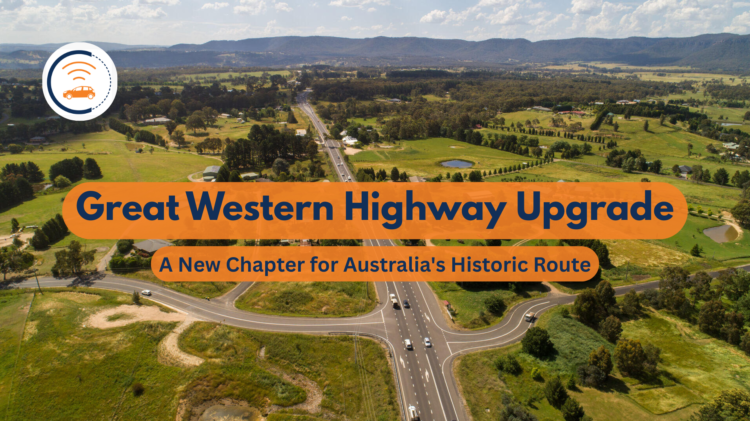
Great Western Highway Upgrade: Rebuild Australia’s Historic Route

Great Western Highway Upgrade marks a significant milestone in the ongoing evolution of this essential transport corridor.

The recent completion of the Coxs River Road Upgrade marks a major investment in safer, more efficient travel between Sydney and regional NSW.

This project demonstrates a modern approach to infrastructure, respecting the highway’s history while meeting today’s transport needs.

The Great Western Highway is Australia’s most historic road. This vital route saved the early New South Wales colony from abandonment and enabled the settlement of the vast western inland.

Since its initial construction by William Cox between 1814 and 1815, the highway has been in a state of continuous improvement.

This evolution spans from Thomas Mitchell’s re-routing in the 1830s to various deviations and upgrades throughout the 20th century.

Today, this 202-kilometre highway remains the key route linking Sydney to the state’s Central West and beyond.

Great Western Highway Upgrade: Project Overview for Coxs River Road

The Coxs River Road Upgrade at Little Hartley represents a $232 million investment in regional infrastructure. The NSW and Australian Governments are jointly funding the project.

This project widened and realigned 2.4 kilometres of the Great Western Highway. The upgrade created a dual carriageway with two lanes in each direction.

Construction began in April 2023. Traffic will switch to the new alignment in April 2025, with final completion and finishing touches in the subsequent months.

New Great Western Highway Upgrade Australia
Construction crews place final pavement layers on the new 2.4-kilometre, four-lane alignment of the Great Western Highway at Little Hartley. | Image Source: transport.nsw.gov.au

The upgraded section stretches from east of Mid Hartley Road to east of Coxs River Road at the foot of the Blue Mountains.

The project created approximately 530 jobs during construction and provided economic benefits to regional communities. It utilized locally sourced materials, including concrete from Lithgow and quarry materials from Oberon.

This upgrade is part of a broader vision to improve the entire Great Western Highway corridor.

However, further planned upgrades between Little Hartley and Lithgow are currently paused, awaiting funding confirmation from both governments.

Key Features and Improvements of Great Western Highway Upgrade

The Great Western Highway Upgrade shows several innovative features designed to enhance safety and traffic flow. The centerpiece is a new 70-metre-long road bridge that carries local traffic, pedestrians, and cyclists over the four-lane highway.

The new grade-separated interchange at Coxs River Road eliminates the long waits for local traffic. This solves a major issue where vehicles faced significant delays trying to join or cross the highway, especially during busy holiday periods.

Coxs River Road Upgrade
Aerial view of the upgraded Browns Gap Road intersection, part of the comprehensive improvements to local access points that enhance traffic flow and safety. | Image Source: ABC News

Other Significant Improvements in the Great Western Highway Upgrade include:

  1. Realignment of the old highway to create service roads for local businesses.
  2. A U-turn bay on Baaners Lane for improved local access.
  3. Over two kilometres of shared paths for pedestrians and cyclists.
  4. New landscaping with native species and retaining walls finished with materials selected by the community.
  5. Variable Speed Limit signage to enhance safety during low visibility and fog conditions.

Moreover, the project delivered critical intersection upgrades at key local roads, including Browns Gap Road, Coxs River Road, Ambermere Drive, and Baaners Lane.

Benefits for Road Users and Community after the Great Western Highway Upgrade

The upgrade delivers tangible benefits for all road users, particularly in addressing congestion and safety concerns.

The Great Western Highway is the major connection between Sydney and the Central West. It carries substantial traffic volumes, including freight vehicles essential to regional economies.

The new four-lane divided section reduces congestion and improves travel time reliability by managing traffic peaks more effectively.

Great Western Highway Upgrade News
Local residents now enjoy seamless access via the new service road, while highway traffic flows freely on the separated four-lane carriageway, reducing travel times for everyone. | Image Source: YouTube, Blackheath Mountain Life

For local residents, the separation of highway and local traffic creates safer access to properties and side roads. The new bridge and shared paths also encourage active transport with dedicated cycling and pedestrian facilities connecting local roads.

Additionally, the diversion of heavy traffic helps preserve Hartley’s historic buildings by reducing constant vibration and rumble from trucks.

Historical Significance in Modern Context

This latest upgrade continues a two-century tradition of improving this vital transport route.

The original Great Western Road was constructed in just six months from 1814 to 1815 under William Cox. This accomplishment helped Governor Macquarie to travel to Bathurst and officially open the western lands to settlement.

Throughout the 19th century, the road underwent significant improvements. These included the construction of Mitchell’s Pass in 1832 and Victoria Pass in the 1830s, which replaced the precipitous descent of Mount York.

Historical Significance of the Great Western Highway Road
The newly constructed divided carriageway at Prospect in 1962 set the precedent for modern upgrades like the Coxs River Road project. | Image Source: Facebook, Michael Lorkovic

The 20th century saw further developments, including the opening of Berghofer’s Pass in 1912. Other key milestones were improvements to Victoria Pass in 1920 and the Lapstone deviation incorporating the Knapsack Viaduct.

More recent upgrades include the bypass of Springwood’s main thoroughfare in 1967. Other key improvements were the opening of Yeaman Bridge at Katoomba in 1985 and the four-lane highway through Linden in 2001.

The Coxs River Road Upgrade represents the latest chapter in this ongoing evolution of the highway.

Community Perspectives and Business Impact

The upgrade has received mixed reactions from different stakeholders.

Government officials highlight the project’s safety and efficiency improvements. NSW Minister for Roads, Jenny Aitchison emphasized that “it is a very busy highway” and that the upgrade “needed to happen.”

However, Member for Bathurst, Paul Toole has criticized the project as a “road to nowhere.” His criticism follows the government’s decision to scrap a planned tunnel between Hartley and Blackheath.

Coxs River Road upgrade of the Great Western Highway
NSW Minister for Roads Jenny Aitchison (Left) and Member for Bathurst Paul Toole (Right) at the site, highlighting the bipartisan recognition of the upgrade’s importance, despite differing views on future stages. | Image Source: Central Western Daily

Local businesses have expressed concerns about being bypassed by the new alignment.

The owner of The Lolly Bug, Sharon Tofler, remains optimistic that her well-known business will continue to attract customers. However, she notes a concern about patrons “finding their way off the highway to get to us.”

Lithgow Mayor, Cassandra Coleman has acknowledged these business concerns and indicated work with the minister on potential signage solutions.

Ready to optimize your transport operations along the newly upgraded Great Western Highway?

The Manage Vehicle FCS app provides advanced route optimization and real-time vehicle tracking. It also includes many more features designed to boost your Australian transport business.

Claim your 20% discount and start a 30-day free trial today to experience how our technology can enhance your efficiency and profitability!
Aussie Truck Driver Quiz: 10 Riddles to Test Your Road Knowledge

The life of a truck driver is a demanding journey, testing patience and skill while navigating from city grids to the isolated outback.

A truck driver must master everything from dense city traffic to the long, lonely outback highways. It is a job that is never simple.

It pays to keep the rule book fresh in your mind. Let’s dive into 10 random questions that every professional truck driver in Australia should be able to answer confidently.

1. A Fire Truck Approaches Behind You with its Flashing Lights and Siren On. What Should You Do?

When you see those flashing lights and hear that siren in your mirrors, your primary duty is to get out of the way safely and predictably. Panic is your worst enemy.

The key is to signal your intentions clearly and move to the left as much as you can to create a clear path for the emergency vehicle.

First, check your mirrors and assess your surroundings. If you’re on a multi-lane road, indicate left and move into the left-most lane, or even onto the road shoulder if it’s safe and wide enough for your rig.

Driving Tips, Fleet Safety, Compliance
Panic is the real danger. The key is to be predictable: signal your intentions and move left where safe. Never break the law to get out of the way! | Image Source: Dreamstime

If you’re on a single-lane road, slow down and pull over to the left as far as possible, even coming to a complete stop if necessary.

Never break the law to get out of the way, like running a red light, but do everything within the legal road rules to facilitate their passage.

Remember, every second counts for that emergency vehicle. Your calm and decisive action ensures they can get to where they’re needed without delay, potentially saving lives and property.

2. If it’s Getting Dark or it Starts Raining, Which Lights Should You Use?

The golden rule for using lights in deteriorating conditions is simple: see and be seen. As soon as visibility drops, whether from fading light, rain, or even smoke, you must switch on your headlights.

In these situations, you should not be using your parking lights alone, as they are insufficient for both your vision and for making your large vehicle visible to others. For rain, fog, or dust, you must dip your headlights to low-beam.

Fleet Management, Driver Safety, Aussie Truckie Quiz
Don’t be the driver creating a dangerous glare. In rain, fog, or at dusk, your low-beam headlights are your best tool for maximum visibility without blinding others. | Image Source: Adobe Stock

Using high-beam in these conditions is not only illegal but dangerously counterproductive.

The bright light reflects off water droplets or particles. This creates a blinding glare that drastically reduces your own vision and dazzles oncoming truck drivers.

Using your low-beam lights with your tail lights makes your truck highly visible from all angles. This combination provides the best overall illumination and significantly reduces collision risk.

3. Do You Have to Give Way to Pedestrians Crossing the Road You’re Turning Into?

Yes, absolutely. This is a fundamental and non-negotiable rule across Australia.

Whenever you are turning left or right at an intersection, and pedestrians are crossing the road you are entering, you must give way to them. This applies even if there are no marked pedestrian crossings.

Road Safety, Driver Responsibility, Road Rules
It’s not just a courtesy; it’s the law. Failure to give way at intersections carries heavy penalties for a reason. Ensure you’re always in the right. | Image Source: YouTube Channel, Conquer Driving

As a professional truckie, you have a greater responsibility due to the size and potential for harm your vehicle carries. Always approach intersections with extra caution, scanning the footpaths and road edges for pedestrians about to cross.

A moment of patience ensures everyone’s safety. Remember, the person on foot always has the right of way in this scenario, and failing to give way can result in severe penalties and, tragically, even worse outcomes.

4. The Weather is Foggy and There is a Car 100 meters in front of you. Which Lights can You Use?

In dense fog, your goal is to maximise your vehicle’s visibility without impairing your own or others’ vision. The correct lights to use are your low-beam headlights and your fog lights, if your truck is equipped with them.

Your low-beams are angled to light up the road directly in front of you without causing excessive glare in the fog.

Road Safety, Driving Tips, Fleet Safety
Fog creates a blinding wall of light if you use the wrong setting. The correct choice? Your low-beam headlights are essential for seeing the road, not just the fog. | Image Source: Les Schwab

Crucially, you must avoid using your high-beam headlights. High-beams illuminate the fog itself, creating a solid, blinding wall of white light. This wall reflects back at you, making it impossible to see the car 100 metres ahead.

Your fog lights are specifically designed with a wide, low-cut beam to light up the road edges and improve side visibility without causing glare.

And don’t forget your tail lights, they are essential for allowing the vehicle behind you to see you from a safe distance.

5. The Vehicle Ahead is Travelling at 85 Kilometer Per Hour Speed. Can You Legally Overtake This Vehicle?

This question hinges on one critical piece of information: what’s the signed speed limit?

You can legally attempt to overtake if the speed limit is 100 or 110 km/h. However, you must also ensure it is safe and that there is a clear, designated overtaking lane. You must complete the manoeuvre without exceeding the posted speed limit.

Road Rules, Overtaking, Driver Safety
Don’t just check your speedometer, check the signs. The legality of your overtake hinges on the speed limit and heavy vehicle regulations. Know the rule before you make the move. | Image Source: YouTube Channel, mylicensesa

However, you must also consider the specific road rules for heavy vehicles, which may have lower speed limits than cars on certain roads. Furthermore, the practicality of overtaking is vital.

Overtaking in a heavily laden truck at a closing speed of only 15km/h will take a long time. As a result, you will need a significant stretch of clear road.

Always assess the situation thoroughly, is it worth the risk and fuel for a minimal gain in speed? Often, it’s safer and more efficient to maintain a safe following distance.

6. Who is Allowed to Use a T3 Lane Without Restriction?

A T3 lane (Transit Lane) is reserved for vehicles carrying a minimum of three occupants including buses, motorcycles, and bicycles. The purpose of these lanes is to encourage carpooling and ease traffic congestion.

The only vehicles that can always use a T3 lane without restriction are buses, motorcycles, bicycles, and taxis. However, taxi rules can vary slightly by state, even though they are generally permitted.

T3 Lane Driving Test, Fleet Safety, Road Rules
Not everyone can use that lane! T3 lanes have strict rules. As a truck driver, you can only enter if you meet the passenger requirement, unlike buses, motorcycles, and bikes. | Image Source: News.com.au

As a truck driver, you are only allowed to enter and use a T3 lane if you and your vehicle meet the minimum occupancy requirement of three people. Driving in a T3 lane as a single-occupant truck is a traffic offence and can result in a fine.

7. Both You and Another Vehicle Want to Turn right, But the Road You are On is Ending. Who Gives Way?

The road rules clearly define this common right-of-way scenario. At a T-intersection where two oncoming vehicles are both turning right, neither truck driver has priority. This is the straightforward rule for this specific situation.

In this situation, both vehicles must turn right, passing in front of each other. The correct and safest procedure is for both drivers to turn behind the other vehicle.

Driving Tips, Roads Safety, Truck Driver Life
Who goes first? This classic intersection scenario tests your knowledge of right-of-way procedures. The correct, safest path is for both drivers to turn behind each other. | Image Source: Shutterstock

This means you should steer to the right and pass behind the oncoming vehicle as you complete your turn. It is crucial to make eye contact (if possible), signal clearly, and proceed with caution, ensuring you do not cut in front of the other driver’s path.

8. You are Pulled Over by Police. Can You Legally Refuse a Roadside Breath Test?

The law mandates that drivers must submit to a roadside breath test upon request. Under Australian law, driving is a privilege that comes with responsibilities, and one of those is agreeing to breath testing when lawfully requested by a police officer.

A roadside breath test is a standard procedure used to enforce drink-driving laws and keep the roads safe.

Truck Driver Responsibility, Fleet Safety, Road Rules
No refusal, no excuses. Compliance is mandatory. A roadside test is a standard procedure, and refusing it will cost you your licence. | Image Source: Australia Breathalysers

Refusing to undergo a breath test when directed by a police officer is a serious offence. The penalties for refusal are typically just as severe, if not more severe, than those for driving over the legal alcohol limit.

You will likely face heavy fines, immediate licence disqualification, and potentially a criminal record. Compliance is not just a legal requirement but a professional obligation for every truck driver, especially those operating heavy vehicles.

9. How Does Using a Phone While Driving Cause Inattentional Blindness?

This statement is completely true. Inattentional blindness is a specific psychological phenomenon: you fail to see something in plain sight because your attention is focused elsewhere.

Your brain becomes primarily engaged in the conversation or task when you use a mobile phone while driving, even for a few seconds. This means it is not focused on the complex and dynamic environment of the road.

Truck Driver, Distracted Driving, Fleet Safety
Your phone makes you blind to danger. Inattentional blindness is the real reason a simple text can lead to a major accident. For your safety and everyone else’s, keep your full attention on the road. | Image Source: Shutterstock

For a truck driver, the consequences are magnified. Your vehicle requires a much longer stopping distance and has significant blind spots.

When you look at a phone, you take your eyes and mind off the road. This means you might completely miss a car changing lanes, a pedestrian stepping out, or traffic signals changing.

This Cognitive Distraction is why hands-free is not risk-free, and why physically handling a phone is so explicitly and heavily outlawed.

10. Is it Legal to Drive Through a Red Light to Make Way for a Police Vehicle?

No, it is not legal. You must never break the law to make way for an emergency vehicle.

While the law requires you to move out of their path as safely as possible, this does not extend to committing a traffic offence like running a red light or speeding.

Truck Driver, Fleet Safety, Driving Test
This is a common misconception. You must not drive through a red light for any emergency vehicle. They are trained to find a way around you; you are responsible for your own legal actions. | Image Source: CarsGuide

The correct action is to slow down, indicate, and move as far left as you can without proceeding through the red signal. If you are stopped at a red light and cannot move left any further, you must remain stationary.

Instructors train emergency vehicle drivers to anticipate these situations, and they will find a way around you. Their maneuvers may include mounting a kerb or using the wrong side of the road.

If you illegally enter an intersection to get out of their way, you risk causing a serious crash, and you will face liability for any offence you commit.

Manage Vehicle: Your Partner on the Road to Compliance and Safety

Tired of the stress that comes with road inspections and the constant battle against driver fatigue? Let Manage Vehicle be the co-driver you can always count on.

Our cloud-integrated app, Manage Vehicle is built for you, the Australian truckie. It seamlessly tracks your compliance logs, manages fatigue, and keeps your vehicle in check. This helps you avoid heavy penalties and stay safe on those long hauls.

Manage Vehicle, All-in-One Fleet Compliance Management Software Built for Australian Truck Drivers
Compliance, made simple. Safety, made certain. That’s the Manage Vehicle promise. Your essential partner on the road. | Image Source: Cartrack

Stop worrying and start driving with confidence. Sign up for our 30-Day Free Trial on Manage Vehicle app and experience the peace of mind that comes with having a true partner in your journey.