The Shadow Economy’s Toll on Australia’s Road Freight Industry

The road freight transport industry is facing an unprecedented crisis that threatens its very foundation.

A perfect storm of economic pressures is bearing down on compliant operators across Australia. To make matters worse, they must now compete with a rapidly expanding shadow economy.

Insolvencies are skyrocketing and regulatory challenges are mounting. The industry is now at a critical juncture that demands immediate action and collaborative solutions.

Recent industry reports reveal a startling 173% rise in insolvencies among transport operators. These businesses are struggling under sustained pressure from higher costs, rampant red tape, and persistent shortages of drivers and skilled personnel.

In response to this emergency, Western Roads Federation joined with peak bodies, the Transport Workers Union, and operators of all sizes. This coalition met with federal ministers last week to call for an urgent multi-agency task force.

The Sham Contracting Epidemic on Australia’s Road Freight Transport Industry

Sham contracting represents the dark underbelly of the road freight transport industry. It is a practice where companies misclassify workers as independent contractors, despite conditions that legally define them as employees.

These individuals often operate under an ABN while functioning as de facto employees. This allows unscrupulous companies to sidestep legal obligations and gain an unfair market advantage.

Sham Contracting in Australia's Road Freight Transport Industry
A deceptive practice where truck drivers are misclassified as ‘independent contractors’ to strip them of employee rights and undercut compliant businesses. | Image Source: Freepik

The financial incentive for this practice is substantial. By misclassifying workers, companies can avoid paying superannuation, leave entitlements, workers compensation, and taxes.

This illegal cost avoidance provides a significant commercial advantage. It allows non-compliant businesses to undercut those that bear the full cost of proper employment.

The practice has become so widespread that industry leaders describe it as a “virus” spreading through the sector. As a result, it distorts competition, rewarding lawbreakers and punishing legitimate businesses.

Consequences Beyond Australian’s Road Freight Businesses

The impact of sham contracting extends far beyond mere business competition. It creates ripple effects that compromise safety, compliance, and industry standards.

Anecdotal evidence links sham contracting to lower compliance with heavy vehicle regulations and misuse of rest areas. It is also connected to potential environmental and WorkSafe breaches, a lack of insurance, and reduced road safety.

Impact on Australian's Road Freight Businesses
“How can I compete when I follow the rules, but others cheat?” This unfair competition creates dangerous ripple effects that endanger everyone on the road. | Image Source: Firework Ombudsman

These practices undermine the very foundations of a regulated, safe transportation network. The comparison below highlights the stark differences between compliant operators and those engaging in sham contracting:

Compliant OperatorsSham Contracting Operators
Pay superannuation, leave, workers compensationAvoid employee entitlements and benefits
Bear full tax obligationsEvade tax responsibilities
Maintain proper insurance coverageOperate without requisite insurance
Follow heavy vehicle regulationsShow lower compliance with safety regulations

Australia’s situation is part of a worrying global pattern. In France, ten haulage firms collapse daily, while Poland faces its “deepest crisis in 25 years.”

This global context underscores the urgent need for targeted solutions. These measures must address both the economic pressures and regulatory failures enabling these practices.

Road Freight Transport Industry Fights Back!

Faced with this existential threat, industry representatives are mobilizing to demand government action and develop collaborative solutions.

WA Senator, Glenn Sterle organized a meeting that brought industry voices directly to Canberra last week. There, they presented their passionately argued concerns and solutions to the highest levels of government.

This coordinated response brings together stakeholders from across the sector. It demonstrates a united determination to address the crisis.

Road Freight Transport Industry in Australia
Senator Glenn Sterle convened a critical roundtable with trucking associations to tackle the threat of sham contracting. | Image Source: ATN

Industry leaders are pushing for a national multi-agency taskforce. However, they recognize that establishing such a body and addressing regulatory gaps will require time.

In the meantime, non-governmental organizations such as Western Roads Federation are volunteering to collaborate with the state governments and unions.

They aim at introducing short-term state solutions, which can limit the spread of the so-called, “sham contracting virus”.

This two-pronged approach acknowledges the need for both immediate action and long-term structural reforms. The goal is to protect compliant operators.

The Path Forward to Collaboration and Solutions

Western Australia has demonstrated that collaboration between government and industry delivers cost-effective outcomes. A prime example is its successful heavy vehicle driver training program.

This successful model of cooperation provides a clear blueprint. It can be used to develop the state-level collaborative solutions needed to stop the spread of sham contracting.

Australia's Road Freight Transport Industry
Building on proven models of cooperation, industry and government are forging collaborative solutions to eradicate sham contracting and secure the future of compliant freight operators. | Image Source: ABC News

By building on this proven approach, the industry can implement targeted measures that address the root causes of this problem. This strategy also simultaneously improves productivity, safety, and emissions.

The solutions being advanced would create a virtuous cycle of benefits for the industry and community. Ending sham contracting lets compliant operators compete fairly and invest in better equipment, training, and safety.

This in turn leads to better outcomes for workers, improved road safety for all users, and a more sustainable and efficient road freight transport industry capable of meeting Australia’s economic needs.

Protect Your Fleet in Challenging Times with Manage Vehicle FCS System

While the industry addresses these systemic challenges, protecting your assets and ensuring safety remains crucial.

Maintain compliance and safety with Manage Vehicle fleet compliance management system. Our cloud-integrated tool gives you real-time insights, live GPS tracking, and instant alerts for driver fatigue or distraction.

Manage Vehicle FCS System
Safeguard your assets and drivers despite industry turmoil. The Manage Vehicle FCS System provides the real-time tracking and safety alerts you need to protect your investment and ensure compliance. | Image Source: Advanced Fleet Management

Our fleet compliance management software help legitimate operators stay competitive while upholding their commitment to safety and compliance.

Sign up today to learn how our fleet compliance management software can support your business through these challenging times while preparing you for a more stable future.
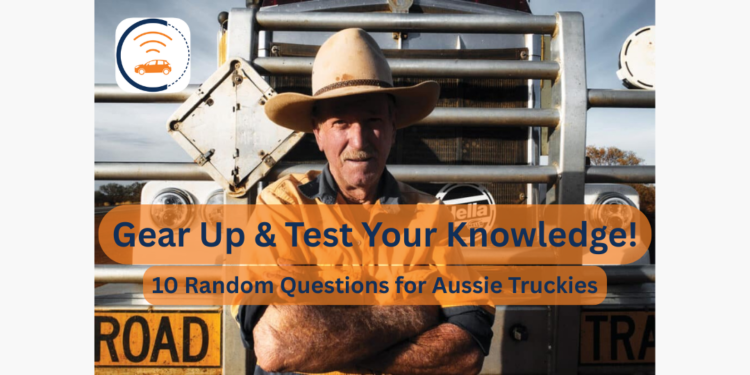
Aussie Truck Driver Quiz: 10 Riddles to Test Your Road Knowledge

The life of a truck driver is a demanding journey, testing patience and skill while navigating from city grids to the isolated outback.

A truck driver must master everything from dense city traffic to the long, lonely outback highways. It is a job that is never simple.

It pays to keep the rule book fresh in your mind. Let’s dive into 10 random questions that every professional truck driver in Australia should be able to answer confidently.

1. A Fire Truck Approaches Behind You with its Flashing Lights and Siren On. What Should You Do?

When you see those flashing lights and hear that siren in your mirrors, your primary duty is to get out of the way safely and predictably. Panic is your worst enemy.

The key is to signal your intentions clearly and move to the left as much as you can to create a clear path for the emergency vehicle.

First, check your mirrors and assess your surroundings. If you’re on a multi-lane road, indicate left and move into the left-most lane, or even onto the road shoulder if it’s safe and wide enough for your rig.

Driving Tips, Fleet Safety, Compliance
Panic is the real danger. The key is to be predictable: signal your intentions and move left where safe. Never break the law to get out of the way! | Image Source: Dreamstime

If you’re on a single-lane road, slow down and pull over to the left as far as possible, even coming to a complete stop if necessary.

Never break the law to get out of the way, like running a red light, but do everything within the legal road rules to facilitate their passage.

Remember, every second counts for that emergency vehicle. Your calm and decisive action ensures they can get to where they’re needed without delay, potentially saving lives and property.

2. If it’s Getting Dark or it Starts Raining, Which Lights Should You Use?

The golden rule for using lights in deteriorating conditions is simple: see and be seen. As soon as visibility drops, whether from fading light, rain, or even smoke, you must switch on your headlights.

In these situations, you should not be using your parking lights alone, as they are insufficient for both your vision and for making your large vehicle visible to others. For rain, fog, or dust, you must dip your headlights to low-beam.

Fleet Management, Driver Safety, Aussie Truckie Quiz
Don’t be the driver creating a dangerous glare. In rain, fog, or at dusk, your low-beam headlights are your best tool for maximum visibility without blinding others. | Image Source: Adobe Stock

Using high-beam in these conditions is not only illegal but dangerously counterproductive.

The bright light reflects off water droplets or particles. This creates a blinding glare that drastically reduces your own vision and dazzles oncoming truck drivers.

Using your low-beam lights with your tail lights makes your truck highly visible from all angles. This combination provides the best overall illumination and significantly reduces collision risk.

3. Do You Have to Give Way to Pedestrians Crossing the Road You’re Turning Into?

Yes, absolutely. This is a fundamental and non-negotiable rule across Australia.

Whenever you are turning left or right at an intersection, and pedestrians are crossing the road you are entering, you must give way to them. This applies even if there are no marked pedestrian crossings.

Road Safety, Driver Responsibility, Road Rules
It’s not just a courtesy; it’s the law. Failure to give way at intersections carries heavy penalties for a reason. Ensure you’re always in the right. | Image Source: YouTube Channel, Conquer Driving

As a professional truckie, you have a greater responsibility due to the size and potential for harm your vehicle carries. Always approach intersections with extra caution, scanning the footpaths and road edges for pedestrians about to cross.

A moment of patience ensures everyone’s safety. Remember, the person on foot always has the right of way in this scenario, and failing to give way can result in severe penalties and, tragically, even worse outcomes.

4. The Weather is Foggy and There is a Car 100 meters in front of you. Which Lights can You Use?

In dense fog, your goal is to maximise your vehicle’s visibility without impairing your own or others’ vision. The correct lights to use are your low-beam headlights and your fog lights, if your truck is equipped with them.

Your low-beams are angled to light up the road directly in front of you without causing excessive glare in the fog.

Road Safety, Driving Tips, Fleet Safety
Fog creates a blinding wall of light if you use the wrong setting. The correct choice? Your low-beam headlights are essential for seeing the road, not just the fog. | Image Source: Les Schwab

Crucially, you must avoid using your high-beam headlights. High-beams illuminate the fog itself, creating a solid, blinding wall of white light. This wall reflects back at you, making it impossible to see the car 100 metres ahead.

Your fog lights are specifically designed with a wide, low-cut beam to light up the road edges and improve side visibility without causing glare.

And don’t forget your tail lights, they are essential for allowing the vehicle behind you to see you from a safe distance.

5. The Vehicle Ahead is Travelling at 85 Kilometer Per Hour Speed. Can You Legally Overtake This Vehicle?

This question hinges on one critical piece of information: what’s the signed speed limit?

You can legally attempt to overtake if the speed limit is 100 or 110 km/h. However, you must also ensure it is safe and that there is a clear, designated overtaking lane. You must complete the manoeuvre without exceeding the posted speed limit.

Road Rules, Overtaking, Driver Safety
Don’t just check your speedometer, check the signs. The legality of your overtake hinges on the speed limit and heavy vehicle regulations. Know the rule before you make the move. | Image Source: YouTube Channel, mylicensesa

However, you must also consider the specific road rules for heavy vehicles, which may have lower speed limits than cars on certain roads. Furthermore, the practicality of overtaking is vital.

Overtaking in a heavily laden truck at a closing speed of only 15km/h will take a long time. As a result, you will need a significant stretch of clear road.

Always assess the situation thoroughly, is it worth the risk and fuel for a minimal gain in speed? Often, it’s safer and more efficient to maintain a safe following distance.

6. Who is Allowed to Use a T3 Lane Without Restriction?

A T3 lane (Transit Lane) is reserved for vehicles carrying a minimum of three occupants including buses, motorcycles, and bicycles. The purpose of these lanes is to encourage carpooling and ease traffic congestion.

The only vehicles that can always use a T3 lane without restriction are buses, motorcycles, bicycles, and taxis. However, taxi rules can vary slightly by state, even though they are generally permitted.

T3 Lane Driving Test, Fleet Safety, Road Rules
Not everyone can use that lane! T3 lanes have strict rules. As a truck driver, you can only enter if you meet the passenger requirement, unlike buses, motorcycles, and bikes. | Image Source: News.com.au

As a truck driver, you are only allowed to enter and use a T3 lane if you and your vehicle meet the minimum occupancy requirement of three people. Driving in a T3 lane as a single-occupant truck is a traffic offence and can result in a fine.

7. Both You and Another Vehicle Want to Turn right, But the Road You are On is Ending. Who Gives Way?

The road rules clearly define this common right-of-way scenario. At a T-intersection where two oncoming vehicles are both turning right, neither truck driver has priority. This is the straightforward rule for this specific situation.

In this situation, both vehicles must turn right, passing in front of each other. The correct and safest procedure is for both drivers to turn behind the other vehicle.

Driving Tips, Roads Safety, Truck Driver Life
Who goes first? This classic intersection scenario tests your knowledge of right-of-way procedures. The correct, safest path is for both drivers to turn behind each other. | Image Source: Shutterstock

This means you should steer to the right and pass behind the oncoming vehicle as you complete your turn. It is crucial to make eye contact (if possible), signal clearly, and proceed with caution, ensuring you do not cut in front of the other driver’s path.

8. You are Pulled Over by Police. Can You Legally Refuse a Roadside Breath Test?

The law mandates that drivers must submit to a roadside breath test upon request. Under Australian law, driving is a privilege that comes with responsibilities, and one of those is agreeing to breath testing when lawfully requested by a police officer.

A roadside breath test is a standard procedure used to enforce drink-driving laws and keep the roads safe.

Truck Driver Responsibility, Fleet Safety, Road Rules
No refusal, no excuses. Compliance is mandatory. A roadside test is a standard procedure, and refusing it will cost you your licence. | Image Source: Australia Breathalysers

Refusing to undergo a breath test when directed by a police officer is a serious offence. The penalties for refusal are typically just as severe, if not more severe, than those for driving over the legal alcohol limit.

You will likely face heavy fines, immediate licence disqualification, and potentially a criminal record. Compliance is not just a legal requirement but a professional obligation for every truck driver, especially those operating heavy vehicles.

9. How Does Using a Phone While Driving Cause Inattentional Blindness?

This statement is completely true. Inattentional blindness is a specific psychological phenomenon: you fail to see something in plain sight because your attention is focused elsewhere.

Your brain becomes primarily engaged in the conversation or task when you use a mobile phone while driving, even for a few seconds. This means it is not focused on the complex and dynamic environment of the road.

Truck Driver, Distracted Driving, Fleet Safety
Your phone makes you blind to danger. Inattentional blindness is the real reason a simple text can lead to a major accident. For your safety and everyone else’s, keep your full attention on the road. | Image Source: Shutterstock

For a truck driver, the consequences are magnified. Your vehicle requires a much longer stopping distance and has significant blind spots.

When you look at a phone, you take your eyes and mind off the road. This means you might completely miss a car changing lanes, a pedestrian stepping out, or traffic signals changing.

This Cognitive Distraction is why hands-free is not risk-free, and why physically handling a phone is so explicitly and heavily outlawed.

10. Is it Legal to Drive Through a Red Light to Make Way for a Police Vehicle?

No, it is not legal. You must never break the law to make way for an emergency vehicle.

While the law requires you to move out of their path as safely as possible, this does not extend to committing a traffic offence like running a red light or speeding.

Truck Driver, Fleet Safety, Driving Test
This is a common misconception. You must not drive through a red light for any emergency vehicle. They are trained to find a way around you; you are responsible for your own legal actions. | Image Source: CarsGuide

The correct action is to slow down, indicate, and move as far left as you can without proceeding through the red signal. If you are stopped at a red light and cannot move left any further, you must remain stationary.

Instructors train emergency vehicle drivers to anticipate these situations, and they will find a way around you. Their maneuvers may include mounting a kerb or using the wrong side of the road.

If you illegally enter an intersection to get out of their way, you risk causing a serious crash, and you will face liability for any offence you commit.

Manage Vehicle: Your Partner on the Road to Compliance and Safety

Tired of the stress that comes with road inspections and the constant battle against driver fatigue? Let Manage Vehicle be the co-driver you can always count on.

Our cloud-integrated app, Manage Vehicle is built for you, the Australian truckie. It seamlessly tracks your compliance logs, manages fatigue, and keeps your vehicle in check. This helps you avoid heavy penalties and stay safe on those long hauls.

Manage Vehicle, All-in-One Fleet Compliance Management Software Built for Australian Truck Drivers
Compliance, made simple. Safety, made certain. That’s the Manage Vehicle promise. Your essential partner on the road. | Image Source: Cartrack

Stop worrying and start driving with confidence. Sign up for our 30-Day Free Trial on Manage Vehicle app and experience the peace of mind that comes with having a true partner in your journey.