
What are the Responsibilities of a Truck Driver? Fleet Insights 2025

The year was 2025. In the quiet, dark hours just before dawn, the Gateway Motorway was mostly empty. Then, a truck swerved and crashed. It was a terrible accident, and the man behind the wheel lost his life.

This incident shows us a hard truth. The role of a truck driver demands immense responsibility, and perfect safety and precision are not optional.

Truck drivers are the backbone of Australian logistics. Their job goes far beyond driving; they are professionals who must safely and efficiently deliver the nation’s goods, all while navigating changing rules and challenges.

This article breaks down the core duties of this vital profession and explores the tools that are making it safer and more manageable.

What are the Responsibilities of a Truck Driver?

A truck driver’s day is built on a foundation of critical tasks that ensure safety, compliance, and the integrity of the cargo. Far from a simple job of driving, it is a multifaceted role requiring vigilance and skill.

1. Drive Long Distances:

This is the primary task, involving hours behind the wheel to transport goods across Australia’s vast landscapes. It demands constant focus to navigate varying road conditions while adhering to strict delivery schedules.

Truck Driver Duties and Responsibilities
A long-haul driver navigates a sprawling Australian highway at dawn, clocking up the kilometres. | Image Source: Atech Logistics & Distribution

2. Report Any Incidents Encountered on the Road to a Dispatcher:

If an accident, breakdown, or any other road incident occurs, the driver’s first step is crucial. They must immediately contact their dispatcher to report what happened and coordinate the response.

3. Follow All Applicable Traffic Laws as per NHVR:

Compliance with all road rules is essential. This includes adhering to new regulations, such as the August 2025 rules that introduced stricter penalties for mobile phone use and required slowing to 40 km/h when passing emergency vehicles in certain states.

4. Secure Cargo for Transport:

Before a truck even leaves, the driver must safely load and secure all the cargo. Moreover, they use the right equipment, like straps and chains, to prevent anything from shifting or being damaged on the road.

What are Responsibilities of a Truck Driver? Fleet Insights 2025
A driver expertly secures a load with straps and chains before a long journey. | Image Source: Straight Shot Express

5. Inspect Their Trailers Before and After the Trip and Record Any Defects:

Conducting pre-start and post-trip inspections is a mandatory safety procedure. Also, drivers must check their vehicle’s condition and log any defects to ensure it is roadworthy.

6. Maintain a Driver’s Log of Their Working and Rest Hours:

Drivers must follow strict fatigue management regulations. So, this means they have to accurately log their work and rest hours to prove they are staying within the legal driving limits.

7. Report Serious Fleet Maintenance Issues to Fleet Manager or Transport Operator:

If an inspection finds a major vehicle fault, the driver must report it right away. They need to tell their manager or maintenance team so repairs can be arranged to prevent a breakdown or accident.

Truck Driver Duties and Responsibilities, Fleet Insights 2025
A driver points out a serious mechanical fault to the fleet manager/transport operator in a workshop. | Image Source: Whip Around

8. Keep Their Trucks and Associated Equipment Clean and In Good Working Order:

A driver’s daily tasks include basic upkeep and cleaning the truck. This routine is essential because it keeps the vehicle running smoothly and protects its long-term value.

What is It Like to be a Truck Driver in Australia?

Life as a truck driver is a unique blend of freedom and formidable challenge, both physically and mentally.

It’s a career that keeps you on the move, offering scenic views and a sense of independence on the open road. However, the reality behind the wheel is demanding.

Physically, the job involves more than just sitting. It requires heavy lifting, awkward postures during loading and unloading, and prolonged periods of vibration and sitting, which contribute to high rates of chronic pain and musculoskeletal injuries.

Duties and Responsibilities of a Truck Driver in Australia
A truck driver finds a moment of quiet reflection at a remote rest stop, capturing the solitary beauty and mental challenge of life on the Australian road. | Image Source: Cloud Trucks

Mentally, drivers face psychological stress and isolation, particularly on long-haul routes away from family and friends. Tight deadlines and irregular shifts can lead to chronic fatigue, with more than 60% of drivers reporting feeling tired at work.

Despite these hardships, many find deep satisfaction in the profession. It’s a well-paying job in Australia, with a median weekly earning of $1,780, and offers the reward of playing a critical role in the economy by keeping supply chains moving.

So, it’s a career that suits those who value independence and can manage the inherent physical and mental strains.

Is Truck Driving a Dangerous Job?

Truck driving is indeed one of Australia’s more dangerous professions. The physical risks are clear; in a recent 12-month period, 157 people died in crashes involving heavy trucks.

However, the dangers extend beyond collisions. A hidden health crisis reveals that only 17% of lost work time results from crashes.

The remaining 83% of injuries are not from traffic accidents. Instead, they are physical or psychological, like back injuries from lifting or mental health struggles worsened by the stress and isolation of the job.

What are the responsibilities of a truck driver in Australia?
A tense moment on a wet highway, illustrating the ever-present physical risks that make truck driving one of Australia’s most dangerous professions. | Image Source: Dispatch Circle

Becoming a truck driver in Australia requires specific qualifications. First, while a formal degree isn’t necessary, most drivers complete a Certificate III in Driving Operations. The second and mandatory step is to get a heavy vehicle licence from state authorities.

Moreover, the path is demanding, but for many, the stability and essential nature of the work make it a viable and important career choice.

Manage Vehicle Driver App: Making the Job Easier for Australian Truck Drivers

Technology is now a key ally in helping drivers manage their complex responsibilities safely and efficiently. The Manage Vehicle Driver app is an all-in-one fleet and compliance management solution built for Australian transport operators.

MV Driver app streamlines a driver’s workflow by digitizing many daily tasks:

  • Vehicle Inspection: Complete pre-start inspections with easy digital checklists directly from your phone.
  • Fault and Incident Reporting: Instantly report vehicle faults, delays, or accidents for a quicker resolution.
  • Work and Rest Hour Management: Log your hours seamlessly within the app to stay compliant with fatigue management regulations.
  • Digital Toolbox and Training: Access training materials and toolbox talks to stay updated on safety practices.
  • Proof of Delivery (POD): Digitize delivery documentation with features like e-signatures for faster and more accurate confirmation.
Every Truck Driver's Trusted Fleet Compliance Management App, Manage Vehicle
A truck driver uses the Manage Vehicle app on his phone to complete a digital vehicle inspection, streamlining compliance and saving time. | Image Source: Simform

The Manage Vehicle driver app combines all these essential tasks into one simple tool. Moreover, this reduces paperwork, improves safety, and lets drivers keep their focus on the road.

Become part of the growing number of Australian drivers who trust Manage Vehicle for better fleet compliance management. Discover the difference today. Sign up today and get 30 days free trial for smooth fleet management operations.
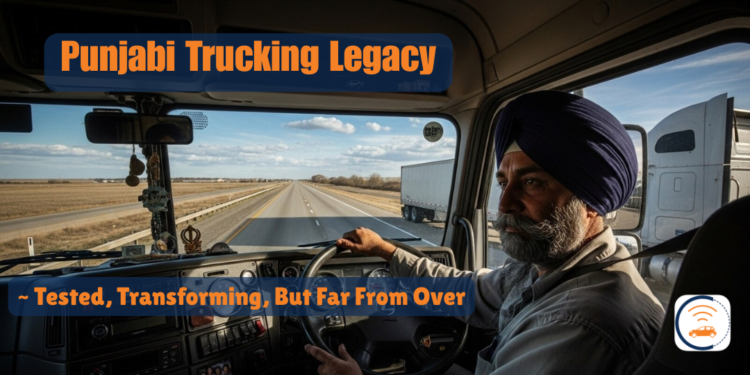
Punjabi Trucking Legacy: Collapse or Comeback?

The Punjabi trucking legacy on North America’s highways has long been more than a profession. It stands as a moving testament to resilience, faith, and the pursuit of opportunity.

Today, that legacy faces its most severe test as recent tragedies cast long shadows over an entire community.

The very industry they helped build now views them with suspicion, and the dreams woven into countless miles of asphalt suddenly feel fragile.

Yet, behind the headlines and harsh rhetoric lies a more complex story of community, contribution, and quiet perseverance that demands to be heard.

Punjabi Sikhs are a cornerstone of the trucking industry, making up roughly 20% of all U.S. truckers and a large portion in Australia. This success grew from a self-sustaining community that provided mentorship and built businesses.

The profession also uniquely accommodates their religious practices, like wearing turbans and keeping uncut hair.

Causes of the Crisis: Recent Tragedies and Their Implications on Punjabi Trucking Legacy

The Punjabi trucking community now finds itself at a crossroads following two devastating accidents that have triggered national scrutiny and heated immigration debates.

The California Case: Jashanpreet Singh, 21 Year Old Truck Driver

On Tuesday, 28th October, tragedy struck a California freeway when 21-year-old truck driver Jashanpreet Singh allegedly drove while intoxicated, resulting in a crash that killed three people.

Singh has been charged with three counts of gross vehicular manslaughter while intoxicated and one count of driving under the influence of a drug.

Punjabi Trucking Legacy, Is Its Fall Really True
Jashanpreet Singh, whose not-guilty plea sparked a national debate on trucking and immigration. | Image Source: ABC10

Despite pleading not guilty, the case has become a flashpoint in immigration debates. The Department of Homeland Security revealed Singh entered the U.S. illegally from India in 2022.

His requirement for a Punjabi interpreter during court proceedings raised questions about how he obtained a commercial driver’s license despite apparent English proficiency limitations.

The case has drawn national attention, with toxicology reports contradicting his family’s claims that he never uses drugs.

The Florida Tragedy: Truck Driver Harjinder Singh

Just months earlier, on August 12, another incident had already put the community under scrutiny.

Harjinder Singh, a 28-year-old India-born truck driver, allegedly made an illegal U-turn on a Florida Turnpike, blocking the roadway and causing a minivan collision that killed three people.

Punjabi Trucking Legacy, Collapse or Comeback
Harjinder Singh, the truck driver charged with vehicular homicide after a wrong U-turn on the Florida Turnpike. | Image Source: Times of India

The charges against him include three counts each of vehicular homicide and manslaughter.

Authorities stated that Singh entered the U.S. illegally from Mexico in 2018 and was processed for fast-track deportation. However, he was later released on a $5,000 bond after claiming a fear of returning to India.

His work authorization, denied during Trump’s first term, was granted under the Biden administration in 2021.

The case drew additional attention when Singh failed an English proficiency test after the accident. He answered only two of twelve questions and identified just one of four road signs.

AspectJashanpreet Singh (California)Harjinder Singh (Florida)
DateOctober 2025August 2025
ChargesGross vehicular manslaughter while intoxicated, DUIVehicular homicide, manslaughter
Immigration StatusEntered illegally in 2022Entered illegally in 2018
English ProficiencyRequired Punjabi interpreter in courtFailed post-accident English test
Policy ImpactTriggered MAGA backlash against immigrantsPrompted Trump administration to freeze trucker visas
Comparison of Two Recent Accident Cases. | Source: Times of India, News.com.au

Consequences: Punjabi Trucking Legacy Under Scrutiny

The aftermath of these tragedies has extended far beyond the courtroom. It has had real-world consequences for the Punjabi trucking community and sparked policy changes.

Harassment and Fear

In the wake of these incidents, Sikh truckers across the United States have reported increased harassment and discrimination.

The North American Punjabi Trucking Association has received numerous reports of Sikh drivers being targeted. In one instance, a Sikh man was ejected from an Oklahoma truck stop for trying to take a shower.

Punjabi Trucking Legacy Under Scrutiny
Increased scrutiny is now threatening thousands of Punjabi Sikh truck drivers, the very backbone of American commerce. | Image Source: LA Times

Sukhpreet Waraich, a trucker who owns an interstate freight carrier in Fontana, California, expressed the community’s anxiety:

“I’ve been talking to a lot of truck drivers, and they’ve been saying, ‘People look at us different now'”.

The situation has created such tension that some drivers are reconsidering their careers. Harsimran Singh, CEO of Gillson Trucking, reported that five of his Sikh drivers quit, telling him they no longer feel safe.

Policy Changes and Community Response

The political fallout has been swift and significant. Following the Florida crash, the Trump administration announced an immediate pause on all issuances of commercial truck driver work visas.

U.S. Secretary of Transportation Sean Duffy condemned what he called “despicable failures” in the system, vowing to “use every tool at our disposal to hold these states and bad actors accountable”.

Punjabi Trucking Legacy on Policy Changes and Community Response
U.S. Secretary of Transportation Sean Duffy, who announced a freeze on truck driver visas following the fatal accidents. | Image Source: Yahoo

In response, Sikh communities have proactively launched English language classes to address proficiency concerns.

Simultaneously, organizations like the Sikh Coalition have been reaching out to truckers to ensure they know their rights if stopped by authorities.

Beyond the Stereotypes: Success Stories and Diverse Narratives

While recent tragedies have dominated headlines, they represent only a small fraction of the Punjabi trucking experience.

Beyond the negative stereotypes lies a richer tapestry of stories that showcase the community’s resilience, diversity, and valuable contributions.

For every driver involved in an accident, there are thousands of Punjabi truckers who operate safely and professionally year after year. Sukhpreet Waraich, one of the many drivers concerned about increased scrutiny, proudly states,

“I’ve been driving since 2019. I haven’t got a single ticket”.

Many American-Punjabi truck drivers point out that they immigrated to the United States “the right way, legally.” They emphasize their commitment to safety and their respect for the country’s people and values.

As one Punjabi truckie eloquently expressed, “We’re judged not by our hearts or our work, but by the mistakes of a few. That hurts… because we’re part of the same road, the same dream”.

Sandeep Kaur: Breaking Barriers in Brisbane

In Australia, Sandeep Kaur represents the vibrant future of Punjabi trucking, shattering multiple stereotypes simultaneously as a female heavy vehicle operator.

Ms. Kaur hails from a small village, Goraya in Punjab and overcame significant personal challenges, including the early loss of her father and financial hardships. She later came to Australia as an international student from India in 2013.

Punjabi Trucking Legacy, Beyond the Stereotypes
In Australia’s male-dominated trucking industry, Sandeep Kaur stands out as one of the few women behind the wheel of a heavy vehicle. | Image Source: SBS Punjabi

Today, she navigates massive B-double trucks through interstate routes from Brisbane to Sydney, Melbourne, and Adelaide.

“This is not as difficult as I thought it to be. All you have to do is drive your load and finish the given task. You are your own boss. Your gender doesn’t matter here”. Ms. Kaur says in an interview with SBS Punjabi.

Ms. Kaur credits her mother as her inspiration and emphasizes mindset over external barriers,

“The first barrier is your own mind. Once you overcome that, everything else becomes so simple”.

Despite societal pressures that often discourage women from unconventional careers, Kaur remains focused on her goals. She aims to run her own fleet of heavy vehicles within ten years.

Satnam Singh: From Detention to Business Ownership

On Reddit, a user asked, “Why the Punjabi Sikh Community is so Active in Trucking as Compared to Other Professions?”

In response, American-Punjabi truck driver Satnam Singh offered a powerful testimony of transformation through the profession.

Punjabi Trucking Legacy
Journalist Shreen Khan joins Satnam Singh, a Punjabi Sikh trucker who crossed the U.S.-Mexico border, faced detention, and now owns a lucrative trucking company, to learn the story behind his remarkable journey. | Image Source: AJ+ on X.com

Satnam has been in the industry for 25 years. He shared his journey from crossing the U.S.-Mexico border and getting detained to now owning a successful trucking company that earns $200,000 annually.

Mr. Singh explained that trucking provides crucial opportunities for immigrants who may lack college degrees or strong English skills but possess a strong work ethic.

“Trucking is a hard job but we are willing to work hard,” Mr. Singh said.

He highlighted the freedom the profession offers, the ability to set one’s own schedule and determine one’s workload.

Satnam Singh’s story echoes the experiences of thousands who have found economic mobility through transportation.

Punjabi Trucking Legacy: Tested, Not Broken!

The Punjabi trucking legacy is not falling, it’s being tested. Like any community, it has its challenges and individuals who make tragic mistakes, but these exceptions do not define the whole.

The true Punjabi trucking legacy is built on countless safe journeys, immense economic contributions, and the religious freedom found on the open road.

It is a story of generational perseverance that has made these truckers indispensable to countries across the world.

Punjabi Trucking Legacy Tested, Not Broken
The enduring symbol of a community’s resilience: a Sikh trucker continues the long haul, upholding a legacy that persists despite its challenges. | Image Source: CTV News

The road ahead requires balance. This approach acknowledges where the community must improve while refusing to let isolated incidents erase decades of contribution.

The moral is not that the Punjabi trucking legacy is collapsing. Rather, it is evolving, facing modern challenges while maintaining its core values of hard work, faith, and family.

The trucking industry is adapting to new regulations and safety standards. The community’s resilience shows this isn’t an end, but another mile in the long journey of an extraordinary diaspora success story.

Drive Safer with Manage Vehicle Software

In light of recent tragedies, technology now offers powerful tools to prevent accidents before they happen.

Manage Vehicle’s fleet compliance management software provides drivers with essential safety features. It provides you with a digital logbook, a driver training toolbox, optimized routes, and real-time insights for proactive maintenance.

Drive Safer with Manage Vehicle Software
Navigate with confidence: Modern fleet management software provides real-time insights and tools to help ensure every journey is a safe one. | Image Source: The Bains Firm

Manage Vehicle ensure compliance with regulations, manage driver fatigue, and maintain vehicles in optimal condition. In doing so, they directly address several key factors that contribute to road incidents.

Whether you’re an owner-operator or part of a larger fleet, embracing such technology represents a positive step toward safer highways for everyone. Start Your Free Trial Today for 30 Days!

Logbook for Truck Drivers in Australia: Your Answer to All Queries

Digital logbook made simple for Australian truckies. Stay legal, avoid fines and streamline your records with an electronic work diary (EWD).

For Australian truck drivers, digital logbook is more than just a record-keeping tool. It’s a legal requirement central to managing fatigue and ensuring safety on our roads.

The regulatory landscape is constantly evolving. The National Heavy Vehicle Regulator (NHVR) continues to approve new Electronic Work Diary (EWD) systems, such as the recent certification of the OneRoad EWD in May 2025.

This push towards digital solutions highlights the industry’s move towards greater accuracy and efficiency in compliance.

Understanding your logbook is not just about avoiding fines. It’s about championing a culture of safety within the Australian transport industry.

How Important is a Logbook for Truck Drivers?

A logbook is fundamentally important as it is your primary evidence of compliance with Australia’s strict fatigue management laws. It is a legal document that protects both you and your employer.

1. Legal Requirement:

Under the Heavy Vehicle National Law (HVNL), drivers of fatigue-regulated heavy vehicles must record their work and rest hours in a National Driver Work Diary.

Logbook for Truck Drivers in Australia
Logbook is a legal requirement for Australian truck drivers to maintain records of daily work and rest hours. | Image Source: NHVR

This applies to vehicles with a gross vehicle mass (GVM) over 12 tonnes, and buses over 4.5 tonnes fitted to carry more than 12 adults. Failure to maintain a compliant logbook can result in significant penalties.

2. Fatigue Management Tool:

The core purpose of the logbook is to ensure drivers do not exceed maximum work hours or take less than the minimum rest hours required in a given period.

By faithfully recording your time, you actively manage your fatigue, reducing the risk of accidents caused by tired driving. This makes the logbook a critical tool for your personal safety and the safety of everyone else on the road.

Logbook is a Fatigue Management Tool for Australian Truck Drivers
Logbook is a fatigue management tool for Australian truck drivers in order to maintain work and rest hours on a daily basis. | Image Source: Intelex Blog

What is the Main Purpose of a Logbook in Fleet Management?

In fleet management, the logbook transitions from an individual record to a strategic asset, providing the data necessary for operational compliance, efficiency, and proactive safety management.

1. Compliance and Auditing:

The logbook provides fleet managers and record keepers with the verified data needed to meet their obligations under the HVNL.

Logbook for Compliance and Auditing
Logbook meets necessary obligations under HVNL in order to provide verified data of work regulations. | Image Source: NHVR

All records, whether paper or electronic, must be kept for three years and be readily accessible for audits or investigations by authorised officers. Accurate logbooks streamline this process, making audits less disruptive.

2. Operational Insight and Safety Culture:

Logbook data offers invaluable insights into work patterns, allowing managers to identify potential fatigue risks before they lead to an incident. Furthermore, using Electronic Work Diaries (EWDs) can foster a stronger safety culture within a company.

Logbook for Operational Insight and Safety Culture
Logbook is not just for record keeping; it is for operational insights and enhancing safety culture at work. | Image Source: Milestone, Rand McNally

These systems provide real-time alerts for rest breaks, helping to prevent breaches and demonstrating a company’s commitment to driver well-being.

ELD vs. E-Logbook: What’s the Difference?

FeatureElectronic Work Diary (EWD)Electronic Logging Device (ELD)
Governing RegionAustraliaUnited States and Canada
Regulatory BodyNational Heavy Vehicle Regulator (NHVR)Federal Motor Carrier Safety Administration (FMCSA) in the US
Legal Status in AustraliaThe legally approved and accepted system for proving compliance with HVNL fatigue laws.Not legally acceptable for compliance with Australian fatigue management laws.
Core FunctionDigitally records work and rest times in accordance with Australian fatigue management rules.Digitally records driving hours in accordance with North American Hours of Service (HOS) rules.
Key PurposeOfficially replaces the paper-based work diary and is programmed specifically for the Australian regulatory environment.Designed to meet with different regulatory standards and calculation methods of the US and Canada.

What are Logbook Rules for Australian Truckies?

The rules governing logbooks are designed to ensure consistency and compliance across the industry. The following table outlines the core requirements and exemptions:

  • Who Must Use Logbook?

Drivers of fatigue-regulated heavy vehicles driving over 100km from their base, and all drivers under Basic or Advanced Fatigue Management (BFM/AFM).

  • Local Area Exemption

Drivers under standard hours within a 100km radius of their base may use a simpler record including, a run sheet but, must still track total work and rest times.

  • Mandatory Content

Driver details, vehicle registration, date, base location and time zone, all work and rest times (to the nearest 15 min for paper), location of changes, and total daily hours.

  • Record Keeping

The record keeper (often the employer) must retain all records for three years . Drivers must carry the current and previous 28 days of records.

It is crucial to fill out your diary correctly and in accordance with the HVNL. If your work diary is lost, stolen, or destroyed, you must contact the NHVR.

You can then use a supplementary record for up to seven business days until you can purchase a replacement.

Alternative of Logbook: Manage Vehicle’s Electronic Work Diary (EWD)

Manage Vehicle’s Electronic Work Diary offers a modern, integrated solution. It moves beyond traditional paper diaries to automate compliance and enhance operational efficiency.

This cloud-based system is designed to seamlessly fit into the daily workflow of transport operators and drivers. So, here’s some key features and benefits of using Manage Vehicle’s electronic work diary (EWD):

Manage Vehicle is an Integrated Compliance Platform
Manage Vehicle gives you real-time GPS tracking option with pre-start vehicle inspections. It also does document management with its electronic work diary system that ensures all compliance data in one place.

Manage Vehicle’s EWD is part of a comprehensive suite of fleet management tools, which sets it apart from standalone solutions.

  • Integrated Compliance Platform:

Manage Vehicle is not an isolated app; it integrates with a full fleet and compliance management system. This includes GPS tracking, digital pre-start inspections, job dispatch, mass management, and document management.

This eliminates the need to juggle multiple systems and ensures all compliance data is in one place.

  • Automated Fatigue Calculations:

The system is programmed with NHVR fatigue management rules. It automatically calculates work and rest times, sending notifications to drivers when a break is due or a potential breach is approaching.

This eliminates the miscalculations and human error common with manual paper diaries.

  • Time Savings and Precision:

Unlike paper diaries that require rounding time to the nearest 15 minutes, the Manage Vehicle EWD records time to the nearest minute.

This can save drivers up to 30-40 minutes of administrative work each day, increasing productivity. Furthermore, being app-based, it is less prone to being lost, damaged, or stolen compared to a physical book.

Ready to simplify compliance? Try our Manage Vehicle app free for 30 days. Streamline your logbooks, avoid heavy fines, and drive with confidence.

Australia’s Fleet Industry Faces a Truck Driver Shortage

The truck driver shortage is real. It’s causing missed deliveries, lost revenue, and immense pressure on Australian transport operators every single day.

A recent report from the National Transport Commission highlighted that with nearly half of our drivers nearing retirement, this gap is only set to widen unless we make fundamental changes.

It feels like you’re fighting a battle on three fronts at once. But what if there was a way to not just manage these challenges, but to turn them into your competitive advantage?

Let’s break down the problems and, more importantly, talk about a solid solution.

1. The Growing Truck Driver Shortage is a Problem for Fleet Owners

The stats don’t lie! 50 percent of Australian truck drivers are over the age of 55. The next generation isn’t lining up to take their place, and for good reason.

Fleet managers or transport business owners are looking for modern workplaces that offer better pay, improved work-life balance, and a tech forward environment.

Truck Driver Shortage in Australia
Many truck drivers are getting closer to retirement age and there’s not enough manpower to fill up the job criteria in Australia.

The key to attraction and retention isn’t just higher rates. It’s about creating a better, safer, and more efficient job. This means investing in:

  • Better pay and conditions can be possible solution by greater operational efficiency.
  • Moving beyond the basics to include modern training on new AI-driven logistics systems, and advanced safety protocols.
  • Reducing administrative burdens and frustration can be a better day on the job for your drivers.

2. Regulatory Compliance Pressure is More Than Just a Red Tape

From the government’s new emissions standards aiming for a 30% reduction by 2030 to the constant evolution of Chain of Responsibility (COR) and safety laws, compliance is a full-time job. For small to medium-sized operators, these pressures are immense.

Forcing costly fleet upgrades and demanding meticulous record-keeping, these regulations are designed to make our industry safer and greener, but they come with a heavy administrative cost.

Compliance Regulatory Pressures Australia's Trucking Industry
There’s a squeeze in the compliance regulatory of the Australian transport and logistic sector.

The risk of non-compliance isn’t just a fine and it’s the potential loss of your operating licence.

3. Supply Chain Resilience is Navigating a Volatile World

Geopolitical tensions and climate-related disruptions just like floods and fires have exposed the fragility of just-in-time supply chains. Clients now demand reliability and transparency more than ever. To create an adaptable and flexible supply chain for your fleet business, you need to:

  • Diversify Suppliers: Don’t have all your eggs in one basket.
  • Gain Real-Time Visibility: Know exactly where your assets and freight are, at all times, to proactively manage delays.
  • Provide Proof of Compliance: Instantly reassure clients that their goods are being moved safely and legally.

The Solid Solution: Integrate, Automate and Dominate with Manage Vehicle

Manage Vehicle (MV) integrates everything: compliance, asset management, driver management, and customer transparency into one powerful, easy-to-use app. It reduces admin, lowers your risk, and gives your drivers the modern tools they need to excel.

MV is the single dashboard that empowers your business to eradicate these problems by putting you in complete control. Tackling these three major challenges with a piecemeal approach, such as:

1. For Truck Driver Shortage:

Our built-in driver training and toolbox portal makes upskilling easy. Train drivers on digital platforms, safety procedures, and compliance updates seamlessly, making you an employer of choice.

2. For Regulatory Compliance:

Our digital work diaries ensure flawless, audit-ready record-keeping. Our fleet GPS tracking system automatically logs hours, locations, and vehicle data, providing a digital shield for COR and emissions compliance.

3. For Supply Chain Management:

Our real-time navigation and live tracking give you and your clients unparalleled visibility into every shipment. Diversify routes, manage disruptions instantly, and deliver unparalleled reliability.

Manage Vehicle Can Fill Up the Gap of Truck Driver Shortage with Training Lessons and Toolbox

Ready to future-proof your transport business? Stop being held back by labour shortages and regulatory complexity. Let us show you how Manage Vehicle can streamline your operations, keep you compliant, and help you grow your business smoothly.

Click Here to Book a Free Demo of Manage Vehicle Today and also Get a 30-days Trial Period to Manage Your Daily Fleet Operations!

How Much Do Truck Drivers Earn in Australia? Salary & Wages

If you are curious to know how much do truck drivers earn in Australia, then lets take a glance below:

Truck driving is beyond an occupation; it is the lifeblood of the economy as a whole in Australia. It keeps the transportation of goods over long distances and also sustains a continuous flow of supply chains and mobility of goods for commercial purposes.

Trucking makes the profession not only a job but a vital part of the nation’s operations, offering opportunities for drivers at all skill levels, from beginners to seasoned professionals.

This article covers essential topics, including hourly wages, minimum salaries, high-paying roles, industry demand, and what it takes for one to succeed at being a truck driver in Australia.

How Much Do Truck Drivers Earn in Australia? Salary & Wages?

Truck drivers’ salaries differ from one place to another depending on their experience, geographical location, and truck driving kind. On average, truck drivers earn approximately $35.75 per hour, translating to an annual salary between $65,000 and $85,000.

Trucking is a profession that fills your pockets and promises the highest of peaks despite presenting challenges such as long hours and extensive travel.

However, these figures are highly variable according to specific roles or responsibilities within the sector.

How Much Do Truck Drivers Earn Per Hour in Australia?

The hourly wage for truck drivers in Australia varies depending on experience, location, and the nature of the job. On average, drivers earn around $35.75 per hour.

Entry-level positions may start at approximately $29 per hour, while experienced drivers, especially those handling specialized or long-distance routes, can earn up to $45 per hour.

What is the Minimum Salary of a Truck Driver in Australia?

The minimum salary for truck drivers in Australia typically starts at around $62,049 per year, equating to approximately $29.62 per hour.

This base salary can increase with additional qualifications, experience, and endorsements, such as obtaining a Heavy Combination (HC) or Multi-Combination (MC) license, which can lead to higher-paying opportunities.

Who Is the Highest-Paid Truck Driver in Australia?

Among truck drivers, those operating interstate routes or handling specialized freight, such as road train drivers in remote areas, often command the highest salaries. Interstate drivers can earn between $120,000 and $140,000 annually.

In some instances, road train drivers reportedly earn up to $150,000 per year, reflecting the demanding nature of their work.

Also Read: Australia’s EV Transition: Key Wins and Challenges Ahead of 2025

Is Truck Driving a Good Job in Australia?

Truck driving in Australia is not just a rewarding career in terms of competitive salaries and opportunities for advancement, but it also offers a sense of stability.

The logistics industry, which includes truck driving, is part and parcel of the Australian economy, thus keeping jobs secure in tough times.

The job requires one to spend long hours working and away from home for long periods, always under safety regulations. For those who value independence and adjustment to this form of life, truck driving can be a rewarding career.

Is Owning a Truck Profitable in Australia?

You can consider being an owner-operator in Australia if you want an entrepreneurial approach. Some truck operators are earning $63.89 per hour.

However, profitability depends on factors such as securing consistent contracts, managing operating expenses, and navigating market fluctuations. Success requires business acumen, industry knowledge, and effective cost management.

How Much Do a B-Double Truck Drivers Earn in Australia?

B-Double drivers, who operate complex multi-trailer combinations, are compensated for their specialized skills. The average salary for Heavy Combination (HC) drivers, which includes B-Double operators, is approximately $77,716 per year, or $39.85 per hour.

Salaries can increase with experience and the complexity of the routes driven.

Are Truck Drivers in High Demand in Australia?

The Australian trucking industry is currently experiencing a high demand for drivers, driven by factors such as an aging workforce and increased freight needs.

This demand has led to various initiatives aimed at attracting new drivers, including training programs and incentives.

Now Trending: Fatigue Breaches: Work, Rest, Penalties Under HVNL Rules 2025

How Hard Is It to Become a Truck Driver in Australia?

Entering the truck driving profession in Australia requires obtaining the appropriate licenses, such as a Heavy Rigid (HR) or Heavy Combination (HC) license, which involves both theoretical and practical assessments.

Additional certifications, like fatigue management training, may be necessary depending on the job requirements. While the training process is structured, the physical and mental demands of the job require a commitment to safety and professionalism.

Is There a Shortage of Truck Drivers in Australia?

At the moment, the shortage of truck drivers is adding to the increase in the number of people working in the older age group and factors related to the difficulty of enticing young people to take on the job.

This shortage has implications for the supply chain and has prompted industry stakeholders to implement programs aimed at workforce development and retention.

The situation for truck drivers in Australia is foreseeable as the need for them increases, even with labour shortages. Growing freight demands initiated an actual campaign to engage more applicants to the profession and improve conditions of employment.

Earning potential remains affected by factors such as type of work, geographical location, and experience. That’s how this continues to evolve, with numerous opportunities.

What Do Truckies Roughly Earn in Australia?

Truckies distinctively earn in Australia as it will depend on their experience, the location, and the freight they are hauling. Generally, truckies can expect to make an average of $65,000 to $85,000.

Nevertheless, these specialized or long-haul carriers tend to earn quite a lot, with some reporting figures as high as $150,000 per year for very challenging jobs.

All things considered, truck driving in Australia has several earning potentials connected with various conditions. Though it has exceptional challenges, being in truck driving occupies a very integral and sometimes rewarding place in the economy of Australia.

Despite this new workload, some of you may even be looking at truck driving as a career option or are already searching for supplementary qualifications. Luck would have it that there are training programs available to get entry or advancement in the industry.

Explore More: Olympic Highway Accident: Truck Driver Charged in Riverina Crash