Fleet fuel management system that shows where the money goes
Fuel is one of the biggest costs in any fleet. ManageVehicle’s fuel management system brings fill-ups, expenses and vehicle data together, so you can see the cost of every vehicle and spot waste early.

- NHVR-approved EWD
- ISO 9001 certified
- Australian support
- Serving fleets since 2021
The headaches we hear about most
What changes when fuel stops being one big number on the monthly bill.
Manual, fragmented and reactive
- Fuel receipts stuffed in the glovebox
- One fuel bill and no idea which vehicle used what
- Odd fill-ups nobody questions
- Running costs spread across five spreadsheets
- Guessing which vehicles cost the most to run
Connected, live and proactive
- Fill-ups and receipts logged from the driver app
- Fuel and cost broken down per vehicle
- Unusual fill-ups flagged for a second look
- Fuel, repairs, tolls and other expenses in one place
- Cost per vehicle and per kilometre, side by side
What is a fuel management system?
A fuel management system records fuel and running costs for each vehicle and compares them with distance and usage, so you can control spend and spot waste.
- 01
Fill-ups and expenses
Logged by drivers or your office team.
- 02
Vehicle data
Distance, engine hours and idle time.
- 03
ManageVehicle
Matches every cost to the right vehicle.
- 04
Reports and flags
Cost per vehicle, trends and odd fill-ups.
For the bigger picture on why fuel management matters, read our guide to fuel management in fleet operations.
From the bowser to the cost report
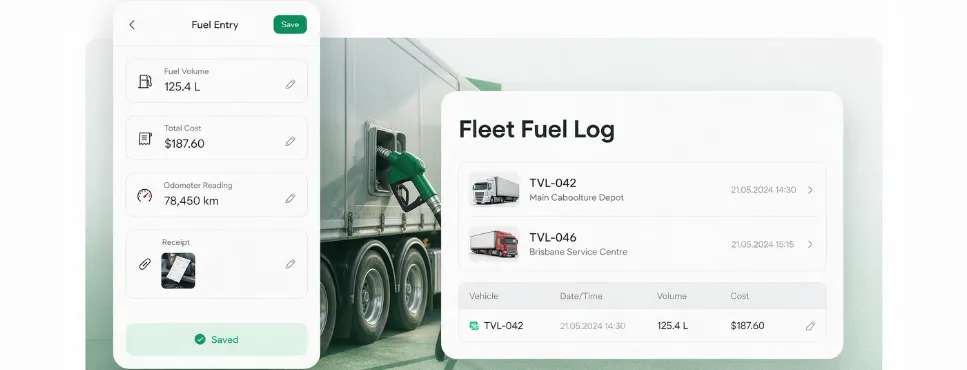
Log every fill-up where it happens
Clean fuel records without the paperwork.
Drivers record fuel in the driver app with litres, cost, odometer and a photo of the receipt, so your fuel tracking system fills itself in. No more chasing paper at the end of the week.
What your team can do:
- Fill-ups logged from the phone
- Receipt photos attached
- Odometer captured with each fill
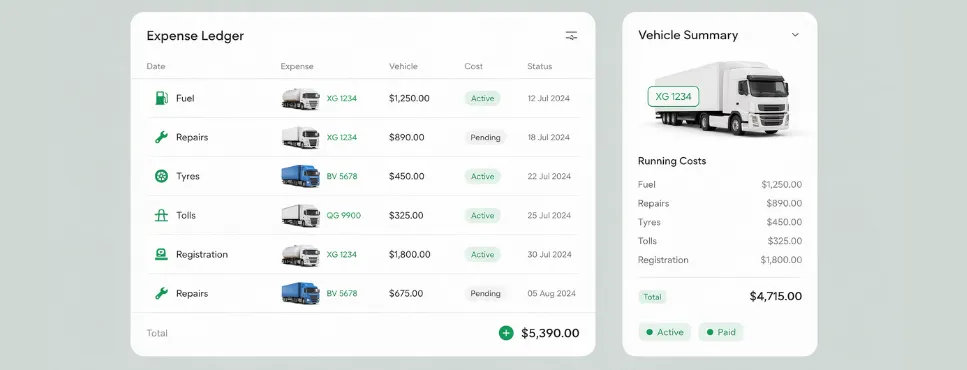
Every running cost against the right vehicle
One place for every running cost.
Fuel is only part of it. Record repairs, tyres, tolls, rego and other expenses so you see the true cost of keeping each vehicle on the road.
What your team can do:
- Expenses by category
- Costs tied to each vehicle
- Attach invoices and receipts
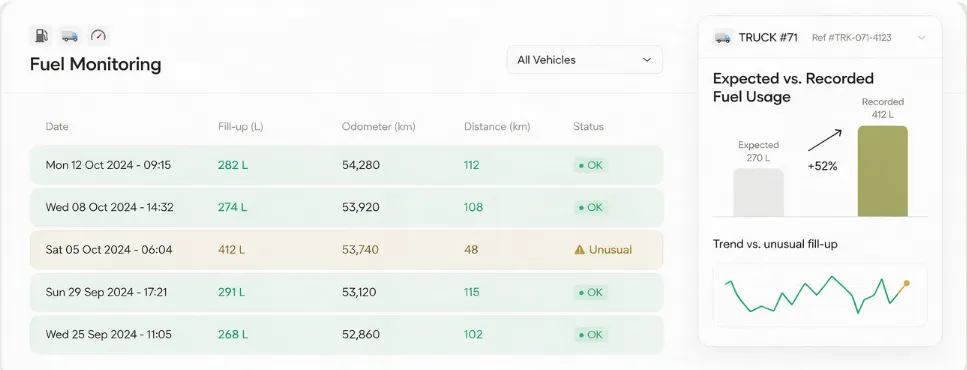
Spot the fill-ups that don’t add up
Catch waste and misuse early.
When a fill-up doesn’t match the distance travelled or the vehicle’s usual pattern, it stands out. Your team can check it before it becomes a habit. This is where fuel monitoring software earns its keep.
What your team can do:
- Compare fuel with distance
- Review fill-ups by driver
- Follow up on odd entries
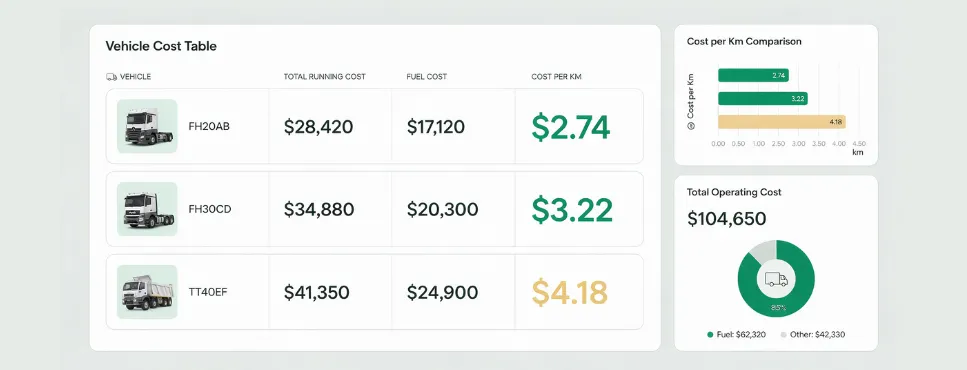
Know which vehicles cost the most to run
Decisions based on real numbers.
Compare fuel and running costs per vehicle and per kilometre. It’s a vehicle fuel tracking system and a cost report in one. It makes keep, repair or replace decisions much easier.
What your team can do:
- Cost per vehicle
- Cost per kilometre
- Compare similar vehicles
Fuel trends you can act on
Clear reports for managers and accounts.
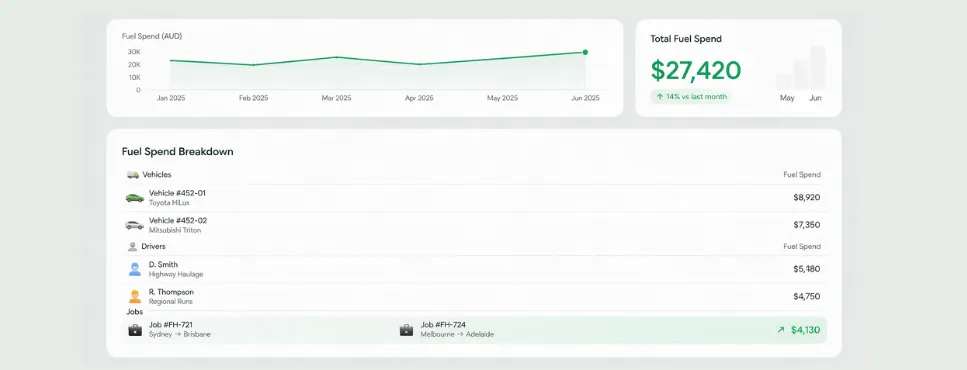
Tracking fuel month to month shows how spend is changing and which vehicles, drivers or jobs are pushing it up.
What your team can do:
- Monthly fuel trends
- Spend by vehicle and driver
- Export for accounts
Five places fuel money leaks out of a fleet
Most fuel waste isn’t one big problem. It’s small leaks that nobody can see on a fuel card statement.
-
Idling
- What it looks like
- Engines running at depots, sites and drop-offs
- What ManageVehicle shows
- Idle time by vehicle and driver, from GPS tracking or telematics
-
Fill-ups that don’t add up
- What it looks like
- More litres than the distance travelled would need
- What ManageVehicle shows
- Unusual fill-ups flagged for a second look
-
After-hours and private use
- What it looks like
- Vehicles driven when they shouldn’t be
- What ManageVehicle shows
- Trips and after-hours movement on record
-
Driving style
- What it looks like
- Speeding and harsh acceleration burning extra fuel
- What ManageVehicle shows
- Driving events by driver, ready for coaching
-
Missed services
- What it looks like
- Under-inflated tyres and overdue services raising fuel use
- What ManageVehicle shows
- Service reminders and tyre and repair costs per vehicle
Connect the dots with Vehicle Telematics, Driver Behaviour and Fleet Maintenance.
Stop asking “why is the fuel bill so high?”
The questions accounts and fleet managers ask every month, answered without a spreadsheet.
Which truck used the most fuel?
Check fuel by vehicle.
Is that fill-up right?
Compare it with the distance travelled.
What did Ute 4 cost us this month?
Open its expense summary.
Is idling adding to the bill?
Review idle time by vehicle.
Where’s the receipt for that fill?
See the photo on the entry.
Cost records your accountant will thank you for
Every fuel entry and expense is stored with the vehicle, driver, date and receipt. Month-end reconciliation gets quicker and questions get answered with records, not memories.
Receipts attached to every entry
No more missing paperwork at month end.
Costs by vehicle and category
See exactly where each dollar went.
Export-ready reports
Hand clean figures to accounts in a few clicks.
-
Records for fuel tax credits
Businesses can claim fuel tax credits for fuel used in heavy vehicles over 4.5 t GVM, reduced by the road user charge for fuel used on public roads. Clean fuel records per vehicle make the claim easier to prepare. See the ATO’s guide to working out fuel tax credits for heavy vehicles.
Connected fuel and fleet operations
Fuel data makes more sense next to how vehicles are driven, used and maintained.
-
Fuel + telematics
Match fuel to real usage
Usage data can include
- Distance travelled
- Engine hours
- Idle time
- Fuel used from engine data (supported devices)
-
Fuel + driver behaviour
See how driving affects fuel
Driver insights can include
- Harsh acceleration
- Speeding
- Idle time
- Driver reports
-
Fuel + maintenance
Keep vehicles running efficiently
Maintenance records can include
- Service history
- Tyre and repair costs
- Defects
- Overdue services
-
Fuel + jobs
Know what each job really costs
A job record can include
- Vehicle and driver
- Distance
- Time on job
- Running costs
-
Reports & insights
Turn fuel data into savings
Fuel reports can include
- Spend by vehicle
- Cost per km
- Monthly trends
- Unusual fill-ups
-
Australian fleet operations
Fuel management built for Australian fleets
What you get
- Web and mobile access
- Designed for commercial fleets
- Australian customer support
- Driver app on iOS and Android
Fuel cards vs fuel management software
A fuel card tells you what was bought. Fuel management software tells you whether it made sense.
Fuel card statements
Fleet fuel cards show transactions and totals.
- Date, site and amount
- Litres purchased
- Monthly statement
- Little vehicle context
Fleet fuel management software
Adds the vehicle and driver behind every litre.
- Fuel per vehicle and driver
- Fuel vs distance travelled
- Unusual fill-ups flagged
- All running costs in one place
- Cost per kilometre
Fuel management system FAQs
What is a fuel management system?
It records fuel and running costs for each vehicle and compares them with distance and usage. As fleet fuel management software, ManageVehicle shows you cost per vehicle, trends and fill-ups worth checking.
How do drivers log fuel?
Drivers enter litres, cost and odometer in the driver app and snap a photo of the receipt. It’s saved straight to the vehicle’s record.
Can I track other expenses besides fuel?
Yes. Record repairs, tyres, tolls, rego and other running costs so you see the full cost of each vehicle.
How does it spot unusual fill-ups?
By comparing fill-ups with the distance travelled and the vehicle’s normal pattern. Entries that don’t fit are easy to find and follow up.
Can I see cost per kilometre?
Yes. Combining fuel and expense records with distance gives you cost per kilometre for each vehicle.
Does driving style affect fuel use?
It does. Idling, speeding and harsh acceleration all add to the bill. Pairing fuel data with Driver Behaviour shows where coaching can help.
Can I export fuel reports for accounts?
Yes. Fuel and expense reports can be exported for reconciliation and month-end reporting.
Does it work with mixed fleets?
Yes. Trucks, light vehicles, utes and plant can all have their fuel and costs tracked in the same place.
Does it work with fuel cards?
Fuel card statements show what was bought and where. ManageVehicle adds the vehicle, driver and distance behind each fill-up, so you can see whether it made sense. If you use fuel cards, bring a recent statement to the demo and we’ll show you how it fits alongside ManageVehicle’s records.
Can fuel records help with fuel tax credits?
Accurate fuel records per vehicle make fuel tax credit claims easier to prepare. ManageVehicle doesn’t calculate the credit; see the ATO’s guidance or your accountant for that.
Explore more
-
Vehicle Telematics
Vehicle telematics software that reads engine hours, odometer, faults and speed straight from your vehicles, so you can act early.
Explore Vehicle Telematics -
Driver Behaviour
Speeding and harsh driving alerts with the time, place and driver for every event, so you can coach drivers with real data.
Explore Driver Behaviour -
Fleet Maintenance
Fleet maintenance software for service reminders by km or engine hours, digital pre-starts and defects tracked through to repair.
Explore Fleet Maintenance
See your fleet’s fuel costs in the demo
In a 30-minute demo, we’ll show you how fill-ups, expenses and vehicle data come together for your fleet, and where the fuel money is going.
- Tailored to your fleet size
- Live answers on HVNL and EWD
- Local Australian support team
See ManageVehicle in action
Tell us a bit about your fleet and we’ll be in touch within one business day.