Australia’s Fleet Industry Faces a Truck Driver Shortage

The truck driver shortage is real. It’s causing missed deliveries, lost revenue, and immense pressure on Australian transport operators every single day.

A recent report from the National Transport Commission highlighted that with nearly half of our drivers nearing retirement, this gap is only set to widen unless we make fundamental changes.

It feels like you’re fighting a battle on three fronts at once. But what if there was a way to not just manage these challenges, but to turn them into your competitive advantage?

Let’s break down the problems and, more importantly, talk about a solid solution.

1. The Growing Truck Driver Shortage is a Problem for Fleet Owners

The stats don’t lie! 50 percent of Australian truck drivers are over the age of 55. The next generation isn’t lining up to take their place, and for good reason.

Fleet managers or transport business owners are looking for modern workplaces that offer better pay, improved work-life balance, and a tech forward environment.

Truck Driver Shortage in Australia
Many truck drivers are getting closer to retirement age and there’s not enough manpower to fill up the job criteria in Australia.

The key to attraction and retention isn’t just higher rates. It’s about creating a better, safer, and more efficient job. This means investing in:

  • Better pay and conditions can be possible solution by greater operational efficiency.
  • Moving beyond the basics to include modern training on new AI-driven logistics systems, and advanced safety protocols.
  • Reducing administrative burdens and frustration can be a better day on the job for your drivers.

2. Regulatory Compliance Pressure is More Than Just a Red Tape

From the government’s new emissions standards aiming for a 30% reduction by 2030 to the constant evolution of Chain of Responsibility (COR) and safety laws, compliance is a full-time job. For small to medium-sized operators, these pressures are immense.

Forcing costly fleet upgrades and demanding meticulous record-keeping, these regulations are designed to make our industry safer and greener, but they come with a heavy administrative cost.

Compliance Regulatory Pressures Australia's Trucking Industry
There’s a squeeze in the compliance regulatory of the Australian transport and logistic sector.

The risk of non-compliance isn’t just a fine and it’s the potential loss of your operating licence.

3. Supply Chain Resilience is Navigating a Volatile World

Geopolitical tensions and climate-related disruptions just like floods and fires have exposed the fragility of just-in-time supply chains. Clients now demand reliability and transparency more than ever. To create an adaptable and flexible supply chain for your fleet business, you need to:

  • Diversify Suppliers: Don’t have all your eggs in one basket.
  • Gain Real-Time Visibility: Know exactly where your assets and freight are, at all times, to proactively manage delays.
  • Provide Proof of Compliance: Instantly reassure clients that their goods are being moved safely and legally.

The Solid Solution: Integrate, Automate and Dominate with Manage Vehicle

Manage Vehicle (MV) integrates everything: compliance, asset management, driver management, and customer transparency into one powerful, easy-to-use app. It reduces admin, lowers your risk, and gives your drivers the modern tools they need to excel.

MV is the single dashboard that empowers your business to eradicate these problems by putting you in complete control. Tackling these three major challenges with a piecemeal approach, such as:

1. For Truck Driver Shortage:

Our built-in driver training and toolbox portal makes upskilling easy. Train drivers on digital platforms, safety procedures, and compliance updates seamlessly, making you an employer of choice.

2. For Regulatory Compliance:

Our digital work diaries ensure flawless, audit-ready record-keeping. Our fleet GPS tracking system automatically logs hours, locations, and vehicle data, providing a digital shield for COR and emissions compliance.

3. For Supply Chain Management:

Our real-time navigation and live tracking give you and your clients unparalleled visibility into every shipment. Diversify routes, manage disruptions instantly, and deliver unparalleled reliability.

Manage Vehicle Can Fill Up the Gap of Truck Driver Shortage with Training Lessons and Toolbox

Ready to future-proof your transport business? Stop being held back by labour shortages and regulatory complexity. Let us show you how Manage Vehicle can streamline your operations, keep you compliant, and help you grow your business smoothly.

Click Here to Book a Free Demo of Manage Vehicle Today and also Get a 30-days Trial Period to Manage Your Daily Fleet Operations!

The Ultimate Pre-Trip Vehicle Inspection Checklist – 30 Days Trial

Good day, drivers and operators! Let’s be honest, the pre-trip vehicle inspection is as fundamental as a good cuppa in the morning. But in the rush to hit the road, it’s often the first thing that gets rushed.

A proper check isn’t just about ticking a box for compliance; it’s about ensuring you, your load, and everyone else on the road get home safely. Forgetting to check a single tyre or a loose wheel nut can have serious consequences.

That’s where a structured system comes in, and that’s exactly why we built the MV Driver app, a smart fleet and compliance management system designed to make your daily checks thorough, simple, and digitally seamless.

Here’s your ultimate guide to conducting a bulletproof pre-trip vehicle inspection using the MV Driver app.

Your Guide For The MV Driver App Walkthrough!

Getting started with your digital pre-trip check is a breeze. These are the steps that will help you to guarantee that your rig is safe and your paperwork is in an impeccable order.

Step 1: Get the MV Driver App and Set Up

First things first, download the MV Driver App from the App Store or Google Play Store. Once it’s installed, create your free account.

You’ll just need your name, email, and phone number (make sure to use the Australian international code, +61). Then, you’ll get a verification code via SMS to confirm it’s really you, this only takes seconds.

Step 2: Complete Your Profile as a Driver

Next, complete your driver profile. Enter your driving license number, select your vehicle model, and choose the contractor or company you’re working for.

MV Driver App for Fleet Inspection

This links you to the right fleet and makes everything official.

Step 3: The Pre-Trip Vehicle Inspection Checklist

This is the main event! Once your profile is set, navigate to the vehicle inspection section. The app will guide you through a comprehensive checklist.

Manage Vehicle Inspection Checklist for Truck Drivers

Here’s what you’ll be checking:

  • Tyres: Check all tyres for adequate pressure (a good visual check for any obvious deflation).
  • Tread Depth: Ensure all tyres have legal and safe tread depth.
  • Wheels and Rims: Confirm all wheels are secure with no loose nuts, and check all rims for any damage or cracks.
  • Safety Equipment: Verify your safety triangles, jack, and wheel brace are all present and in good condition in the vehicle.

After you’ve gone through the list, the app will ask you to confirm the vehicle’s status. So, you’ll have two clear options like report if the vehicle is broken (and needs attention) or acceptable for operation.

Step 4: Sign Off and Record Your Activity

Almost done! Sign your inspection with your digital signature. Then, head over to the activity record.

Here, you can log your start time, record your break hours (which automatically adds to your pass time), and choose whether you’re taking rest or finishing your schedule once you reach your destination.

Vehicle Inspection Checklist by Manage Vehicle for Australian Truck Drivers

You can even confirm your breaks before you officially finish your job, making fatigue management a doddle.

Step 5: Trailer and Final Checks (Optional)

Finally, you can do a separate trailer inspection and send an asset docket by inputting the odometer readings.

Manage Vehicle Asset Docket Report with Odometer Reading

And just like that, your entire pre-trip inspection is digitally recorded, time-stamped, and stored for compliance. So, easy right?

Now, Here’s Your Guide for the MV Operator App Overview

For the blokes and sheilas running the show, the MV Operator side of the system gives you unparalleled control and insight into your entire fleet from the palm of your hand.

Real-Time Fleet Visibility

Open the app and click the map feature to see your drivers and vehicles moving in real-time.

Manage Vehicle Operator App for Real Time Navigation

No more wondering where drivers are, you have live location tracking at your fingertips.

Daily Analytics at a Glance

Click into the ‘Today’ option to get an instant snapshot of your entire operation.

Manage Vehicle Inspection Checklist for Truck Operators or Fleet Managers

See total shifts completed (with attachments), total loads, events for audit, completed vehicle inspections, and crucially, all NCRs (Non-Conformance Reports) sent by drivers that day.

Smart Problem Solving

This is where MV Operator truly shines. Furthermore, you are able to scan every NCR in order to recognise patterns.

Is a particular driver making repeated speed breaches? Is there a recurring documentation issue?

MV Operator App for Non-Conformance Report

The app gives you the data to not just see the problems but to solve them proactively with targeted training or vehicle maintenance.

The Digital Toolbox

Keep your entire team on the same page.

The toolbox feature is where drivers can share signed meeting documents. Also, you can push out important announcements from Manage Vehicle, ensuring critical information is never missed.

Why Your Transport Business Needs Manage Vehicle?

In the fast-paced world of Australian transport, efficiency and safety are the two wheels that keep your business moving. Manage Vehicle isn’t just another app; it’s your partner in building a smarter, safer, and more compliant operation.

  • For drivers, Manage Vehicle simplifies your day, protects your license, and ensures you’re always driving a safe vehicle.
  • For operators and fleet managers, MV provides real-time data, reduces administrative headaches, lowers risk, and ultimately saves you time and money.

It’s about replacing guesswork with certainty and paperwork with digital efficiency.

Ready to transform your daily routine and take your fleet compliance into the 21st century?

Download the MV Driver or MV Operator app via App Store or Play Store today and experience the difference a smart management system can make. Sign up now for the 30-days free trial only at Manage Vehicle.

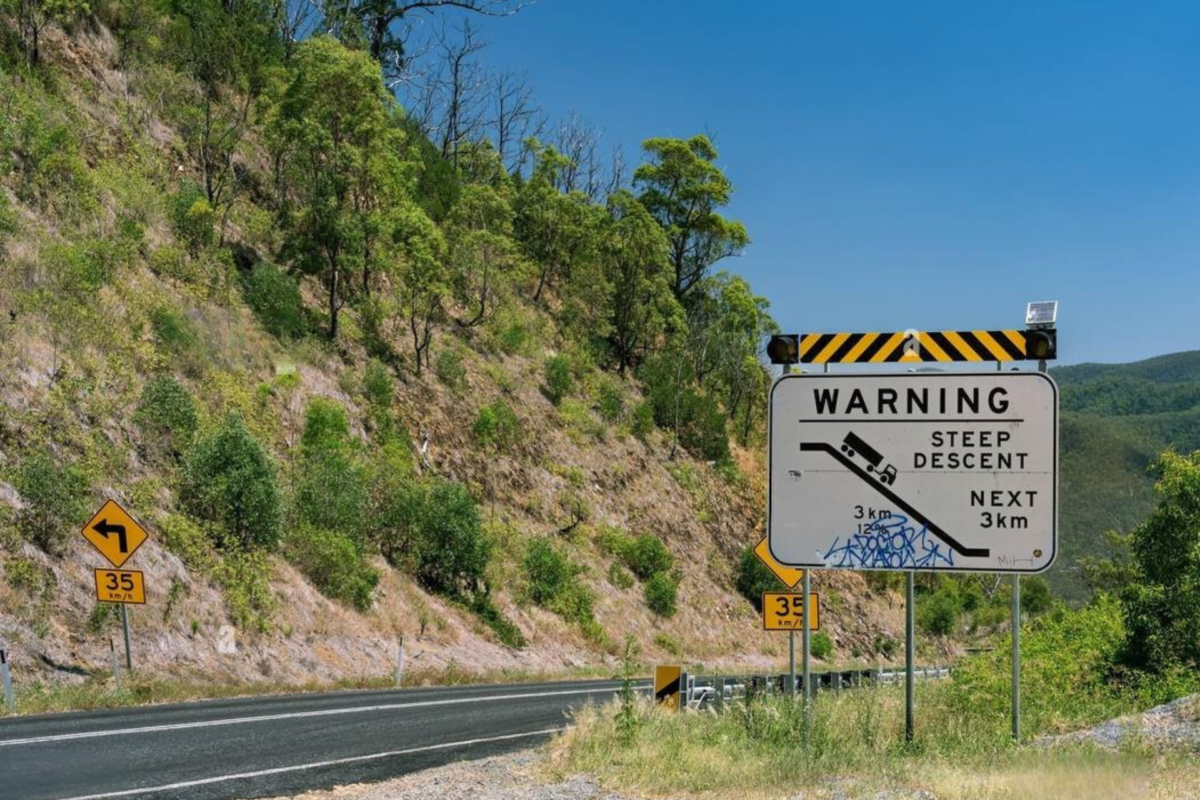
Steep Descents in Australia: NHVR Warns Drivers To Be Cautious!

According to National Heavy Vehicle Regulator (NHVR) released an urgent national alert about steep descents across Australia that expose heavy vehicle operators to deadly conditions.

Fatal crashes, together with almost catastrophic accidents, show that steep slopes require absolute compliance with protective measures.

According to the NHVR, proper safety measures remain vital during operations in demanding conditions.

Recent Incidents Highlighting the Dangers of Steep Descents

Death-causing accidents from heavy vehicles increasingly occur at New South Wales locations Bulli Pass and Mount Ousley. Two fatal crashes during the previous year at Bulli Pass led to multiple deaths with serious physical injuries.

The truck encountered control troubles before breaking through barriers at a backward curving slope on the mountainside.

Data shows that truck drivers now use safety ramps and arrester beds, which have successfully prevented major trucking accidents.

NHVR’s Safety Recommendations upon Steep Descents

According to the NHVR, drivers must follow steep descent warning markers and then select the gear to lower before initiating a sloping descent. The approach protects control systems by lowering brake operations and stopping heat buildup.

New South Wales truck and bus drivers must follow regulations that require them to use gears suitable for controlled speed maintenance instead of principal brake operation.

Repeated heavy use of brakes results in excessive heat generation, causing decreased performance of brake mechanisms while simultaneously elevating the potential for vehicle accidents.

Importance of Vehicle Maintenance and Driver Training

The safety of all driver operations depends on frequent inspections combined with regular maintenance work on braking systems.

Drivers experience significant impairments in stopping ability when their brakes do not operate correctly, mainly when they should make urgent stopping stops.

A vital part of operator responsibility includes driver training to safely handle steep descents as well as warning them about safety risks during these routes.

Route allocation decisions must carefully take into account drivers’ driving abilities and experience when they handle difficult descent sections.

Planning and Preparedness Ahead of Steep Descents

Safety depends on the effectiveness of planning journeys. After considering steep descents, all drivers need to schedule proper rest stops to maintain attention levels.

Through early knowledge of dangerous areas such as Bulli Pass, drivers can develop heightened caution levels.

Sticking to road signs on the one hand and following directions on the other while maintaining strict speed limits set up an essential safety protocol for protecting everyone using the roads.

Read More: Heavy Vehicle Detours: Updates Near Wallendbeen Bridge

Enhancing Road Safety on Steep Descents in Australia with Fleet and Compliance Software

Steep descents in Australia present significant challenges for heavy vehicle operators. Recent NHVR alerts highlight the core importance of correct equipment operation alongside vehicle upkeep, complete driver education, and detailed planning steps for routes.

The accident-prevention capabilities of Manage Vehicle’s advanced fleet and compliance software are essential for any safety strategy.

The systems evaluate vehicle speed combined with brake system activity and driver fatigue levels in live operation to notify fleet administrators about dangers that are beginning to intensify.

When drivers use these safety measures to handle dangerous geographic conditions, they achieve safer journeys, reduced accident probabilities, and more substantial road safety outcomes.

The reduction of risks for steep descents depends on safety protocols, vehicle maintenance, and driver readiness preparation.

The system combines our fleet and compliance software to improve safety because it tracks driver routes and speeds and sends immediate maintenance messages.

Discover: Why Driver Fatigue Is a Serious Risk for Transportation Businesses

Why Choose Manage Vehicle’s Fleet and Compliance Software?

The NHVR’s proactive stance serves as a critical reminder of the responsibilities shared by drivers and operators in ensuring the safety of Australia’s roads. Our fleet and compliance software alerts drivers to potential near-fatal accidents while descending.

Your fleet business advancement is now reachable through our current SaaS solutions. Talk to us right now about our modern fleet management software that will modernize your operations and protect your safety and compliance.

Contact us right now to utilize our state-of-the-art SaaS solutions, which will revolutionize your fleet operations.

How Much Do Truck Drivers Earn in Australia? Salary & Wages

If you are curious to know how much do truck drivers earn in Australia, then lets take a glance below:

Truck driving is beyond an occupation; it is the lifeblood of the economy as a whole in Australia. It keeps the transportation of goods over long distances and also sustains a continuous flow of supply chains and mobility of goods for commercial purposes.

Trucking makes the profession not only a job but a vital part of the nation’s operations, offering opportunities for drivers at all skill levels, from beginners to seasoned professionals.

This article covers essential topics, including hourly wages, minimum salaries, high-paying roles, industry demand, and what it takes for one to succeed at being a truck driver in Australia.

How Much Do Truck Drivers Earn in Australia? Salary & Wages?

Truck drivers’ salaries differ from one place to another depending on their experience, geographical location, and truck driving kind. On average, truck drivers earn approximately $35.75 per hour, translating to an annual salary between $65,000 and $85,000.

Trucking is a profession that fills your pockets and promises the highest of peaks despite presenting challenges such as long hours and extensive travel.

However, these figures are highly variable according to specific roles or responsibilities within the sector.

How Much Do Truck Drivers Earn Per Hour in Australia?

The hourly wage for truck drivers in Australia varies depending on experience, location, and the nature of the job. On average, drivers earn around $35.75 per hour.

Entry-level positions may start at approximately $29 per hour, while experienced drivers, especially those handling specialized or long-distance routes, can earn up to $45 per hour.

What is the Minimum Salary of a Truck Driver in Australia?

The minimum salary for truck drivers in Australia typically starts at around $62,049 per year, equating to approximately $29.62 per hour.

This base salary can increase with additional qualifications, experience, and endorsements, such as obtaining a Heavy Combination (HC) or Multi-Combination (MC) license, which can lead to higher-paying opportunities.

Who Is the Highest-Paid Truck Driver in Australia?

Among truck drivers, those operating interstate routes or handling specialized freight, such as road train drivers in remote areas, often command the highest salaries. Interstate drivers can earn between $120,000 and $140,000 annually.

In some instances, road train drivers reportedly earn up to $150,000 per year, reflecting the demanding nature of their work.

Also Read: Australia’s EV Transition: Key Wins and Challenges Ahead of 2025

Is Truck Driving a Good Job in Australia?

Truck driving in Australia is not just a rewarding career in terms of competitive salaries and opportunities for advancement, but it also offers a sense of stability.

The logistics industry, which includes truck driving, is part and parcel of the Australian economy, thus keeping jobs secure in tough times.

The job requires one to spend long hours working and away from home for long periods, always under safety regulations. For those who value independence and adjustment to this form of life, truck driving can be a rewarding career.

Is Owning a Truck Profitable in Australia?

You can consider being an owner-operator in Australia if you want an entrepreneurial approach. Some truck operators are earning $63.89 per hour.

However, profitability depends on factors such as securing consistent contracts, managing operating expenses, and navigating market fluctuations. Success requires business acumen, industry knowledge, and effective cost management.

How Much Do a B-Double Truck Drivers Earn in Australia?

B-Double drivers, who operate complex multi-trailer combinations, are compensated for their specialized skills. The average salary for Heavy Combination (HC) drivers, which includes B-Double operators, is approximately $77,716 per year, or $39.85 per hour.

Salaries can increase with experience and the complexity of the routes driven.

Are Truck Drivers in High Demand in Australia?

The Australian trucking industry is currently experiencing a high demand for drivers, driven by factors such as an aging workforce and increased freight needs.

This demand has led to various initiatives aimed at attracting new drivers, including training programs and incentives.

Now Trending: Fatigue Breaches: Work, Rest, Penalties Under HVNL Rules 2025

How Hard Is It to Become a Truck Driver in Australia?

Entering the truck driving profession in Australia requires obtaining the appropriate licenses, such as a Heavy Rigid (HR) or Heavy Combination (HC) license, which involves both theoretical and practical assessments.

Additional certifications, like fatigue management training, may be necessary depending on the job requirements. While the training process is structured, the physical and mental demands of the job require a commitment to safety and professionalism.

Is There a Shortage of Truck Drivers in Australia?

At the moment, the shortage of truck drivers is adding to the increase in the number of people working in the older age group and factors related to the difficulty of enticing young people to take on the job.

This shortage has implications for the supply chain and has prompted industry stakeholders to implement programs aimed at workforce development and retention.

The situation for truck drivers in Australia is foreseeable as the need for them increases, even with labour shortages. Growing freight demands initiated an actual campaign to engage more applicants to the profession and improve conditions of employment.

Earning potential remains affected by factors such as type of work, geographical location, and experience. That’s how this continues to evolve, with numerous opportunities.

What Do Truckies Roughly Earn in Australia?

Truckies distinctively earn in Australia as it will depend on their experience, the location, and the freight they are hauling. Generally, truckies can expect to make an average of $65,000 to $85,000.

Nevertheless, these specialized or long-haul carriers tend to earn quite a lot, with some reporting figures as high as $150,000 per year for very challenging jobs.

All things considered, truck driving in Australia has several earning potentials connected with various conditions. Though it has exceptional challenges, being in truck driving occupies a very integral and sometimes rewarding place in the economy of Australia.

Despite this new workload, some of you may even be looking at truck driving as a career option or are already searching for supplementary qualifications. Luck would have it that there are training programs available to get entry or advancement in the industry.

Explore More: Olympic Highway Accident: Truck Driver Charged in Riverina Crash

How are Australia’s Truck Drivers Faring on the Road Today?

For a long time, road accidents involving more than one vehicle have occurred and implicated some of Australia’s truck drivers.

The dangers and risks of truck driving in Australia have been steadily decreasing despite the fact that there are more trucks.

According to the NTI’s National Truck Accident Research Centre (NTARC), the recorded number of truck accidents is down by 16% year-on-year.

It comes as an outstanding achievement—even as freight movement and heavy vehicles have been increasing by 50% since 2003.

The statistics changed into the fact that in as high as 70% of cases, trucks would not be the reason behind the fatal truck and car crashes in 2021.

The leading causes of truck accidents are the following:

  • Fatigue
  • Inattention/distraction
  • Inappropriate vehicle positioning
  • Fire
  • Medical event
  • Inappropriate speed

What are the best practices that are driving this change forward?

Best Practices for Australia’s Truck Drivers Faring on the Road

Driver Alerts for Truckies in Australia

Truck drivers face a lot of challenges and uncertainties while they’re out on the road. Although they are trained and adequately prepared for the job, things can become quite tricky after long hours of being on the job.

A big part of fleet management is improving communication and providing reliable driver alerts and assistance. The help they are invaluable in helping to reduce accidents.

Driver Reporting or Scorecards

It’s important to remember the human element of truck driving. Truck drivers have a responsibility to keep cargo safe and secure while out on the road and the collective safety of other drivers.

However, they’re only human, and they are still vulnerable to fatigue and developing bad habits to cope with the difficulties of the job.

By implementing driver reporting or scorecards, companies can keep better track of their behaviour. From there, you can easily spot problematic drivers that might need additional assistance or training.

It also makes it easier to give incentives to the drivers who are performing better than others—a great way to boost morale and maintain good performance.

Read More: Why You Should Keep an Electronic Work Diary (EWD)?

Reports on Diagnostic Trouble Codes

Timely and consistent vehicle maintenance is crucial if you want to ensure the safety of your drivers and other people on the road. It is essential to keep track of issues and take care of them as soon as possible.

You can use a fleet management software system to ensure that you will receive updates on any issues with the vehicle. Diagnostic trouble codes (DTC)  will help you spot any problems early on and fix them before they become a safety issue. 

Better Safety Procedures for Australia’s Truck Drivers

Ensure that everyone on your team is aware of and understands basic safety procedures. These rules should be consistent and readily available for anyone who needs a refresher on what to do.

Don’t leave any room for misinterpretation or misunderstanding of your safety procedures. Keep the rules clear, cohesive, and convenient.

Not only those but there are regular training sessions for all drivers, from novices to veterans. Technology is ever-evolving, and even the most experienced need to keep up to date with new systems and rules.

Australia’s Truck Drivers: Enhancing Safety with Fleet Management

The number of multi-vehicle accidents that involve trucks has significantly decreased over the years. Thanks to stricter road safety laws and safer vehicle standards, Australia’s roads and all drivers are safer than ever.

Proper fleet management and driver safety standards will improve in the coming years with more advancements in technology and data-driven insight. It’s trying hard to stay right on the right track in meteorological data, though numbers tend to fluctuate at times.

If you are looking for a reliable and practical solution to improve your drivers’ safety and performance, we can help you.

Manage Vehicle offers an intelligent fleet management system that allows managers and owners to run their fleet smoothly on the road with no high fuel costs, extra miles, or delays in delivery.

Use software for modern fleet and compliance management. Get a quote for your company now!