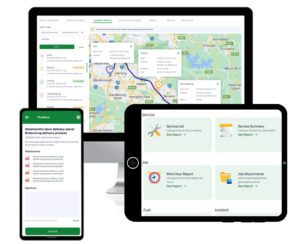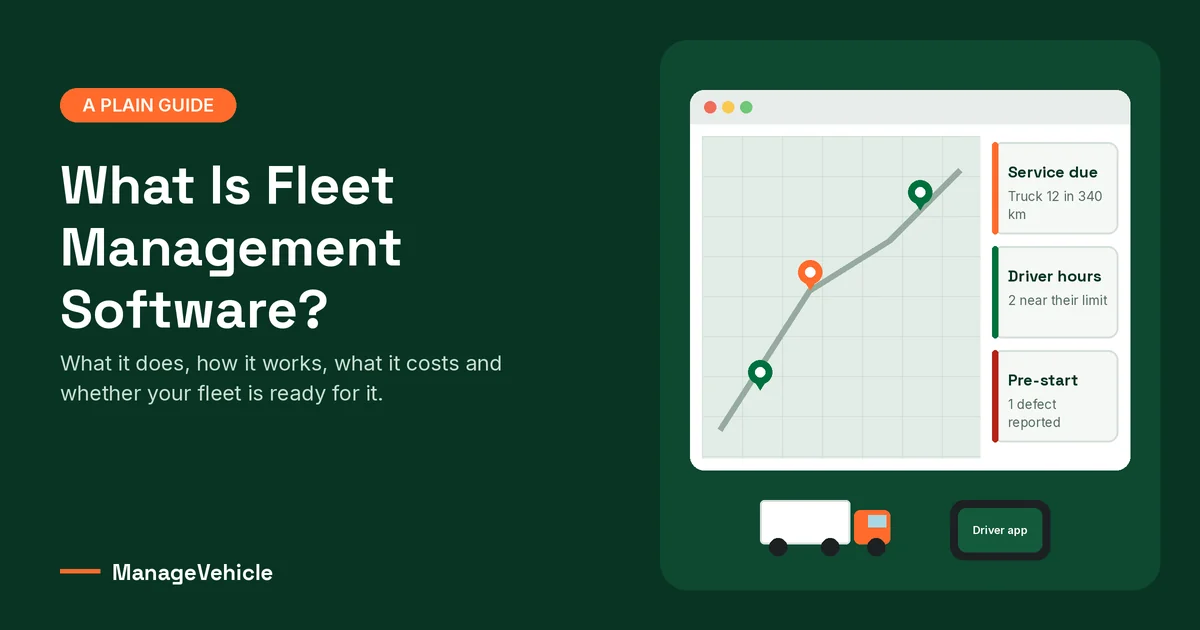
What is fleet management software? It’s a platform that puts everything about running your vehicles in one place: where they are, when they’re due for a service, who’s driving them, and whether you’re meeting your compliance obligations. Instead of whiteboards, spreadsheets, paper diaries and phone calls, the office and the drivers work from the same live information.
For Australian transport operators, it’s also become one of the main ways to show you’re meeting your obligations under the Heavy Vehicle National Law. This guide explains what fleet management software does, how it works, why it matters, what it costs, and how to tell if your fleet is ready for it.
What is fleet management software, in plain terms?
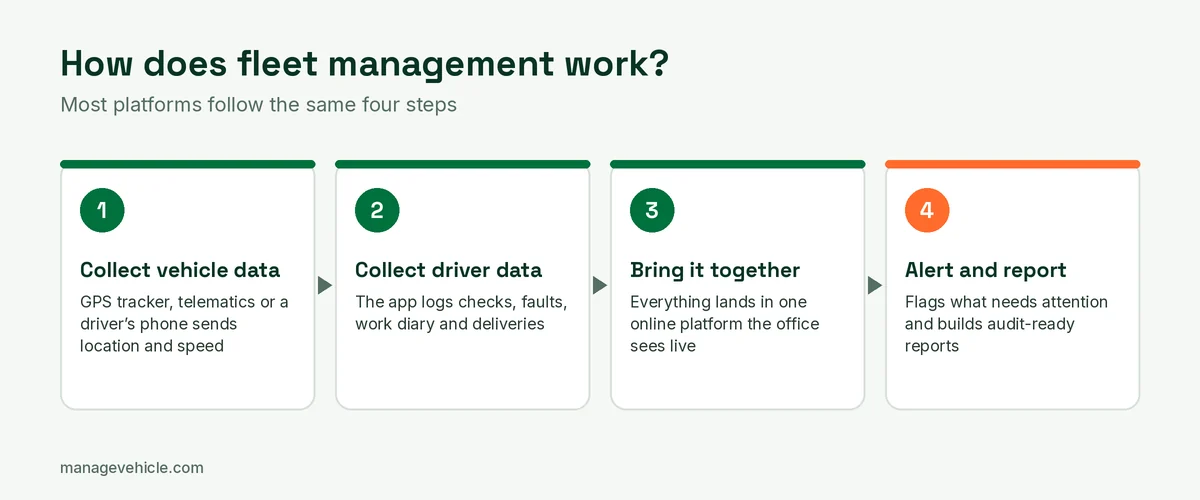
Think of it as your fleet’s shared logbook, map and to-do list, all online. A good system answers the questions you’d otherwise chase by phone:
- Where is each vehicle right now, and where has it been?
- Which vehicles are due for a service or registration?
- Which drivers are close to their work and rest limits?
- Did today’s pre-start checks find any defects?
- What happened in that incident on Tuesday?
Small operators often start with tracking and maintenance. Larger fleets usually add jobs, compliance and driver management on top.
How does fleet management work?
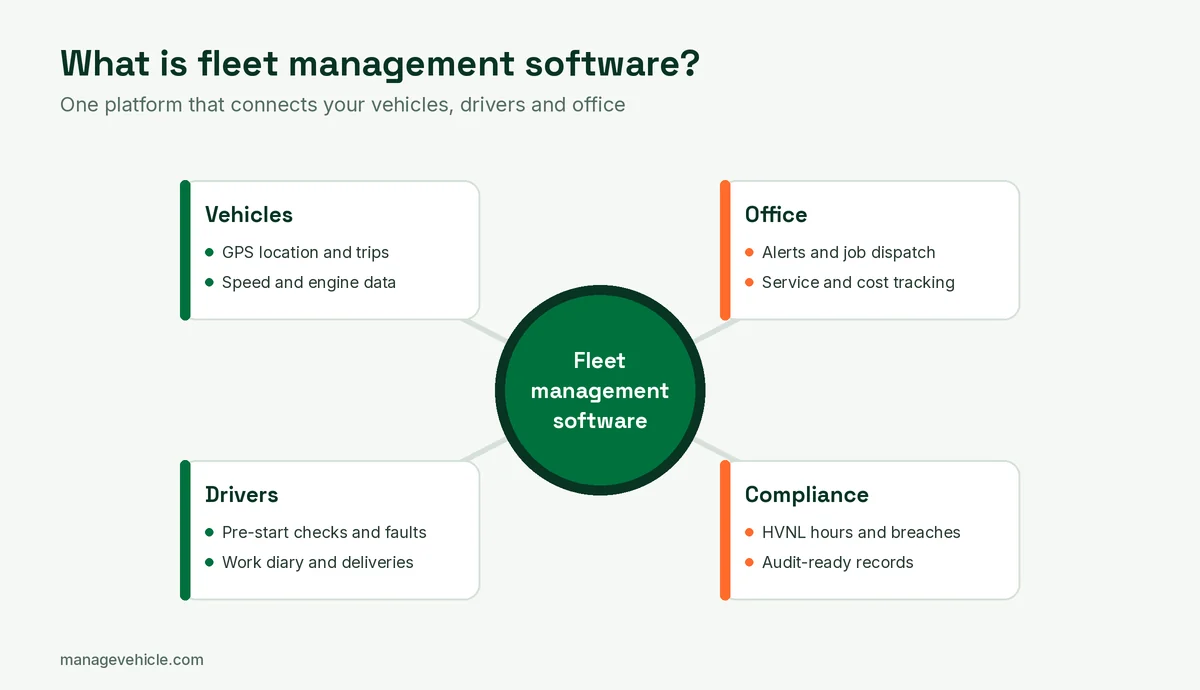
Most fleet management software works in four steps:
- Collect data from the vehicle. A GPS tracker or telematics device sends location, speed and engine data every few seconds. Some platforms, including ours, can also run on drivers’ existing phones, so there’s no hardware to buy to get started.
- Collect data from the driver. Drivers use an app to log pre-start checks, report faults, complete their work diary and record deliveries.
- Bring it together online. Everything lands in one web platform the office can see in real time.
- Turn it into alerts and reports. The system flags what needs attention, like an overdue service, a speeding event or a driver close to their hours, and builds the reports you need for audits.
What does fleet management software do?
Most platforms cover the same core jobs. These are the ones Australian operators use most:
|
Feature |
What it does for you |
|
Live location and trip history for every vehicle |
|
|
Service reminders by kilometres, hours or date, plus defect logging |
|
|
Driver behaviour |
Alerts for speeding, harsh braking and other risky driving |
|
Work and rest hours recorded digitally instead of on paper |
|
|
Fatigue and compliance |
Breach alerts, licence and permit expiry tracking, audit records |
|
Job dispatch |
Send jobs to drivers and capture proof of delivery |
|
Fuel and costs |
Track fuel use and running costs per vehicle |
For a closer look at which features matter for a smaller operation, see our guide to fleet management software features for small fleets.
Isn’t that just vehicle tracking? No. Tracking tells you where a vehicle is. Fleet management software also handles the maintenance, drivers, compliance and paperwork around it. We explain the difference in vehicle tracking vs fleet management software.
Why fleet management is important
The benefits of a fleet management system come down to four things:
- Lower running costs. Services happen on time, so you get fewer breakdowns. You can see and cut idling, wasted kilometres and fuel.
- Safer drivers. Speeding and fatigue alerts reach someone who can act on them, while it still matters.
- Easier compliance. Under the HVNL, everyone in the Chain of Responsibility must take reasonably practicable steps to manage safety risks, not just drivers. Software gives you the records to show you did. That matters more since the amended HVNL started on 1 August 2026 and penalties went up.
- Less admin. No collecting paper diaries, chasing pre-start sheets or ringing drivers to find out where a load is.
Is your fleet ready for fleet management software?
You’ll probably get value from it if a few of these sound familiar:
- You run more than a handful of vehicles, or your drivers do work over 100 km from base
- Someone spends hours each week on paper diaries, pre-start sheets or service records
- You’ve missed a service, registration or licence renewal in the past year
- You’ve had a roadside breach, a defect notice or an incident you struggled to piece together
- You’re preparing for an audit or working towards Heavy Vehicle Accreditation
If you only run one or two light vehicles locally, a spreadsheet may still do the job for now.
How much does fleet management software cost?
Most fleet management software in Australia is priced per vehicle, per month. Some providers also charge for each user, for an electronic work diary, or for hardware, so check what’s included before you compare prices.
As an example, Manage Vehicle’s pricing is $30 per road vehicle per month for the first 30 vehicles, then $20 per vehicle after that, and $7 per month for trailers and other non-powered assets (AUD, excluding GST). Drivers, office users and the NHVR-approved EWD are included, and there’s no hardware to buy. A fleet of 40 road vehicles would pay $1,100 a month.
What to look for when choosing
- Built for Australian rules. It should handle HVNL work and rest hours, and ideally include an NHVR-approved EWD.
- Easy for drivers. If the app is hard to use, drivers won’t use it, and the data won’t be there when you need it.
- Everything in one place. Tracking, maintenance, compliance and jobs in one system saves you paying for, and juggling, several.
- Clear pricing. Know exactly what you’ll pay per vehicle, and whether users, the EWD or hardware cost extra.
See it in action
Manage Vehicle is fleet management software built for Australian transport operators, covering tracking, maintenance, fatigue, EWD and compliance in one platform. Book a demo and we’ll show you how it would work for your fleet.
Frequently asked questions
How does fleet management software work? It collects data from your vehicles (through GPS trackers, telematics devices or drivers’ phones) and from your drivers (through an app for checks, faults and work diaries). It brings it all together in one online platform, then sends alerts and builds reports so the office knows what needs attention.
Who needs fleet management software? Any business that relies on vehicles to make money: transport and logistics, construction, trades, waste, councils and passenger transport. It’s most valuable for heavy vehicle operators, who also have HVNL compliance to manage.
How much does fleet management software cost? In Australia, it’s usually priced per vehicle per month. Manage Vehicle costs $30 per road vehicle per month for the first 30 vehicles, $20 after that, and $7 for trailers (AUD, excluding GST), with users and the EWD included.
Do I need to install hardware? Not always. Some platforms, including Manage Vehicle, can run on drivers’ existing phones and tablets. Dedicated GPS trackers or telematics devices give more detailed vehicle data if you need it.
Is fleet management software only for big fleets? No. Small fleets often get the quickest payback, because one person is usually juggling everything. Per-vehicle pricing means you only pay for what you run.