Vehicle Temperature Monitoring for Refrigerated Fleets
Know your load is at the right temperature from pickup to drop-off. ManageVehicle's vehicle temperature monitoring shows live readings, alerts you when things drift and keeps a record for every load.
What changes when your fridge units report in on their own.
BEFORE MANAGE VEHICLE
Manual, fragmented and reactive
Finding out a fridge failed when the customer rejects the load
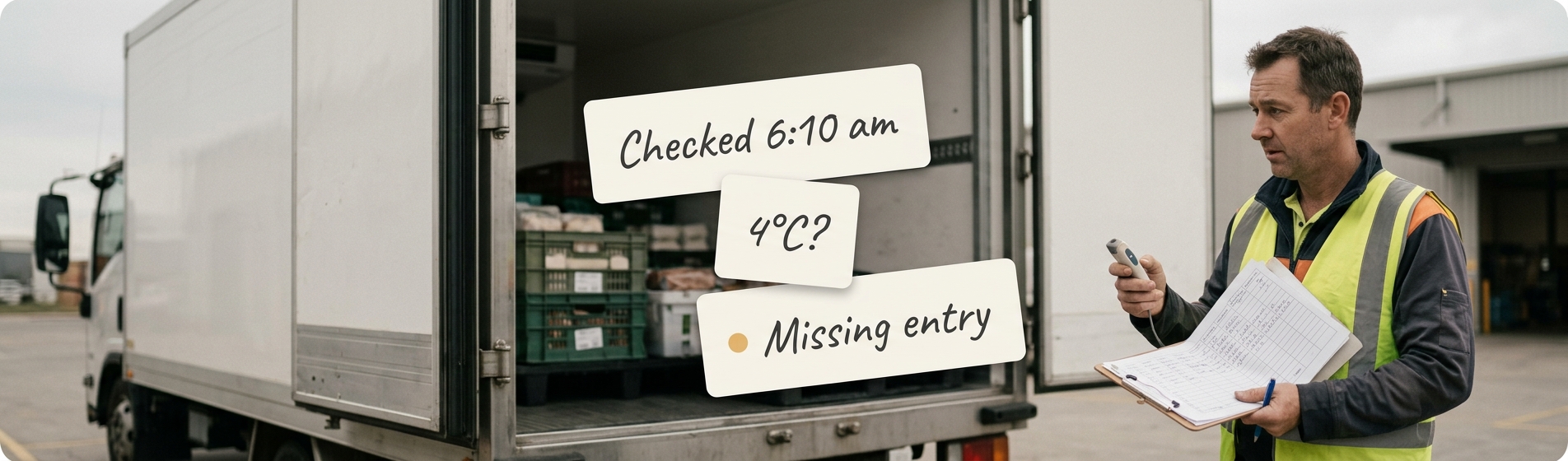
Drivers writing temperatures on a paper log
Customers asking for proof the cold chain held
No idea which unit keeps running warm
Spoiled stock and nobody can say when it happened
AFTER MANAGE VEHICLE
Connected, live and proactive
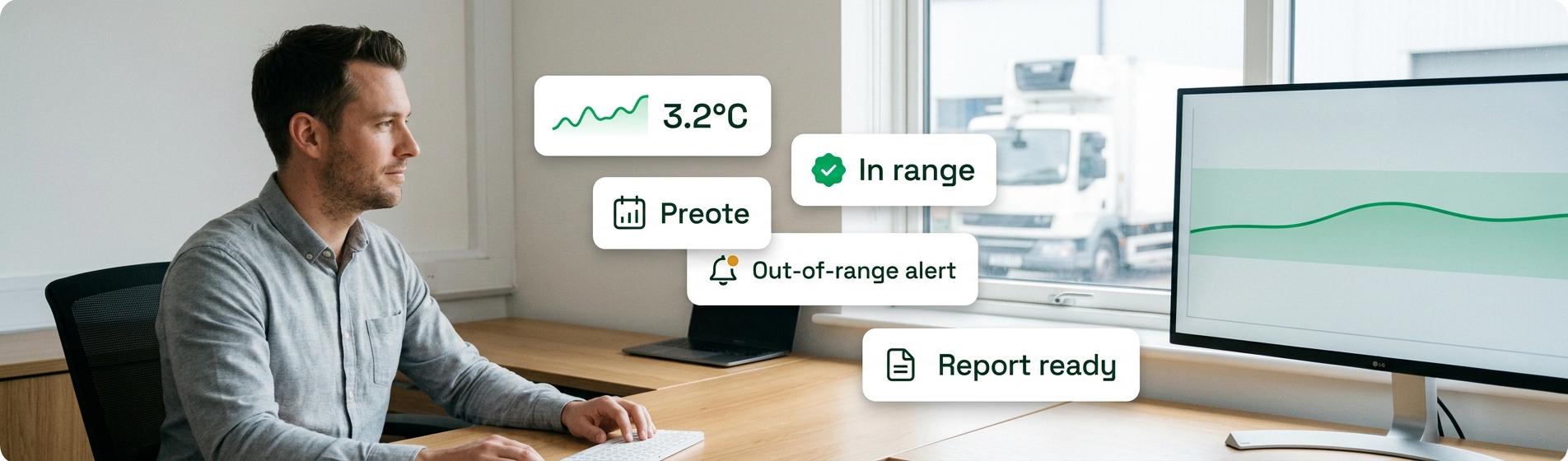
An out-of-range alert while there's still time to act
Readings recorded automatically through the trip
A temperature record for every load, ready to send
Temperature history by vehicle and trailer
Time and location of every temperature change
What Is Vehicle Temperature Monitoring?
Vehicle temperature monitoring uses sensors in a refrigerated truck or trailer to send temperature readings to fleet software, so you can watch the load live and keep a record of the trip.
Temperature Sensor
Measures the load area.
Telematics Device
Sends readings with location.
ManageVehicle
Checks readings against your range.
Alerts & Records
Warns you early and saves the history.
Product experience
From the sensor in the box to proof for the customer
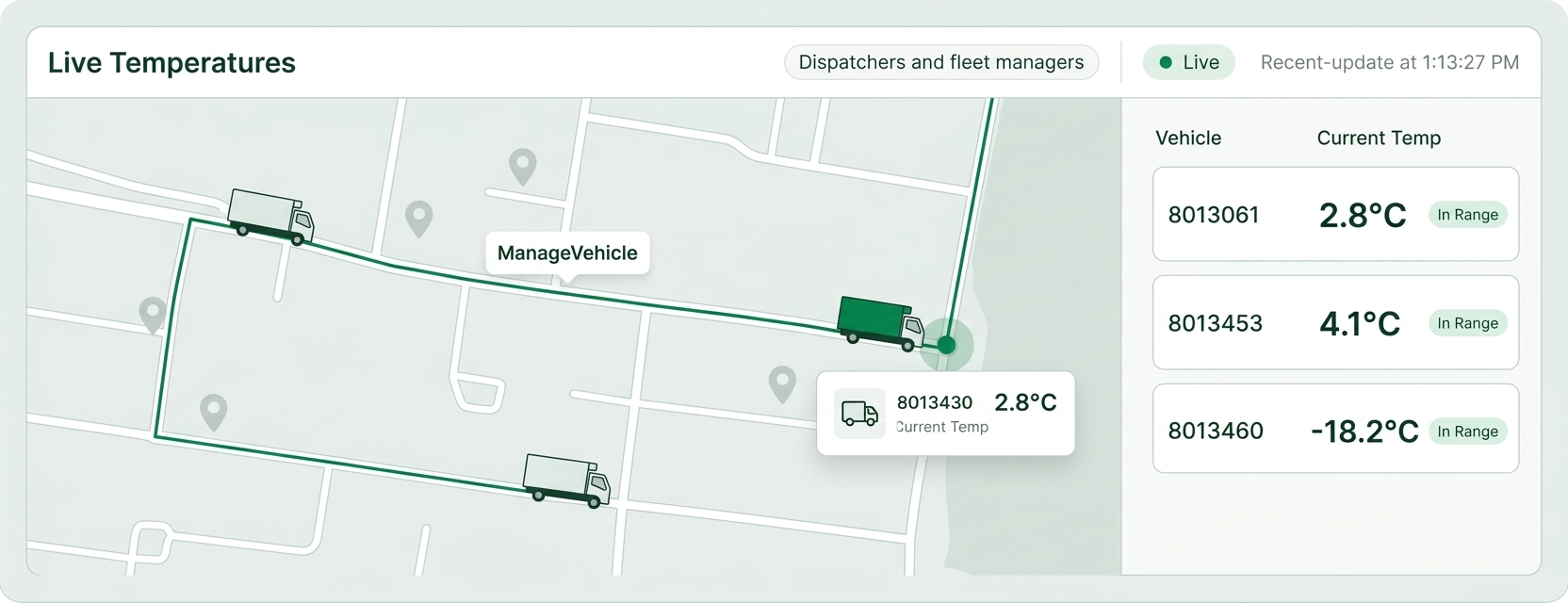
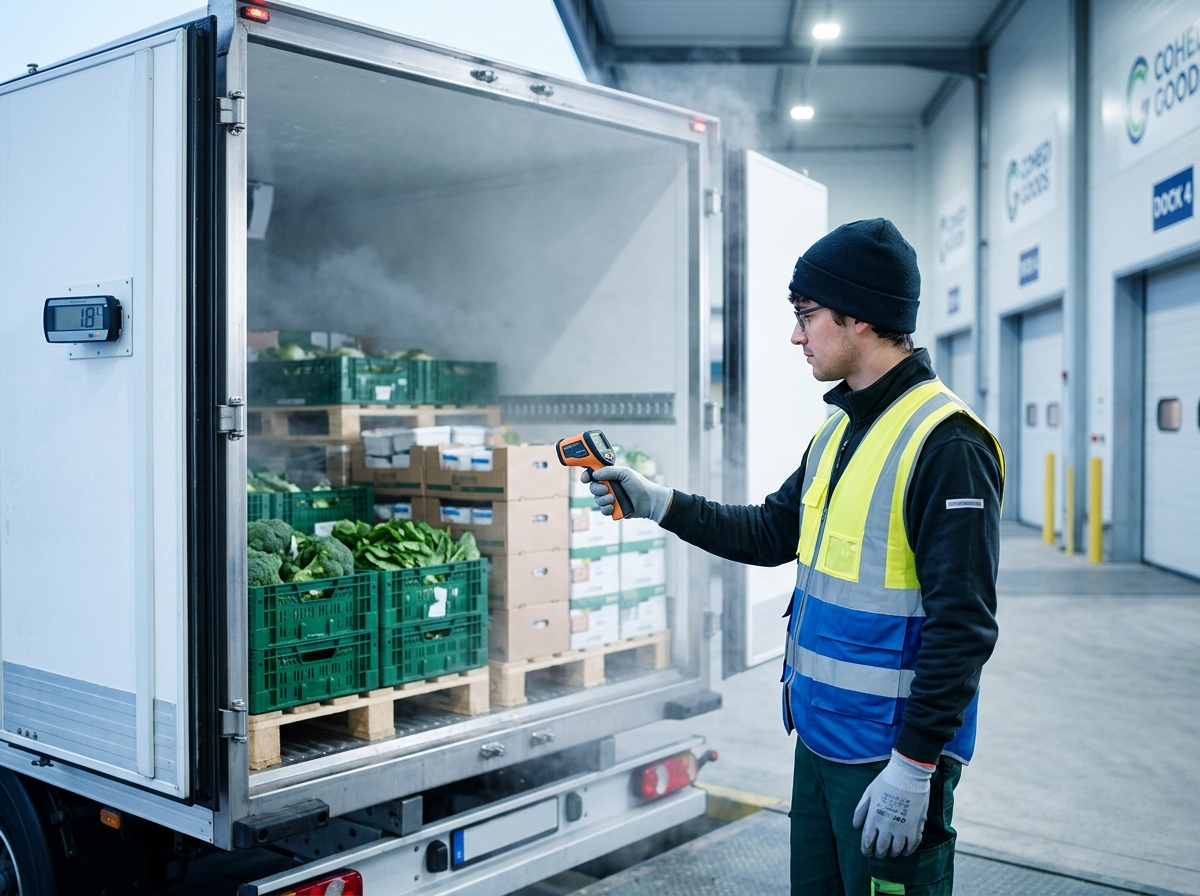
See load temperatures in real time
One screen for location and temperature.
Check the current temperature of every refrigerated vehicle on the same map you use for tracking. No calling drivers to read the display.
What your team can do:
Live temperature per vehicle
Location next to each reading
Fleet-wide view
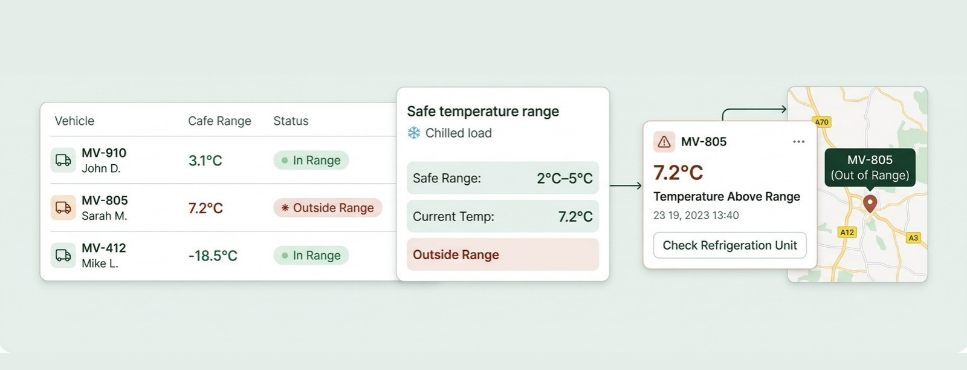
Get warned before the load is at risk
Act early, save the load.
Set the safe range for chilled or frozen loads. If a reading goes outside it, your team gets an alert so the driver can check the unit before stock is lost.
What your team can do:
Set ranges per vehicle or load
Out-of-range alerts
Choose who gets notified
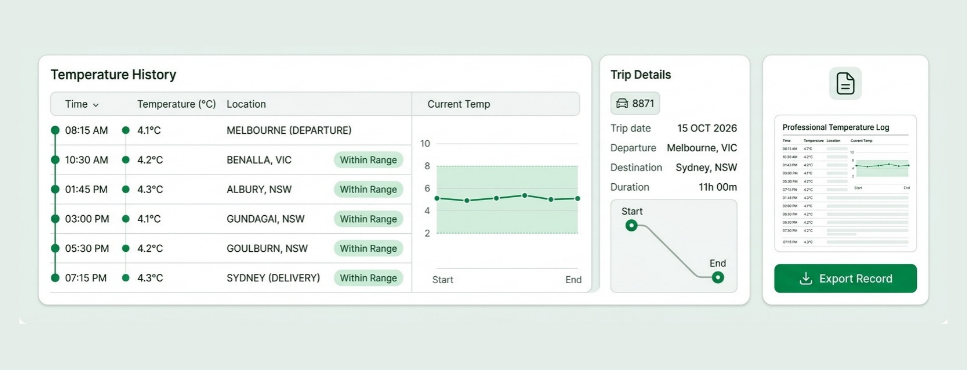
A temperature record for every load
Proof you can hand over.
Every reading is saved with the time and location. Pull up the record for a trip and show the customer the cold chain held from start to finish.
What your team can do:
Readings saved per trip
Time and place for each reading
Records ready to share
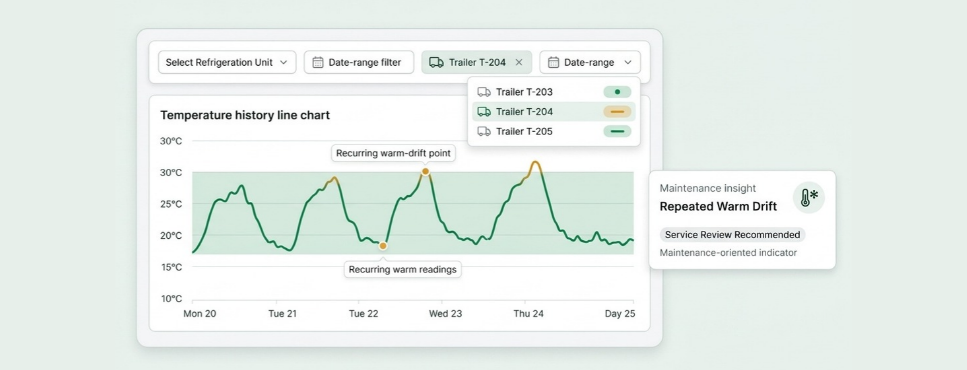
Spot fridge units that are struggling
Fix the unit before it fails on the road.
Look back at temperature history by vehicle or trailer. A unit that keeps drifting warm is a service job waiting to happen.
What your team can do:
History by vehicle and trailer
Spot repeat problems
Link to maintenance
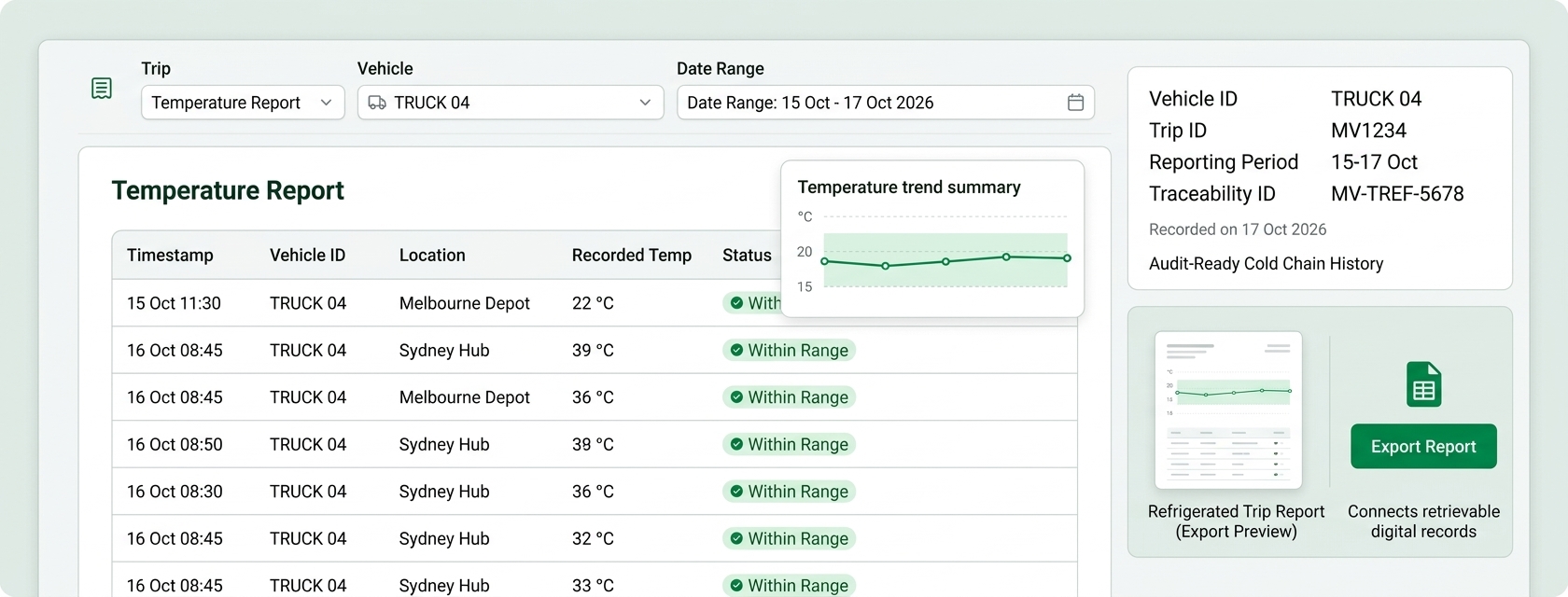
Temperature reports for customers and audits
Clean records without the clipboard.
Export temperature reports for a trip, a vehicle or a date range. Useful for customer requests, quality checks and food safety audits.
What your team can do:
Reports by trip or date
Out-of-range events listed
Export to share
Stop Asking "Is the Fridge Still Cold?"
The cold chain questions your team gets every day, answered without a phone call.
What's the temp in Trailer 3 right now?
Check the live reading.
Did it go out of range on the way?
Review the trip record.
When did the problem start?
See the time and location of the alert.
Can the customer have proof?
Export the temperature report.
Which unit keeps running warm?
Compare history by vehicle.
Cold chain records that stand up to questions
Customers and auditors want to see that the load stayed in range. Automatic, time-stamped readings give you that proof without relying on handwritten logs.
Readings with time and place
Every reading tied to when and where it was taken.
Out-of-range events on record
Show what happened, when, and how quickly it was handled.
Works next to your EWD
Temperature covers the load. MV Driver, our NHVR-approved EWD, covers the driver's work and rest.
Connected Temperature & Fleet Operations
Temperature data means more when it sits next to the job, the route and the vehicle's maintenance.
Temperature + jobs
Attach Temperature Records to Deliveries
A connected delivery record can include
Load temperature on the trip
Delivery time
Location
POD
Signature or photos
Temperature + GPS
See Where a Problem Started
A connected trip record can include
Location of each reading
Route taken
Stops and dwell
Speed
Temperature + maintenance
Turn Warm Units Into Service Jobs
Maintenance workflows can include
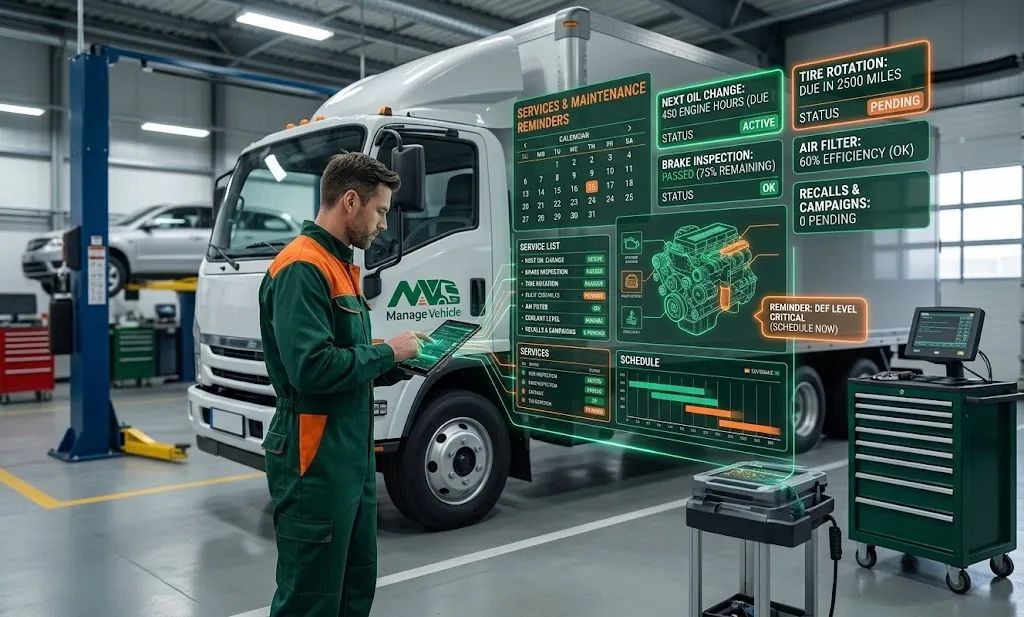
Fridge unit service reminders
Defects
Repairs
Service history
Temperature + alerts
Get the Right People Moving
Alert rules can include
Range per vehicle
Who gets notified
Alert history
Follow-up notes
Manual temperature logs vs Automatic monitoring
A paper log shows what the driver wrote down. Monitoring shows what actually happened.
Real operators, real problems, and what changed once everything sat in one system.
Brandon Manion Coaches
Problem
Maintenance across the bus fleet was difficult to track, with information spread across driver checks and maintenance records.
Result
Drivers complete daily inspections, record odometer readings and report faults directly in Manage Vehicle. The maintenance team has clear, up-to-date visibility of what needs attention. Better maintenance visibility. Fewer missed issues. A fleet that stays on top of its maintenance.
G & V Logistics
Problem
Limited visibility of where loads are while in transit, and difficulty quickly accessing evidence when an incident occurs.
Result
With telematics, G & V Logistics can see where their loads are in real time and share location details with clients immediately. In the event of an incident, they can quickly access and share relevant footage with insurers or other parties.
Alpine Civil Earthmoving
Problem
Limited visibility of how equipment is being used on site, making it difficult to track operating hours and actual equipment utilisation.
Result
Telematics gives Alpine Civil clear visibility of where equipment is and how long it has been operating on site. This helps them monitor utilisation, track equipment activity and better understand how their machines are being used. Better equipment visibility. Better utilisation tracking. More control over site operations.
Veera Transport
Problem
Jobs, PODs and invoicing were previously managed in batches, with the team waiting until the end of the week to collect everything and process invoices.
Result
Jobs are now allocated, driver approval is captured, PODs are recorded, and invoices are sent to the client within 15 minutes of job completion. Faster invoicing. Faster payments. Better cash flow.
Vehicle Temperature Monitoring FAQs
It uses sensors in refrigerated trucks and trailers to send temperature readings to ManageVehicle, so you can watch loads live, get alerts and keep a record for each trip.
Yes. Set a safe range for each vehicle or load type and choose who gets notified if a reading falls outside it.
Yes. Each trip has its own temperature record that you can export and share.
Yes. Set the range that suits the load, whether it's chilled, frozen or another controlled temperature.
A supported temperature sensor and telematics device in the refrigerated vehicle or trailer. We'll talk through the right setup for your fleet during the demo.
Yes. Every reading is saved with the location, so you can see where and when the temperature started to drift.
Yes. A unit that keeps running warm shows up in its history, so you can book it in before it fails on a run.
No. Readings are recorded automatically, so drivers can focus on driving.
Explore More Manage Vehicle Solutions
Geofencing & Alerts
Stay on top of your fleet's operations and team member whereabouts with our real-time GPS fleet tracking and...
Get a 30-minute walkthrough of ManageVehicle set up around your fleet. We'll show you how tracking, EWD,
maintenance and risk management work together, and answer your HVNL questions on the spot.
Walkthrough based on your fleet size and setup
Your HVNL and EWD questions answered live
Local Australian support team
See ManageVehicle in action
Tell us a bit about your fleet and we'll be in touch within one business day.







 Brandon Manion Coaches
 G & V Logistics
 Alpine Civil Earthmoving
 Veera Transport