How Does GPS Vehicle Tracking Actually Work?

Quick answer: A GPS tracker installed in a vehicle receives signals from satellites orbiting Earth, calculates its position using the time difference between those signals, and then transmits that position over a cellular or satellite network to cloud-based software. The fleet manager sees every vehicle’s location, speed, route history, and driver behaviour on a dashboard or mobile app.

That is the short version. Below is the full technical breakdown: what the data actually captures, how it feeds Australian heavy vehicle compliance, and what the law says about tracking your drivers.

How GPS Determines a Vehicle’s Location

GPS stands for Global Positioning System, a network of approximately 31 active satellites operated by the United States Space Force, orbiting roughly 20,200 kilometres above Earth. Each satellite continuously broadcasts a signal containing its precise position and the exact time the signal was sent.

A common misconception is that the tracker in your vehicle sends signals up to those satellites. It does not. The tracker is a receiver. It listens to satellite signals, measures how long each signal took to arrive, and converts that time delay into a distance. To pinpoint a position in three dimensions (latitude, longitude, and altitude), the receiver needs signals from at least four satellites simultaneously. This process is called trilateration.

Trilateration circles

The U.S. Federal Aviation Administration’s technical standard puts basic GPS accuracy at approximately 7 metres, 95% of the time, anywhere on or near the Earth’s surface. In practice, a well-positioned fleet-grade receiver in open sky conditions can achieve 3 to 5 metre accuracy. Urban canyons (tall buildings on both sides of a street), heavy tree cover, tunnels, and underground parking degrade that accuracy or block the signal entirely.

For Australian fleet operators running vehicles across metro, regional, and remote areas, GPS satellite coverage itself is not the problem. The satellites cover every square metre of the continent. The challenge is what happens after the tracker calculates its position: getting that data back to you.

How the Tracker Sends Data to Your Dashboard

The GPS receiver determines the vehicle’s position. A separate communication module then transmits that data to a cloud server. These are two distinct systems working together inside the same device.

  1. Cellular (4G/LTE). Most fleet trackers use a SIM card and the mobile network to transmit location data. In metro and major regional areas across Australia, this delivers near-real-time updates, typically every 10 to 60 seconds depending on the device configuration. The tracker packages each position fix with a timestamp, speed, heading, and any sensor data (ignition status, harsh braking events, engine diagnostics), then sends it to the platform’s servers.
  2. Satellite communication. For vehicles operating in areas without cellular coverage, such as inland freight corridors, remote mining sites, or outback pastoral stations, a satellite-enabled tracker sends data via satellite networks like Iridium or Inmarsat. This costs more per data point and updates less frequently, but it provides coverage where cellular cannot.
  3. Store-and-forward. Some trackers store position data locally when cellular signal drops and upload the stored data once the vehicle returns to coverage. This means you get a complete route history, but it is not truly real-time during the coverage gap. For a 20-vehicle fleet running Adelaide to Perth, for example, you may see live positions across the Nullarbor only if you are using satellite-capable devices. A cellular-only device will show a gap through the coverage dead zone and backfill the route history when the truck hits coverage again on the other side.

Manage Vehicle’s GPS tracking platform supports both cellular and satellite data feeds, so operators running mixed metro and regional routes see all their vehicles on one dashboard regardless of coverage conditions.

What Data a GPS Tracker Actually Captures

A basic consumer tracker records location and speed. A fleet-grade tracking system captures significantly more. The specific data points depend on the device, its installation, and the vehicle systems it connects to.

  • Location and movement – latitude, longitude, speed, heading, and altitude at each reporting interval, creating a breadcrumb trail of everywhere the vehicle has been
  • Ignition and engine status – whether the vehicle is running, idling, or switched off; idle-time reports identify vehicles burning fuel while stationary
  • Driver behaviour events – harsh braking, rapid acceleration, sharp cornering, and speeding above set thresholds, each timestamped and GPS-tagged
  • OBD-II and CAN-bus diagnostics – fault codes, fuel consumption data, odometer readings, and engine hours. Engine-hour data is particularly useful for scheduling maintenance on vehicles that idle heavily, since kilometre-based servicing intervals undercount actual engine wear
  • Geofence triggers – virtual boundaries around depots, customer sites, restricted zones, or state borders, generating an alert when a vehicle enters or leaves
  • Trip summaries – start time, end time, distance, duration, stops, and route for each trip, feeding proof-of-delivery, timesheet verification, and after-hours usage monitoring

All of this data flows to a centralised fleet dashboard where it can be filtered, reported on, and exported. For heavy vehicle operators, this is not just operational visibility. It is compliance evidence.

GPS Tracking and Australian Heavy Vehicle Compliance

For operators running vehicles over 4.5 tonnes GVM, GPS tracking data feeds directly into several Heavy Vehicle National Law (HVNL) compliance obligations.

Speed compliance. Under the HVNL Chain of Responsibility provisions, operators, schedulers, and consignors all share liability for speed breaches, not just the driver. GPS speed logs create a timestamped record showing whether vehicles operated within posted limits.

Fatigue management evidence. GPS data showing vehicle start times, stop times, and continuous driving duration provides a cross-check against work diary entries. If a driver’s diary shows a rest break at a location the GPS data places the vehicle in motion, that discrepancy becomes visible.

Maintenance scheduling. The amended HVNL, in effect from 1 August 2026, requires accredited operators to maintain a Safety Management System (SMS) that includes documented maintenance processes. Engine-hour and odometer data from GPS-connected telematics trigger service alerts based on actual usage rather than calendar estimates – the type of evidence NHVR auditors look for when assessing whether an SMS is operating effectively.

Geofencing as operator oversight. A geofence alert showing that an operator actively monitors where vehicles go, and responds when they deviate demonstrates the kind of proactive risk management the HVNL’s primary duty requires.

GPS data on its own does not guarantee HVNL compliance. But it provides the raw evidence that supports an operator’s ability to demonstrate “reasonable steps” under the primary duty. For the full compliance picture, see our guide on telematics and Chain of Responsibility.

Types of GPS Trackers Used in Australian Fleets

Tracker Type Best For Power Source Typical Use
Hardwired (OBD-II or direct wiring) Permanent fleet vehicles: trucks, vans, utes Vehicle battery Real-time tracking, driver behaviour, engine diagnostics, compliance
Plug-in OBD-II Light vehicles, short-term deployments Vehicle OBD port Quick install, basic tracking and diagnostics
Battery-powered (portable) Trailers, containers, plant equipment, tools Internal rechargeable or long-life battery Asset tracking where no constant power supply exists
Solar-powered Trailers, shipping containers, remote assets Solar panel with battery backup Long-term unattended asset tracking
Satellite-enabled Vehicles in remote/regional areas without cellular coverage Vehicle battery or standalone Mining, agriculture, outback freight

For heavy vehicle fleets, a hardwired tracker with CAN-bus integration is the standard. A common gap in heavy vehicle fleets is tracking the prime mover but not the trailer – if you’re running B-doubles or regular trailer swaps, each trailer needs its own tracker with its own compliance history for maintenance, location, and utilisation records.

GPS Tracking and Workplace Surveillance Law

GPS tracking of company vehicles is legal in every Australian state and territory, but it’s classified as surveillance, and each jurisdiction has its own rules around notice, consent, and how data can be used – NSW and the ACT have the most prescriptive requirements, including mandatory written notice periods and visible in-vehicle signage. Covert tracking without proper authorisation is unlawful and carries real penalties under state legislation.

Getting this right before you install a single tracker matters – see our full state-by-state guide to vehicle tracking laws in Australia for the specific notice, consent, and penalty requirements in each jurisdiction.

Choosing a GPS Tracking System for Your Fleet

The right platform depends on your fleet’s specific needs – reporting frequency, coverage in remote areas, integration with your compliance and maintenance systems, data hosting location, and hardware compatibility across a mixed fleet all matter more than any single headline feature.

For a full breakdown of what to evaluate and the questions worth asking any provider directly, see our guide to choosing the best GPS fleet tracking software in Australia.

FAQ

How accurate is GPS vehicle tracking?

Basic GPS accuracy is approximately 7 metres, 95% of the time, per the FAA’s published technical standard. Fleet-grade trackers in open-sky conditions typically achieve 3 to 5 metre accuracy. Accuracy degrades in urban canyons, under heavy tree cover, and inside buildings or tunnels.

Can GPS tracking work without mobile signal?

The GPS receiver calculates position from satellite signals regardless of mobile coverage. What changes without a mobile signal is the ability to transmit that data in real time. Cellular-only trackers store data locally and upload it when coverage returns. Satellite-enabled trackers transmit via networks like Iridium, providing coverage across remote Australia at a higher per-data-point cost.

Is it legal to GPS track company vehicles in Australia?

Yes, in every state and territory, provided employees are properly notified – requirements vary by jurisdiction, with NSW and the ACT the most prescriptive. See our dedicated guide to vehicle tracking laws in Australia for the specific requirements in your state.

Does GPS tracking help with HVNL compliance?

GPS data supports several HVNL obligations: speed compliance evidence, cross-checking work diary entries against vehicle movement, maintenance scheduling based on actual engine hours, and demonstrating active fleet oversight through geofencing and alerts. It does not replace a documented Safety Management System, but it provides the underlying data that feeds into one.

How is a GPS tracker installed in a fleet vehicle?

Hardwired fleet trackers are typically connected to the vehicle’s OBD-II port, CAN-bus, or wired directly to the vehicle’s electrical system. Installation usually takes 30 to 60 minutes per vehicle and is best done by a qualified auto electrician or the tracking provider’s installation team. Plug-in OBD-II devices take seconds to install but are easier to remove, which may be a concern for fleet security.
Chain of Responsibility in Australia: 2026 HVNL Guide

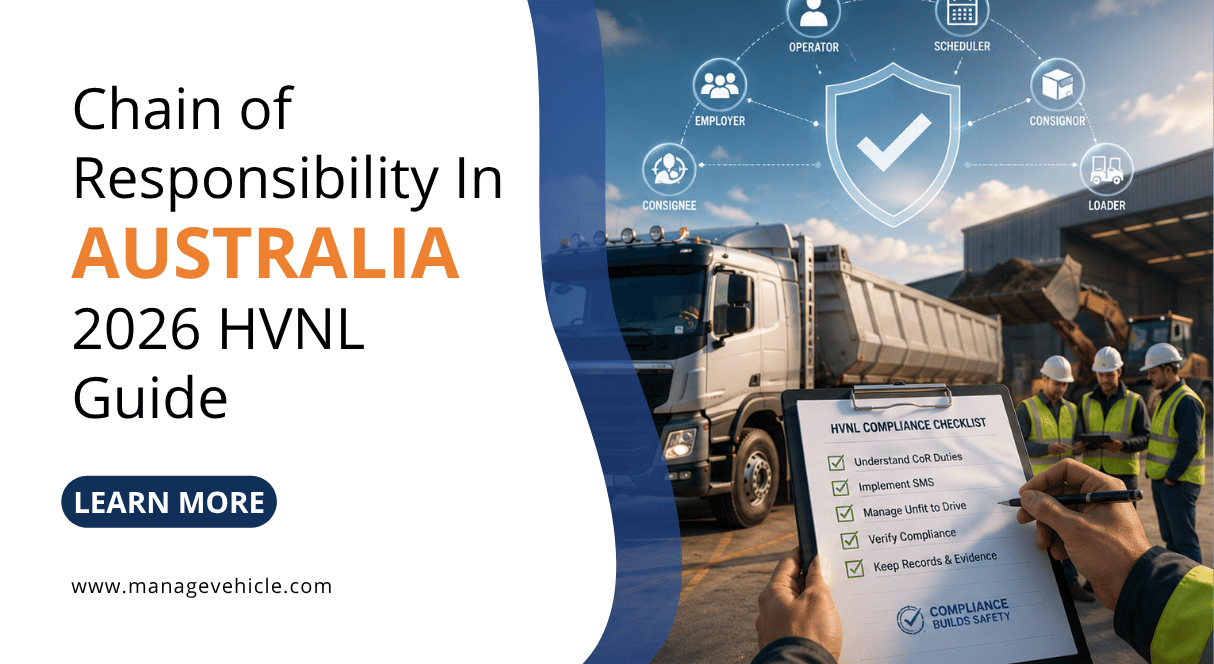
Chain of Responsibility (CoR) is the section of the Heavy Vehicle National Law (HVNL) that makes every party who controls or influences a heavy vehicle transport activity liable for safety. That includes operators, schedulers, consignors, consignees, loaders, and executives, not just drivers. On 1 August 2026, the amended HVNL commenced with no grace period, introducing mandatory Safety Management Systems for accredited operators, a broader “unfit to drive” duty, restructured penalties, and the 2026 Master Code of Practice. This guide covers who has CoR duties, what changed, what the penalties look like, and what practical steps operators should take.

Who Has CoR Duties Under the HVNL

CoR is function-based. The HVNL does not assign liability by job title or contract wording. It assigns liability by function performed. The NHVR’s guidance on the primary duty identifies ten CoR party types: employers, prime contractors, operators, schedulers, consignors, consignees, packers, loading managers, loaders, and unloaders.
Each party shares the same obligation under HVNL Section 26C: ensure, so far as is reasonably practicable, the safety of their transport activities.

Who has CoR duties — the liability chain

What that means operationally: a warehouse that schedules a pickup knowing the driver has been working since the previous day is performing a scheduler function. A quarry that loads a truck beyond rated mass is performing a loader function. A retailer whose delivery window is so tight a driver cannot take a mandated rest break is performing a consignee function. None of these parties drive the truck. All of them carry CoR liability under the HVNL.

This matters for construction companies, waste operators, mining contractors, and any business subcontracting haulage. A common gap identified in NHVR compliance guidance is that organisations assume the carrier holds all the risk. Under the HVNL, the primary duty cannot be contracted out. A clause in a subcontracting agreement that says “the carrier accepts all CoR responsibility” has no legal effect.

Executive officers also carry a separate, personal due diligence duty under Section 26D. Directors and senior managers must acquire knowledge of the HVNL, understand how it applies to the business, ensure adequate resources, and verify that compliance systems work. This duty is prosecutable independently of any penalty applied to the company.

What Changed on 1 August 2026

The amended HVNL commenced on 1 August 2026. The NHVR and National Transport Commission (NTC) released the supporting statutory instruments in May 2026, including the SMS Standard, National Audit Standard, Ministerial Guidelines for Heavy Vehicle Accreditation, and the Ministerial Standard for Alternative Compliance Hours.

New accreditation framework. The National Heavy Vehicle Accreditation Scheme (NHVAS) has been replaced by Heavy Vehicle Accreditation (HVA), with two tiers: General Safety Accreditation (GSA) for all accredited operators, and Alternative Compliance Accreditation (ACA) replacing the former BFM and AFM pathways. Both tiers require a documented Safety Management System that meets the SMS Standard 2026. Existing NHVAS accreditations remain valid until they expire, and the NHVR is providing transition options.

Broader “unfit to drive” duty. The amended HVNL Section 228(1) now covers physical illness, injury, mental health, medication effects, alcohol, drugs, and any other factor that may impair a driver’s ability to operate safely. This duty applies to all heavy vehicles over 4.5 tonnes GVM, not just fatigue-regulated vehicles over 12 tonnes. Drivers can legally refuse to drive when unfit. Operators and schedulers need a documented process for handling an unfit-to-drive report: who makes the stand-down call, how it is recorded, and how a replacement is sourced.

A fit-to-drive process that only asks about fatigue is no longer sufficient. Manage Vehicle’s digital pre-trip declaration captures driver self-assessments across the full scope of the amended duty, timestamped and stored for audit access.

Restructured penalties. The amended HVNL restructures approximately 71 offence penalties. Safety-related penalties have increased, in some cases doubling. Administrative breach penalties have generally decreased. The NHVR has published penalty schedules for 1 August 2026 onward reflecting both the new offence provisions and the 1 July 2026 CPI indexation.

2026 Master Code of Practice. Released by the NHVR in January 2026, the 2026 Master Code uses an activity-based structure covering 45 transport activities, more than 70 hazards, and over 500 recommended controls. The Code is not mandatory. However, the NHVR has indicated that courts may reference it when assessing whether a CoR party took reasonably practicable steps. As NHVR Policy Advisor Graeme Cooper stated publicly at the AfMA Summit in June 2026, a party cannot claim ignorance of a risk or a control if it is published in a registered code of practice. The Code is guidance, not a compliance checklist, and operators may use alternative controls where they can demonstrate equivalent risk management.

CoR Penalty Structure (As of August 2026)

The following figures are from the NHVR Schedule of Penalties incorporating the 1 July 2026 CPI adjustment. These are maximum court-imposable penalties. Infringement notices (on-the-spot fines) are set at 10% of the court maximum. Verify current figures at nhvr.gov.au/law-policies/penalties-and-infringements before relying on them for any legal or commercial purpose

Category Nature of Breach Max Corporate Penalty Max Individual Penalty
Category 1 Reckless conduct creating risk of serious illness, injury, or death $4,230,550 $436,850 and/or 5 years imprisonment
Category 2 Exposure to risk of serious illness, injury, or death (not reckless) $2,120,880 $212,090
Category 3 Breach of primary duty not involving Category 1 or 2 risk $705,820 $70,580

Source: NHVR Schedule of Infringement Penalties and Demerit Points, 1 August 2026 to 30 June 2027. Figures are CPI-indexed annually on 1 July.

Specific penalty changes under the amended Act include the duty-to-avoid-driving-while-fatigued penalty increasing from $8,000 to $26,610, and a new $26,610 penalty for the duty to avoid driving while unfit (per the NHVR’s confirmation to Big Rigs, June 2026).

The penalties are serious, but they are maximums applied at court for the most severe cases. Understanding the penalty structure matters for risk planning, not for panic. The practical priority is having systems that reduce the likelihood of a breach occurring in the first place.

In July 2026, the NHVR secured a prosecution against a transport company and its director for repeatedly breaching prohibition notices, resulting in combined fines of $100,000 and convictions recorded. The NHVR described it as the first use of its court-injunction powers to prevent continued non-compliance. The regulator issued 23 prohibition notices during the 2025-26 financial year (NHVR media statement, July 2026).

What an SMS Needs to Cover Under the 2026 Standard

The SMS Standard 2026 sets out five categories auditors assess using the PSOE framework (Present, Suitable, Operating, and Effective):

SMS framework — the five PSOE categories

  • Leadership and Commitment. Named accountability for safety management within the business. Generic references to “management” are unlikely to satisfy auditors looking for specific, named roles.
  • Risk Management. Identification of public risks specific to the operator’s actual transport activities, routes, vehicles, and loads. The NHVR’s guidance indicates that generic hazard lists copied from a template, without reference to actual operations, are unlikely to satisfy the “Suitable” requirement.
  • People. Competence, licence verification, induction, ongoing training, and the new fitness-to-drive obligations. Competence records need to be current and accessible.
  • Safety Systems. Documented processes for operational controls, including maintenance, load restraint, fatigue management, and vehicle standards.
  • Assurance, Monitoring and Improvement. Evidence of continuous improvement: trend data, corrective actions, management review records.

The “Effective” standard in PSOE is where systems that only exist on paper fall short. Auditors can ask floor staff whether they know the relevant procedure. A policy no one follows fails at “Operating.” A policy followed but never reviewed fails at “Effective.”

For operators tracking compliance evidence across multiple vehicles and drivers, Manage Vehicle’s document management and reporting centralises maintenance records, training logs, inspection reports, and work diary data in one platform, so records are retrievable when an auditor requests them.

An SMS is mandatory for operators seeking HVA accreditation. For non-accredited operators, it is not legally required under the HVNL. However, the NHVR’s own FAQ notes that an effective SMS helps demonstrate due diligence and supports compliance with the primary duty. It may assist an operator in demonstrating that they took reasonably practicable steps, but it does not by itself guarantee HVNL compliance or provide an automatic legal defence.

Common Compliance Gaps

The following operational gaps are consistently highlighted in NHVR guidance, audit findings, and enforcement activity:

  1. Assuming subcontractors hold all CoR liability. Consignors and consignees that subcontract all transport often do not recognise their own CoR duties. The primary duty attaches to the function, not the contract.
  2. Treating work diaries as the driver’s problem. The driver completes the diary, but the operator needs systems to verify accuracy and identify discrepancies. The NHVR recorded nearly 5,000 fatigue offences in 2025. In March 2026, it launched Operation Ambit, a nationwide enforcement campaign targeting fatigue and work diary breaches, citing what it described as “alarming levels of non-compliance.” Manage Vehicle’s digital work diary timestamps entries and flags discrepancies automatically, replacing the manual cross-checking that paper diaries require.
  3. Stale risk registers. A risk register last reviewed at the previous accreditation audit is unlikely to reflect current operations. The SMS Standard expects risk management to be an ongoing process, not a periodic exercise.
  4. No process for unfit-to-drive reports. Many operators have not updated pre-trip processes to cover the full scope of the amended unfit-to-drive duty. A fitness declaration that only addresses fatigue no longer reflects the law.
  5. Confusing the Master Code with a mandatory checklist. The 2026 Master Code is guidance. It is not an offence to decline a specific control if the operator can demonstrate an alternative approach to managing that risk. The value of the Code is as a resource for identifying hazards and controls relevant to the operation, not as a tick-box exercise.

How CoR Applies Across Industries

CoR is not limited to long-haul transport. Any organisation operating, contracting, scheduling, consigning, or loading heavy vehicles over 4.5 tonnes GVM has duties under the HVNL.

  • Transport and logistics. The core audience, and the sector most likely to have existing CoR systems. The 1 August 2026 changes require a full review of SMS documentation, fatigue management procedures, and fitness-to-drive processes.
  • Construction and mining. Site operators who load trucks, schedule concrete or aggregate deliveries, or dispatch vehicles between sites carry CoR duties. The NHVR has specifically noted that organisations that own, procure, manage, or contract heavy vehicles, including construction companies, need to take practical steps to manage transport safety risks.
  • Waste management. Vehicles that gain mass throughout a shift create specific mass-compliance challenges. Operators need systems to monitor cumulative load across a collection route. Manage Vehicle’s mass management tools track load data against rated limits in real time.
  • Passenger transport. Bus and coach operators carry CoR obligations. The expanded fitness-to-drive duty is especially relevant given direct passenger safety implications.
  • Rental and leased fleets. Businesses leasing heavy vehicles have CoR obligations around vehicle standards and maintenance at the point of supply.

The HVNL applies in NSW, VIC, QLD, SA, TAS, and ACT. It does not currently apply in WA or NT as state/territory law, though vehicles from those jurisdictions must comply when operating in participating states.

CoR Compliance Checklist: August 2026

This is a baseline review, not legal advice. Each item should be assessed against your specific operations.

  1. Identify every CoR function your business performs and document who is accountable for each.
  2. If you are accredited or seeking accreditation, review your SMS against the five SMS Standard 2026 categories. If you are not accredited, consider whether a documented SMS would strengthen your primary duty compliance.
  3. Update your risk register to reflect current operations, routes, vehicles, and loads.
  4. Implement a fit-to-drive process covering the full scope of the amended Section 228(1): fatigue, illness, injury, medication, mental health, and substance use. Document the stand-down and replacement driver process.
  5. Review the 2026 Master Code and record which activities and controls are relevant to your operation and why.
  6. Review your work diary processes. If you use paper diaries, assess whether a digital work diary would reduce the risk of undetected discrepancies.
  7. Confirm your executive officers understand their personal due diligence duty under Section 26D.
  8. Check that subcontractor agreements do not purport to transfer your primary duty. They cannot.

FAQ

What is Chain of Responsibility in Australian transport?
CoR is the part of the HVNL that extends safety liability beyond the driver to every party who controls or influences a heavy vehicle transport activity. Ten party types are identified. Each shares the same primary duty under Section 26C. See the NHVR CoR page for the full list.

What are the maximum CoR penalties in 2026?
Category 1 (reckless conduct): up to $4,230,550 corporate and $436,850 individual, plus up to 5 years imprisonment. Category 2: up to $2,120,880 corporate and $212,090 individual. Category 3: up to $705,820 corporate and $70,580 individual. These are CPI-indexed annually on 1 July. Verify at nhvr.gov.au.

Does CoR apply in WA and the NT?
The HVNL does not currently apply in WA or the NT as state/territory law. Vehicles from those jurisdictions must comply when operating in participating states. WA and NT have their own heavy vehicle regulations.

Is a Safety Management System mandatory?
An SMS is mandatory for operators seeking Heavy Vehicle Accreditation (GSA or ACA) from 1 August 2026. For non-accredited operators, it is not a legal requirement under the HVNL, but the NHVR recommends it as a way to demonstrate due diligence. It does not automatically establish compliance.

What is the 2026 Master Code?
An activity-based guide from the NHVR covering 45 transport activities and over 500 recommended controls. It is not mandatory, but courts may use it as a benchmark when assessing whether a CoR party took reasonably practicable steps.

What does the new “unfit to drive” duty cover?
From 1 August 2026, the duty applies to all heavy vehicles over 4.5 tonnes GVM and covers fatigue, illness, injury, mental health, medication effects, alcohol, and drugs. Drivers can legally refuse to drive when unfit. Operators must have a documented process for handling reports.


Legal disclaimer: This article provides general information about Chain of Responsibility obligations under the Heavy Vehicle National Law. It is not legal advice. Penalty figures are CPI-indexed and change annually. Always verify current requirements against NHVR publications and seek independent legal advice for your specific circumstances.

NHVR Best Practices for Grape and Wine Transport Industry

The wine transport industry is crucial for effectively moving grapes from vineyards to wineries. Many challenges such as perishable loads and safety compliance remains problematic for the sector.

The NHVR-developed Wine Industry Code of Practice sets the bar high for best practices and accountability.

The registered wine industry code of practice greatly reduces the safe and legal transportation of grapes and wines through the entire supply chain.

Crafted in partnership with the South Australian Wine Industry Association and Australian Grape and Wine, the code underwent extensive stakeholder consultation to address unique industry risks and hazards.

Furthermore, NHVR encourages stakeholders to use this guidance in their daily work, identifying hazards, mitigating risks, and smoothing the ride from beginning to end.

Following the Code allows stakeholders to ensure compliance with national laws and support the public safety and integrity of the supply chain.

The Wine Transport Industry: An Essential Link in the Supply Chain

The grape and wine transport sector is a facility linked to the manufacture and distribution of one of Australia’s most sought-after exports.

Moreover, the carriage of the grapes from the vineyard to the winery is time-dependent and requires exactitude in every aspect of it being up to safety standards.

The weather conditions, the type of grape, and the harvesting process significantly lessen the procedures involved in transporting it as it requires a careful plan and execution.

Australia relies heavily on this industry for one of its most prized exports. Also, the logistical operation of moving grapes from the vineyards to the wineries requires speed and precision with safety standards.

The variations brought about by weather, grape variety, and harvesting methods demand careful planning and execution when transporting, greatly reducing the likelihood of issues.

Heavy vehicles play a pivotal role in this process, but their use comes with responsibilities under the Heavy Vehicle National Law (HVNL).

The NHVR’s instituting the code of practice for the wine industry is a step towards ameliorating the duties it has to fulfil itself.

Moreover, the code specifies the necessity for risk assessment, vehicle maintenance, and effective communication among all parties in the Chain of Responsibility (CoR).

Key Challenges in Grape Transport

Perishable and Delicate Cargo

Grapes must spoil quickly, and transporting them promptly to maintain quality can greatly reduce.

They are juicy grape varieties or harvests picked during certain stages, which they celebrate-even these conditions lead to instability in load, resulting in a spill or spoilage.

Complex Logistics and Scheduling

Harvesting and transport schedules must align precisely to avoid delays. Difficulties such as breakdowns in equipment and sudden weather changes can disrupt plans and thus compel the design of contingency plans to be strong.

Heavy Vehicle Safety

Ensuring vehicles are roadworthy and operated safely is a shared responsibility under the CoR. Besides, overloaded vehicles or improper load restraints can result in accidents, underscoring the importance of adherence to the code’s guidelines.

Read More: NHVR Prioritize Road Safety for All Drivers This Christmas Season

Understanding the Wine Industry Code of Practice

What is the Code of Practice?

The Wine Industry Code of Practice has been put on the record under section 706 of the HVNL. Also, it offers detailed guidance on managing risks associated with grape and wine transportation.

While not legally binding, the code is a valuable resource for businesses to meet their primary duty under the law.

Core Components of the Wine Transport Industry Code

  • Hazard Identification: Recognizing risks such as vehicle overloading, driver fatigue, or poor load restraint.
  • Risk Management: Implementing measures to eliminate or minimize risks, including proper vehicle maintenance and staff training.
  • Monitoring and Reporting: Effectively identify and run regular assessments on your control measures to eliminate any snagging issues.

Best Practices for Stakeholders in the Wine Transport Industry

  • Grape Growers and Harvest Contractors
  1. Provide accurate yield estimates to aid in planning and scheduling.
  2. Use suitable equipment for loading and transporting grapes to minimize spillage and damage.
  • Transport Operators
  1. Ensure all vehicles comply with HVNL standards, including mass and dimension limits.
  2. Train drivers on the unique characteristics of grape loads and safe driving practices.
  • Wineries and Loading Managers
  1. Lay down simple procedures for reception and off-loading of grape juice.
  2. Make use of weighbridges to ascertain load weights and restrict overloading.

The Role of Collaboration in Enhancing Safety

The Wine Industry Code of Practice’s success depends on collaboration among all CoR parties. Similarly, open communication and shared responsibilities can lead to better risk management and compliance.

Furthermore, Flexible time routines with transporting operators and wineries are often necessary to allow the driver not to have too much stress regarding deadlines.

Securing the Future of Wine Transport

The wine transport industry forms a pillar of the commodity’s production process. Likewise, smooth operations here are vital to ensure the quality and safety of the products.

This code of practice has set a roadmap for the wine industry by the National Heavy Vehicle Regulator. Moreover, the guide indicates that NHVR could also resolve such issues through available safety and compliance measures within the industry.

By implementing the recommended codes, stakeholders will see a culture developed around accountability and efficiency. So, these factors will ensure that the industry does well while maintaining safety standards.

Without any doubts, membership and commitment to these best practices will prepare the stage for a wine transport sector. In the future, the grape and wine industry of Australia will be more sustainable and responsible.

Explore More: Heavy Vehicle Productivity Plan: NHVR’s 2025-2030 Vision

NHVR Prioritize Road Safety for All Drivers This Christmas Season

Road safety is paramount during this festive season as the National Heavy Vehicle Regulator (NHVR) takes steps to ensure that all drivers are safe on the road.

As the NHVR advises, with all the rising traffic and soon-to-come holiday travel, this is the time when people need to be most careful and follow safety rules to preserve life and avoid accidents.

In collaboration with state authorities, the NHVR launched Operation Omega, a nationwide initiative that will continue throughout December.

In this operation, hundreds of officers from New South Wales, Queensland, New Zealand, Victoria, South Australia, and Tasmania are brought in to conduct inspections for regulatory compliance vis-a-vis road safety.

A key focus is combating driver fatigue, a leading cause of accidents, by monitoring work and rest requirements for heavy vehicle drivers.

NHVR CEO Sal Petroccitto OAM stated, “Fatigue remains one of the deadliest risks on our roads – which is why we are doing everything in our power to ensure all road users get home safe this Christmas.”

NHVR Prioritises Road Safety for All Drivers This Christmas Season

Road safety is at the forefront of the National Heavy Vehicle Regulator’s (NHVR) agenda this Christmas season.

With the holiday period leading to increased traffic on Australia’s roads, the NHVR emphasises the importance of caution and consideration among all drivers to ensure a safe journey for everyone.

The NHVR has been proactive throughout 2024, delivering safety campaigns to educate road users on best practices.

Their “We All Need Space” campaign educates light vehicle drivers on how to drive safely around heavy vehicles, offering practical tips to promote safer interactions on the road.

Increased Traffic During the Festive Season

There is typically an increase in road traffic during the holiday seasons, with many Australians travelling to visit family and friends.

However, this increase comes with drivers who are sometimes not too familiar with the highways or rural roads and will thus increase the chances of accidents.

The NHVR reminds all drivers that it is time to brush up on their road safety knowledge, especially regarding dealings with heavy vehicles.

Operation Omega: Combating Driver Fatigue

In December, the NHVR, in collaboration with police across multiple states, launched Operation Omega to address the critical issue of driver fatigue among heavy vehicle operators.

Under this initiative, hundreds of inspecting officers ensure compliance with work and rest requirements, working towards reducing fatigue incidents.

Alarmingly, over 120 fatal crashes involving heavy vehicles have occurred in Australia this year, resulting in 135 lives lost.

More than 3,000 fatigue-related offences were recorded in the heavy vehicle sector from January to October. So, it stresses the requirement for continuation of vigilance and enforcement in the strictest of senses.

Key Road Safety Tips for the Holiday Season

The NHVR urges all motorists to observe the following safety measures:

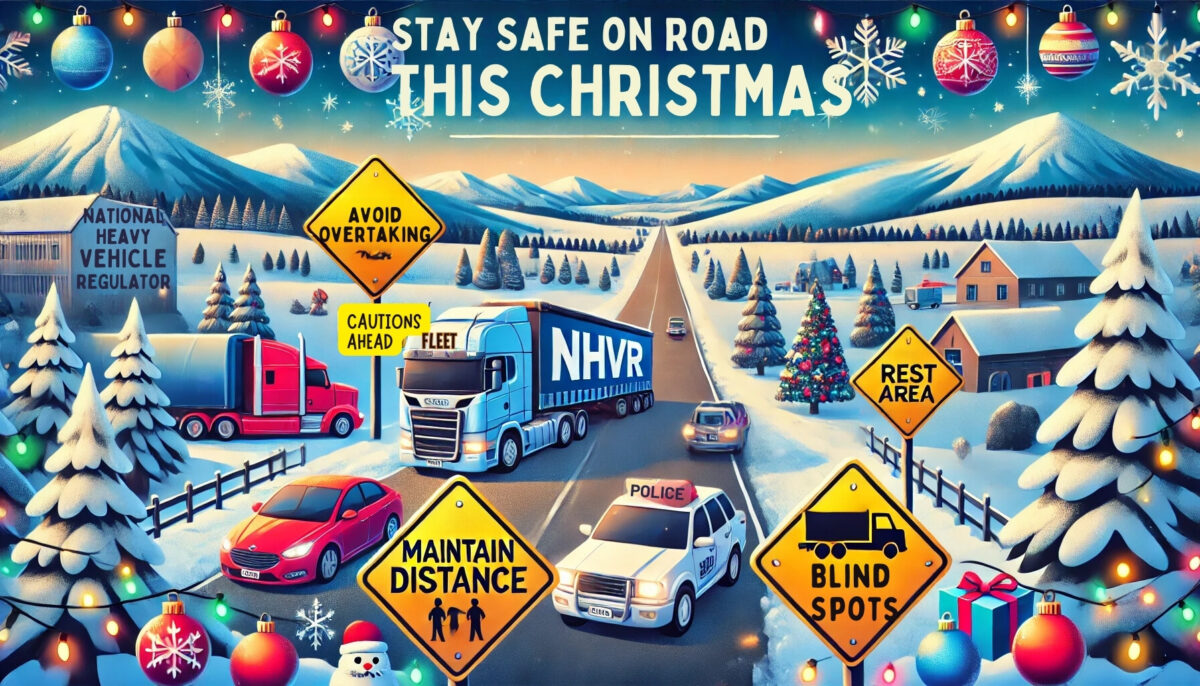
  1. Maintain Safe Distances: Stay safe from heavier vehicles to preclude collisions.
  2. Avoid Blind Spots: Aware of the limitations of vision of the vehicle driver to recognise the blind spots of a truck for visibility.
  3. Do Not Overtake Turning Trucks: Trucks require more space to turn; overtaking them during this maneuver can be hazardous.

With these directions, the NHVR goes on organizing its aspirational public safety campaigns towards responsible use of the roads by heavy vehicles.

Increased Enforcement and Safety Campaigns

In addition to Operation Omega, the NHVR conducts roadside checks, inspects logbooks, and monitors driving behaviour to identify and prevent fatigue-related incidents.

This NHVR notice is a full-on concern for heavy vehicles and normal motorists with their regards to compliance with standards and safety norms to reduce accidents during peak travel.

Drive Safely This Holiday Season

The NHVR’s commitment to road safety during Christmas underscores the importance of collective responsibility among all road users.

Drivers can safeguard an entire travel environment to reach vacation destinations by following safety guidelines and staying alert.

For more information on the NHVR’s safety initiatives and tips for driving around heavy vehicles, visit their official website.

Heavy Vehicle Productivity Plan: NHVR’s 2025-2030 Vision

The National Heavy Vehicle Regulator (NHVR) recently put forth the National Heavy Vehicle Productivity Plan 2025-2030.

This long-term vision is an all-embracing plan for addressing efficiency improvements, safety enhancement, and sustainability in heavy vehicle operations in Australia.

This plan depicts the modern-day hurdles in freight and freight transport and boosts the resilience of the supply chains for economic development.

At the heart of the plan are 22 targeted actions resulting from our collaborative efforts with industry stakeholders.

These actions will improve access consistency, build local government capability, and promote the adoption of safer, more productive vehicles. NHVR create a plan that benefits the environment and our communities by working together.

Enhancing Access Certainty and Consistency

The Heavy Vehicle Productivity Plan involves ‘A National Access Framework for Heavy Vehicles‘ in determining access certainty and consistency across jurisdictions.

These provisions would streamline access requirements for the NHVR concerning efficient movements of heavy vehicle operations through the network nationwide.

This long-term program aims to relieve the stresses that logistics has imposed and seek better operational productivity in freight.

The plan also emphasizes the importance of infrastructure assessments, providing road managers with critical information to improve access and productivity.

NHVR aims to unlock roads on which drivers can take shorter and safer routes, which will come from some formerly ignored or uncategorized routes.

Building Capability with Local Governments

Partnering with local governments is another cornerstone of the plan. The NHVR seeks to enhance the capabilities of local authorities in managing heavy vehicle access and infrastructure.

Local governments are said to be handling the demands of dynamic freight logistics through collaborative and pooled resources to create a resilient supply chain.

This partnership includes initiatives such as the Strategic Local Government Asset Assessment Project, which assists local councils in evaluating their infrastructure to support heavy vehicle access.

The NHVR aims to create a more cohesive and efficient national freight network by building local capacity.

Also Read: Victorian Transport Association’s Driver Salute Award

Promoting Safer and More Productive Vehicles

The Heavy Vehicle Productivity Plan strongly advocates adopting safer and more productive vehicles. NHVR aims to significantly reduce road incidents and environmental impact by encouraging advanced technologies and innovative vehicle designs.

The strategy outlines challenging targets, including zero deaths and significant injuries on roads to be achieved by 2050 and that it would reach net emissions by that same year.

Safety is first and foremost for a driver-safe, and we want to ensure no driver thinks otherwise.

Performance-Based Standards (PBS) vehicles are designed to carry out tasks much better than conventional vehicles.

The plan outlines how there is a scope to achieve these goals by making provisions for promoting Performance-Based Standards (PCS) vehicle uptake.

Thus, the plan mainly aims to improve road safety and substantially increase operational productivity.

Driving the Future of Freight: A Safer and Productive Network

As per the NHVR’s Heavy Vehicle Productivity Plan for 2025-2030, some initiatives will be taken for the upcoming challenges of the freight industry in Australia.

The project will increase production and sustainability toward the ever-increasing demand for heavy-duty vehicle operations across the country. Also, it will focus on access and consistency, collaboration among local governments.

Not just that, the long-term plan will create safer and more efficient vehicles for the efficient work performance.

In fact, the whole initiative will contribute to economic development and the well-being of communities in Australia. NHVR would like stakeholders to have hope for the freight industry’s future.

Indeed, implementing all of the 22 targeted actions will transform safer and more resilient freight networks.

Read More: B-Double Brake Defect Notice Issued for Safety Breach

Heavy Vehicles Temporary Variation in NSW During Christmas Fall

Heavy vehicles temporary variation will be implemented in NSW to ensure smooth traffic flow during Christmas Fall. Specific detours and restrictions are in place for certain heavy vehicle combinations.

NHVR and TfNSW are celebrating their joint efforts to keep the travelling public disturbed while carrying out essential repairs-heavy traffic flows across New South Wales will be kept as smooth as possible.

Key Details of Heavy Vehicles Temporary Variation

The National Heavy Vehicle Regulator (NHVR), in discussion with Transport for New South Wales (TfNSW), has announced temporary access variations for heavy vehicles.

These changes, necessary due to repair works on the Spirit of Progress Bridge, Hume Highway, Albury, have been designed with safety as the top priority.

The southbound bridge will be closed to traffic during repair periods, primarily at night, from 8 PM to 6 AM between December 2-7 and December 11-17, weather permitting.

To accommodate this closure of temporary variation, a unique detour route has been created for all heavy southbound vehicles.

Vehicles must travel via East Street, Atkins Street, Hume Street, Wodonga Place, and Lincoln Causeway and return to the Hume Highway at the High Street ramp.

These changes apply to vehicles holding heavy vehicle access permits for this route.

Read Also: Hume Highway Accident: Driver Killed In Truck Collision at Cullerin

Impacted Vehicles and Compliance Requirements

The heavy vehicles temporary variation applies to specific combinations, including:

  • HML 25/26m B-Double combinations
  • PBS Level 2B combinations
  • PBS Level 3A combinations
  • HML PBS Level 2A combinations

Operators using these combinations must follow the detour route and adhere to the updated permit conditions. Heavy vehicles with approved permits must only deviate from their designated routes if they obtain a revised permit from NHVR.

Ensuring Safe Travel During the Holidays

The heavy vehicles temporary variation aims to facilitate safe and efficient traffic flow during the busy Christmas travel period.

The NHVR and TfNSW aim to minimize disruption while ensuring they complete essential maintenance by scheduling repairs at night and implementing apparent detours.

Operators shall plan their journeys and keep up-to-date with the latest news concerning heavy vehicle access permits and detours. This temporary variation will allow travel during repair to continue as fuel-free as possible.

The Manage Vehicle team wishes all drivers and fleet operators a safe and joyous holiday season. We appreciate your hard work and dedication during this busy Christmas and New Year 2024 period. Drive safely and enjoy the festivities!

Learn More: Heavy Vehicle Travel Restrictions in Christmas and New Year 2024

Hume Highway Accident: Driver Killed In Truck Collision at Cullerin

A devastating accident on the Hume Highway near Cullerin, New South Wales, claimed the life of a truck driver late on Friday, December 13, 2024. The tragic collision occurred around 11:15 PM, about 5 kilometres east of Gunning.

Two heavy vehicles collided, resulting in the death of a man in his 40s, who was driving one of the trucks.

Hume Highway Accident Highlights Critical Road Safety Concerns

First responders arrived quickly, but the driver died at the scene due to his injuries. His colleague, a 25-year-old male, escaped unharmed and proceeded to Goulburn Hospital for routine checks.

Meanwhile, the highway’s eastbound lanes were closed for hours to undergo investigation by the authorities thus severely affecting traffic flow.

Such accidents manifest the real dangers within the busiest freight routes throughout Australia, with elements such as fatigue and conditions on the highway making circumstances more perilous.

Hume Highway, Australia’s major long-haul trade route for trucks, has seen more accidents than any other road and has raised many concerns about road safety within the trucking industry.

Studies and investigations regarding the accident are still ongoing. Road safety norms and technological advancements to monitor driver behaviour should be enforced more stringently by experts in the field at this moment.

It is yet another grim reminder of all the risks truck drivers encounter and the constant need for vigilance from all road users.

Seven Deaths in 48 Hours: Staying Safe During This Holiday Season

This tragic accident comes as an alarming trend on the roads of New South Wales over 48 hours. It has brought the number of fatalities in separate accidents to 7, bringing the 2024 road toll in New South Wales to 331.

This already exceeds the total for the entire 2023 calendar year, when a record 320 fatalities were reported in NSW alone.

According to road safety authorities, fatigue, speeding, and inattentiveness are driving the rise in accidents. Despite efforts to raise awareness, the message isn’t getting through.

Drivers of heavy vehicles or at high speeds must realise that even small mistakes can lead to disaster.

The rising death toll pushes motorists and policymakers to act. There needs to be a better infrastructure and stricter law enforcement. Public awareness campaigns must also interactively engage with drivers.

Without the change, more lives will be lost, leaving families and communities to grieve preventable tragedies. The Cullerin crash is one of many and demands immediate action.

Hume Highway Accident Highlight Holiday Safety Need

The holiday Christmas season brings joy, but it’s also one of the most dangerous times on Australian roads. More travel, heavier traffic, and heightened emotions often lead to poor decisions and accidents.

After the recent fatalities, authorities are urging everyone to drive carefully and adopt safe habits.

Stick to speed limits, avoid distractions, and take regular breaks on long drives to fight fatigue. Check that your vehicle is in good shape—tyres inflated, cooling systems working, and everything ready for summer conditions.

Passengers can help by keeping drivers focused and discouraging risky behaviour.

The Cullerin accident shows how fast lives can change. As families hit the road, the goal should be arriving safely, not quickly. Campaigns like “Drive So Others Survive” remind us that road safety is everyone’s responsibility.

Simple precautions can save lives. Let’s make this holiday season about joy, not tragedy.

Why Choose Manage Vehicle’s Fleet Compliance Software?

This 2024 Christmas and New Year, follow heavy vehicle travel restrictions with Manage Vehicle’s fleet compliance software. The platform includes:

  • Real-time regulated route offers.
  • Automated alerts.
  • Optimized routes for smooth operations.

Fleet compliance software uses efficient and customized interfaces to keep your fleet compliant and avoid fines or delays. Say goodbye to manual planning and hello to simple technology for vacation logistics.

Start your free trial today and experience the difference. With Manage Vehicle, you can drive more intelligent, even during the busiest times of the year!

Aussie Truck Driver Greg Davies Fined $580, Scolded Over Logbook Date Error

In a recent talk with Big Rigs, Greg Davies, a truck driver from Queensland, revealed that he received a hefty $580 fine for a minor logbook error while on a routine trip to Sydney.

Such an incident would highlight truck drivers’ stress levels and raise questions about whether these penalties have broad implications for the transport sector.

Truck Driver Greg Davies Fined $580 for a Simple Mistake

The Queensland truck driver, Greg Davies, was fined $580 at the Marulan weighbridge in NSW for forgetting to record a date in his logbook. Although his error was minor, officers issued the fine without allowing him to correct it.

Davies was in Sydney on a stressful trip, caring for his wife, who had recently suffered a heart attack. She accompanied him in the truck so he could keep an eye on her while continuing his work.

Just past midnight, after a hectic delivery at the Sydney markets, Davies drove towards Marulan, intending to let his wife rest and get breakfast.

In a rush, he forgot to record the date in his logbook—a minor oversight that led to a hefty fine and hostile treatment from compliance officers. This misadventure touched Davies, but more than that, it added needless pressure to his wife’s already-tense health status.

The Comparison: Truck Driver Greg Davies Fine vs Dangerous Driving Penalty

Aussie truck driver, Greg Davis also pointed out the television report that had focused on a case of a female driving with no registration and a suspended license while unbuckled with her two children in the car.

Law enforcement officers caught her speeding and probably found that she was not under the influence of meth, so they fined her just $300 for that.

“She went to court, got six months added to her suspension, and still paid less than me,” Davies said.

In such treatment disparities, glaring examples show the puzzle-like flaws regarding penalty enforcement.

For minor mistakes, a truck driver often has to pay a higher price than an ordinary person for even life-threatening, dangerous offences, which raises the question of how fair this system is.

Read More:

Truck Driver Greg Davies Incident at Marulan Weighbridge

Greg Davies described his encounter with compliance officers at the Marulan weighbridge as one of the most hostile experiences of his 27-year trucking career.

“The first fella came out and just yelled at me, ‘Logbook and licence!’” Davies said.

When Davies forgot to record the date in his logbook, officers refused to let him correct the oversight, instead issuing a $580 fine.

The tension heightened when a second police officer aggressively accused him of not attending to the issue of a broken headlight, although that was an entirely new issue.

“I told them that 99 per cent of officers would have just handed me back my logbook and let me scribble in the date,” Davis also said.

The officers were aggressive and unprofessional, leaving Davies feeling humiliated. He believes such treatment shows a lack of respect for drivers, especially those under personal stress.

Harsh Penalties Forcing Truck Drivers like Greg Davies Away from the Transport Industry

Greg Davies significantly reduces situations such as his, which drive many trucking practitioners away from the profession.

“Some of the fines handed to truck drivers are just ridiculous,” Davies said.

Regulations are necessary to guarantee safety, but unrealistic fines for minor infringements create undue stress for drivers under pressure. Education should replace punishment.

Otherwise, we are creating an industry that’s off-putting to newcomers and disrespectful towards veteran drivers. As if the industry is not already experiencing shortages of drivers, it keeps compounding the problem for the industry.

Appeals Process: Why the Fine Stuck for Australian Truck Driver Greg Davies

Greg Davies challenged the penalty, but he was not successful. The authorities relied upon his three petty offences in the past ten years as evidence of fatigue-related issues. His argument that the mistake was an honest-to-goodness confusion fell on deaf ears.

“I was stressed, but they didn’t care,” Greg Davies told Big Rigs.

The rigid appeals process left Davies feeling helpless. This situation has happened to many drivers without room for context or fairness. The consequent system focuses on penalties rather than fairness, making drivers feel targeted.

Davies’s case illustrates just how much these might be necessary: empathy in enforcing transport laws. The rules exist but must be enforceable through education rather than punishment.

A more empathetic approach could have prevented the unnecessary stress and humiliation Davies experienced and could have improved driver retention and support work in the industry.

That only puts extra pressure on the drivers by punishing them for a small mistake against all considerations. It is a hopeful system that will improve driver retention and support work.

This perception of truck drivers in Australia is fast changing because of awards like the Driver Salute Award program by the Victorian Transport Association, which recognizes individual drivers for their safe and disciplined driving habits.

Victorian Transport Association’s Driver Salute Award

The Victorian Transport Association (VTA) launched the Driver Salute Award alongside Goodyear Fleet to honour heavy truck drivers who adopt road safety and professionalism.

This honour appropriately celebrates all those hidden heroes in the transport sector with their toil; besides, it sets a definitive benchmark on safety and accountability, indicating every driver’s role in promoting road safety.

This bi-monthly award program recognises exemplary performance in the transport sector by rewarding drivers who uphold high safety standards.

It promotes a safety culture by recognising drivers’ contribution drivers contributions on the journey towards a shared responsibility that both the VTA and Goodyear Fleet have to the trucking industry’s vital importance.

Driver Salute Award Winners List

The Driver Salute Award program pays tribute to exceptional heavy vehicle drivers whose demonstration of safety and professionalism stands out. These drivers signify the correct values of the transport industry and motivate their co-workers as well.

A timeline capturing this prestigious award’s winners depends on their accomplishments by month and year.

Timeline of Driver Salute Award Winners

S.N.Driver NameCompany NameAward Date
1.Luke TriantafillouVulcan SteelFebruary 2023
2. Tony WaalwykBingo IndustriesApril 2023
3. Ross MawAKD SoftwoodsJune 2023
4.Kirsten SheahanAustralia PostAugust 2023
5.Stephen KingCahill TransportOctober 2023
6.Diep Do LyAustralia PostFebruary 2024
7.Michael HutchinsPorthaulApril 2024
8.Ross JarredEvans PetroleumJune 2024
9.Mark HallELGAS LPGDecember 2024
Data Source: VTA.com.au

These drivers exhibited a strong commitment to road safety, professionalism, and operational excellence at their peak. Each awardee typifies a milestone in the industry’s progress toward putting safety first and fostering a culture of excellence.

These efforts remind the trucking community to celebrate those who strive to keep the roads safe beyond the call of duty. We’ll keep cheering them on, motivating others to do the same over the years.

Understanding the Driver Salute Award Program

The Driver Salute Award is bimonthly for heavy vehicle drivers who go out of their way to ensure safety while driving. The award identifies drivers who demonstrate outstanding safety practices every month and has it as an almost unbendable part of their driving that protects them and contributes to the safety of other road users.

This recognition acknowledges individual efforts and sets a benchmark for all drivers to aspire to. The VTA and Goodyear Fleet honour safety-conscious drivers for their diligence and hard work on an inclusive platform they created.

The Driver Salute Award is more than just a pat on the back for drivers. It is an opportunity to gain recognition from the transport industry and beyond. Awardees receive a prestigious plaque, a gift voucher, and, most importantly, industry-wide recognition.

These awards remind us how high the trucking industry sets the bar for the profession and encourages many other successful drivers to follow. This program promotes road safety and provides safer roads for all.

How the Driver Salute Award Program Works?

The Driver Salute Award program is open to Victorian operators who use video technology and telematics in their fleets. Such technologies provide insightful information on evaluating a driver’s safety performance.

Operators can submit footage or profiles of their drivers displaying excellent safety behaviour. Telematics assesses this through real-time data, making selection objective and transparent.

Such data-driven criterion shall reduce the improvement of road safety measures, thus identifying those drivers who improve toward road safety.

In addition, the program has advanced safety standards across the industry by attuning to the importance of tech in achieving that goal. The Driver Salute Award uses video technology and telematics to recognise the driver’s effort and encourage the greater industry to implement similar technologies.

This progressive approach demonstrates how innovation and safety go hand in hand. So, it provides a model for other sectors within the transportation industry to follow.

Explore More: Five Stories From The Road: The Lives Of Truck Drivers

The Benefits of the Driver Salute Award Program

The Driver Salute Award brings many benefits to drivers and the industry. For example, in the case of drivers, recognition through the award makes them feel good and leads to continuous development.

It validates their efforts and shows that their work is appreciated, which can lead to higher levels of job satisfaction and retention. Moreover, competition amongst drivers and prodding helps them to think of ways to use their chances wisely.

The Driver Salute Award is not just an accolade; it is a change-maker, a significant policy player in the new shift of safety standards in transport.

It is a paradigm shift model for other operators and drivers, acknowledging and celebrating those prioritising safety in performing their duties and empowering a culture of safety and excellence.

This ripple effect leads to the growth of a safety-driving culture across the entire sector. The less risky the roads become, the safer the drivers’ habits tend to be. So, this award would have a very positive impact on everyone in the transportation process.

The Role of Goodyear Fleet and VTA in the Driver Salute Program’s Success

The Driver Salute program is an innovative VTA-authorised privilege. Since Goodyear Fleet is the most significant supporter of this award program, their involvement is crucial in granting authenticity and outreach to the program.

The VTA is primarily responsible for managing the program closely with all its stakeholders. Also, to become credible and accurate in constructing an image for the program, the voice of the Victorian transport industry steers this program in line with wider safety improvements and training initiatives across the industry.

Goodyear Fleet has become one of the major sponsors of this program, thus broadening its reach and impact.

The recognition of the Driver Salute Award is a collaboration between VTA and Goodyear Fleet to show how road safety can be a vital and excellent contribution by drivers as part of industry-leading initiatives.

Honoring the Heroes of the Road

VTA and Goodyear Fleet initiated the Driver Salute program, which is the most awesome initiative in the trucking industry. Truck drivers receive these awards for safe hauling. This initiative will further stimulate the development of an awards culture in the industry.

The awards celebrate and uphold the dedication and professionalism of truck drivers by creating awareness of their work in making roads safe. Much credit goes to the VTA and Goodyear Fleet for spotlighting these unsung heroes to promote a more professional yet safer transport industry.

Popular News: Five Key Updates in the Transport Industry This Week

Heavy Vehicle Travel Restrictions in Christmas and New Year 2024

Heavy vehicle travel restrictions can get complicated for fleet operators, but Christmas and New Year are a time of happiness and enjoyment. This is why Manage Vehicle is here to summarise these restrictions for you.

Australian authorities have implemented measures to make the roads safer and reduce congestion as the busiest time of the year approaches. Any fleet manager can be pierced by all these rules on vehicle travel restrictions, trying to work through these restrictions while devising delivery plans and deciding on movement strategies.

Knowing beforehand the laws and prerequisites that were in place could save operators a lot of money on unexpected fines, delays, or needless complications.

Understanding Heavy Vehicle Travel Restrictions for Christmas and New Year 2024

The NHVR states that the Australian government implemented vehicle travel restrictions to promote road safety and facilitate traffic flows during the Christmas and New Year 2024 festive period. These restrictions vary from state to state but affect oversized vehicles and heavy combinations that travel under specific permits.

Fleet vehicles, however, will only be allowed to access some Queensland roads between midday December 23, 2024, and 11:59 PM January 2, 2025, to reduce congestion associated with peak holiday travel. Similar restrictions exist in other states for high holiday travel regions.

Fleet operators must ensure they check the NHVR guidelines and the respective state authority on all the above matters regarding eligibility of exemptions, issue relevant permits, or specify alternate routes to prevent unnecessary disruptions in the delivery schedule.

Key States and Their Vehicle Travel Restrictions

All states in Australia have their own set of vehicle travel restrictions for their activity during holiday periods. Most of these rules apply to Class 1 heavy vehicles and others exceeding certain dimensional limits.

In New South Wales and Victoria, the Australian government imposed severe restrictions on the movements of huge vehicles during peak traffic hours, with certain exceptions for vehicles exceeding specific dimensions concerning their width, height, and length.

Within South Australia, an operator must apply for a separate permit to travel during the restricted period.

The Department of State Growth in Tasmania will pause services for Transport Safety and Investigation Officers from 23 December 2024 to 2 January 2025. Activities requiring an escort under a permit or notice will be halted during this period, except in cases of emergency.

The restrictions on Australian capital territory and Queensland have yet to be confirmed.

Obeying the laws of each state is crucial to flowing operations. Fleet managers should continue tracking regulatory bodies to ensure vehicles comply with evolving restrictions.

Preparing Your Fleet for Christmas and New Year Travel Restrictions

Heavy vehicle travel restrictions will prevent colossal traffic jams. The fleet operators can assess the route, delivery timeline, and vehicle dimensions long before the operation.

Fleet managers can employ compliance management software to make this a smoother operation. Vehicle monitoring systems help forecast route restrictions and recommend re-direction to maintain regulatory standards. Besides, proper fleet maintenance prevents mechanical problems during high-traffic periods.

Technology integration in fleet operations should help businesses minimize downtime and maximize efficiency during the limited holiday season.

Why Choose Manage Vehicle’s Fleet Compliance Software?

This 2024 Christmas and New Year, follow heavy vehicle travel restrictions with Manage Vehicle’s fleet compliance software. The platform includes:

  • Real-time regulated route offers.
  • Automated alerts.
  • Optimized routes for smooth operations.

Fleet compliance software uses efficient and customized interfaces to keep your fleet compliant and avoid fines or delays. Say goodbye to manual planning and hello to simple technology for vacation logistics.

Start your free trial today and experience the difference. With Manage Vehicle, you can drive more intelligent, even during the busiest times of the year!