Common Fleet Maintenance Mistakes and How to Avoid Them

Fleet maintenance is the backbone of any successful transport operation, yet many Australian businesses continue to lose thousands to preventable errors. Are you making costly mistakes that could sink your profitability?

Let’s consider this, a Queensland transport company recently faced a catastrophic engine failure during peak season. A prime mover broke down on the Landsborough Highway, requiring $15,000 in repairs and towing—plus lost revenue from undelivered goods.

The cause? Dirty air filter that was not replaced in time and unnoticed coolant system leaks. This preventable disaster shows how routine oversights can cripple operations.

The High Cost of Reactive Maintenance

Many fleets operate on a “fix it when it breaks” model, leading to expensive unplanned downtime and shortened vehicle lifespan. This approach creates hidden costs including overtime labour, emergency parts shipping, and reputational damage from missed deliveries.

Reduce High Fleet Cost in Reactive Maintenance
Manage Vehicle assists in reducing high cost reactive maintenance with its cloud-integrated software that gives you proper details of your vehicle. | Image Source: Click Maint

But, Manage Vehicle’s cloud-based platform automates maintenance scheduling based on actual mileage, engine hours, and driving conditions. The system generates alerts precisely when needed—not too early to waste resources, not too late to risk failure.

Such a proactive nature can help minimize downtime by up to 50 percent as well as increase vehicle life.

Fuel Mismanagement and Inefficient Routing

Fuel constitutes 30-40% of operational costs, yet many operators overlook how maintenance issues like dirty air filters or under-inflated tires increase consumption. Excessive idling during loading operations further burns profits.

Avoid fuel mismanagement and inefficient routing with Manage Vehicle fleet maintenance
Manage Vehicle fleet maintenance tool assists you in major fuel misshape or any inefficient routing during a transport operation. | Image Source: Oxmaint

So, Manage Vehicle’s integrated telematics monitor fuel patterns in real-time, identifying excessive idling and aggressive driving. The route optimization algorithm considers traffic patterns and road conditions to suggest fuel-efficient paths.

One Australian logistics company reduced fuel consumption by 14% within three months using our MV features.

Neglecting Compliance Documentation

The NHVR and state-based regulations require meticulous record-keeping, yet many fleets struggle with manual systems prone to errors. The lack of compliance may result in large fines, closure of operations, and high insurance premium.

Use Manage Vehicle Fleet Maintenance to Avoid Neglecting Compliance Documentation
Manage Vehicle can solve your heavy compliance documentation problems with simply carrying your records in an electronic work diary (EWD). | Image Source: Siwakorn Klomwinyarn, Dreams Time

Nevertheless, Manage Vehicle automates compliance with digital records of all maintenance activities, driver credentials, and inspections.

The system updates automatically with regulatory changes and sends alerts for upcoming certifications and renewals. Electronic work diary integration makes it easy to keep up with the requirements of HVNL.

Here’s How Manage Vehicle Transforms Fleet Maintenance

Manage Vehicle’s cloud-integrated platform consolidates maintenance management, telematics data, and compliance requirements into a single interface.

The system analyzes patterns across your fleet to predict component failures before they occur and optimizes schedules based on actual usage rather than conservative intervals.

Manage Vehicle’s fleet management scales effortlessly with growing fleets and connects with existing business applications through custom API integrations, creating a seamless operational ecosystem rather than another isolated software solution.

Transform Your Fleet Maintenance Today

The cumulative impact of maintenance mistakes affects your bottom line, operational reliability, and safety reputation. In Australia’s competitive transport industry, optimized maintenance isn’t a luxury—it’s a strategic necessity.

Experience the difference firsthand by installing the Manage Vehicle app from the Play Store or App Store and activate a full-featured 30-day free trial—no credit card required.

Discover how our Australian-developed solution can reduce your downtime by up to 45% and cut maintenance costs by 30%. Join hundreds of Australian fleet operators who have eliminated compliance worries through automated documentation.

Don’t let preventable maintenance mistakes undermine your business—sign up now to get a free quote for your Australian heavy vehicles today!
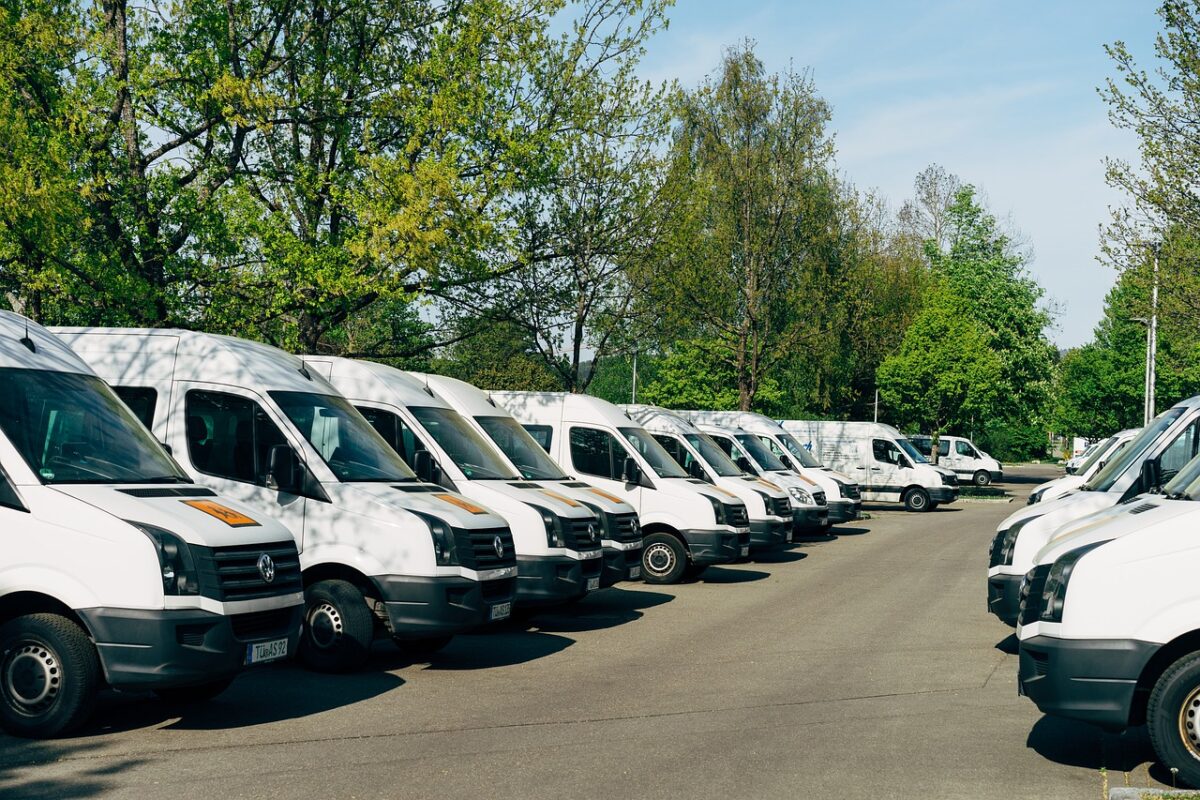
How To Create an ROI Checklist for a Fleet Management System

If you’re looking to create an ROI checklist for a fleet management system, then you have come to the right place.

Operating a fleet of vehicles can be challenging. Apart from the expenses of purchasing new cars and maintaining them, there are a lot of inefficiencies to take note of.

For example, there are issues concerning the acquisition of vehicles, vehicle over- and underutilisation, theft, and more.

However, with a fleet management system, you can optimise the utilisation of your fleet vehicles, which will allow you to handle the flow of goods and services better.

From better customer service to the more efficient delivery of goods, there are countless advantages of investing in fleet management solutions.

Among the countless benefits of a fleet management system, the most notable advantage it can offer is maximising the ROI checklist (return on investment).

Maximise ROI Checklist with a Fleet Management System

A sound fleet management system will allow you to maximise the return on investment since it will enable you to invest in better vehicles. In other words, you can invest in higher quality vehicles with higher efficiency and better performance.

Apart from this, you can also invest in a fleet management system for more efficient delivery of goods and services to your customers.

You can cut down on the expenses you have to incur in terms of acquiring and maintaining vehicles by investing in a vehicle management system.

However, despite the promise of maximising the ROI checklist, it can’t guarantee excellent results if you don’t know how it relates to utilising a GPS management system and the key areas you need to measure.

Read More: Fatigue Breaches: Work, Rest, Penalties Under HVNL Rules 2025

What Should You Consider When Calculating Your ROI Checklist?

The main reason why many companies are hesitant to invest in a fleet management system is the fear of spending too much on it. However, with proper budgeting and careful planning, it is possible to determine the right amount of money to invest in such a system.

Like any other investment, you need to know the expected return on investment first. Once you have established the ROI checklist, you can allot a budget for the vehicle management system.

If you want to calculate the ROI of your vehicle management system, you need to consider the following factors:

Potential Gain of Investment

The initial investment you need to invest in your fleet management system will depend on the potential ROI checklist it can provide. You can quickly assess the potential investment gain by looking at how much you can save.

The greater the potential savings, the higher the expected return on investment. Moreover, some of the potential gains from a fleet management solution are below:

  • Enhanced routing
  • Streamlined for fleet managers
  • Help cut in labour costs
  • Improved fuel savings
  • Improved fleet productivity

Cost of Investment

Aside from the potential gain of an investment, you also need to evaluate and determine the actual cost of investing in a fleet management system. It will allow you to quantify the amount you will spend and decide whether or not the ROI checklist will be worth it.

Interesting to Read: Olympic Highway Accident: Truck Driver Charged in Riverina Crash

Why Should You Look After Manage Vehicle Management System?

Overall, a fleet management system can help you maximise your return on investment by providing you with more efficient and cost-cutting services. Sound vehicle monitoring can help you reduce the costs you incur in managing your vehicle and offer savings to you.

As long as you assemble a comprehensive ROI checklist, our business will withstand the changes and challenges in the current landscape.

If you’re having trouble running your fleet, our fleet management solutions at Manage Vehicle can help! Our best fleet GPS tracking systems offer a complete monitoring solution and allow you to keep an eye on your fleet and fleet drivers in real time. Get quotes today!

Fleet Driver Training: Our 2025 Guide to Finding Success

Fleet driver training can reduce collisions, injuries, and fatalities while also lowering fleet operating costs. It’s also worth noting that your most valuable asset is your workforce.

Your employees represent your organisation, and those who stay behind the wheel will have an increasingly more significant impact on how people perceive your company outside the workplace.

Dangers could be hiding around every corner, whether roads are busy or not. In fact, fleet drivers going too fast or too slow cause the majority of car and pedestrian accidents.

Thus, it’s crucial to develop, implement, and manage a fleet driver training program. Read on as we walk you through the steps required to create an effective skill development strategy.

Step 1: Determine Requirements of Fleet Driver Training

To begin, identify the current risks associated with your fleet drivers, vehicles, and daily operations, as well as incident data. Such buy-in of telematics and collision data will enable the assessment of risks as well. Fleet analysis technologies can help with evaluating training selection.

While accident data is critical, other sources of data that contribute to the overall picture must also taken into consideration.

It is more proactive and practical to have a comprehensive picture of driving behaviour and ability. Data on excessive speeding and abrupt stopping, for example, may aid in identifying judgment and performance issues that contribute to fleet accidents. 

After identifying current problems and performance benchmarks, addressing specific issues and the training needed to solve them effectively would be much easier.  Maintaining a driver or fleet management software is a good start to help you keep track of all this data.

Step 2: Select an Instructional Method for Fleet Driver Training

Now that you have a firm grasp of the requirements for fleet driver training, you can focus on identifying the most effective options. You can achieve your objectives using a variety of training methods, each with its own set of benefits and drawbacks:

1. Workshops and Group Sessions

Workshops and group sessions are a low-cost method of training a large number of people. However, they do not support individual driver-centered learning and have a limited scope.

2. Online Education Services

Training would suit the time of scheduling custom sessions and suit each employee’s job description. However, keep in mind that online instruction is less engaging than face-to-face instruction.

3. Fleet Driver Education 

This method is beneficial when operating specialised vehicles and equipment. In such cases, on-road driver instruction is very effective.

The trainer can work right alongside each driver in an effort to provide safe driving techniques. However, this training method is also time-consuming and costly.

4. Fleet Driver Coaching

Telematics and data have been put into use to help the driver recognise events that occurred. It improves decision-making and required skills, too.

Driver tutoring is more expensive and time-consuming than on-the-road training. It is vital to assess and amend training programs quite frequently to ensure their effectiveness in your organisation.

Now Trending: How Much Do Truck Drivers Earn in Australia? Salary & Wages

Step 3: Implement Your Fleet Strategy

Creating a training program is the most essential component of a better fleet strategy. It involves a well-defined set of schedules and objectives and a mechanism for tracking training completion that will help to reduce confusion and unresolved issues.

It requires the participation of all levels of personnel from upper management to become effective for training completion. Fleet drivers must also understand why training is necessary in order to benefit both your organisation and themselves.

As a result, a well-planned driver communication strategy is critical to the program’s success.

Enhancing Safety and Efficiency Through Fleet Driver Training

Driver education has unquestionably many advantages. Improved fleet driver training and confidence contribute to lowering the car, legal, insurance, and administrative costs associated with accidents.

Moreover, you can improve your company’s performance while also reducing accidents, injuries, and fatalities by promoting the safety of your fleet drivers and other road users.

Manage Vehicle is an established vehicle management company situated in Melbourne, Australia. We provide the best fleet management software in the industry that can accommodate large or small fleets, all while minimising fuel expenses.

Please schedule a consultation with us today and optimise your operations!

False Notions About Fleet Management You Shouldn’t Believe

Fleet management can increase productivity and provide seamless operations. Despite this, it still faces false accusations and notions. Many transport businesses commonly use vehicle tracking systems for their commercial vehicles to function smoothly.

It helps organisations oversee all fleet performance and maintenance easily; that’s why it’s becoming immensely popular these days.

If you are a fleet manager or an owner, perhaps you’re having doubts about the vehicle monitoring system market because of the myths surrounding it.

However, the facts shall prevail, and we are here to tell you about the false notions in fleet management you shouldn’t believe. Let’s get to it!

False Notion #1: Fleet Management System is only an Additional Expense

It’s understandable why most people think that fleet management is only an additional expense. Since it offers an array of operational benefits and is typically digitised, it is hard to believe that it doesn’t cost too much.

However, vehicle management can actually reduce your expenses because you can select better routes, check fuel usage, and plan out everything else in advance, which will help you plan out your budget accordingly, avoiding unnecessary expenses.

False Notion #2: Fleet Management System and GPS is just the Same

Most truck owners don’t like to have fleet management because they think it’s just the same with their GPS vehicle tracking. However, this notion is wrong because asset monitoring and global positioning systems are totally different.

Just so you’re aware, GPS tracking is just a part of the vehicle management system. It’s solely a system used for tracking vehicles.

Unlike the vehicle management system, the GPS doesn’t have features such as fuel and tyre conditions, real-time tracking, route planning, driver performance monitoring, vehicle efficiency, history reports, and more.

False Notion #3: Fleet Management Solutions are Hard to Manage

Fleet management solutions are software. But, being a software doesn’t necessarily mean that it’s hard to navigate and understand. The vehicle monitoring system is like any other software you are using on your smartphone.

It’s easy to navigate, and asset management tool providers like Manage Vehicle ensure that our solutions are user-friendly and manageable. We also provide training and manuals to our clients before we hand entirely out our software.

Also Read: Southbound Lanes Reopen After Fatal Gundagai Truck Accident

False Notion #4: Small Businesses will not Benefit from Vehicle Management System

This notion is not true at all because a fleet management system is beneficial to both small and large businesses. While small companies only have a few heavy vehicles, it doesn’t mean that they don’t need vehicle tracking.

If they have none, it may impact their productivity and revenue. It may also cost them too much time if they do things manually, affecting their ability to expand their business, productivity and efficiency.

False Notion #5: Fleet Management Invades the Privacy of Fleet Drivers

Fleet management is not a CCTV for drivers; it only oversees the vehicle and the driver’s performance.

The vehicle monitoring system is also there to improve the efficiency of the entire process and the productivity of the day-to-day operations, not to invade the drivers’ privacy.

Why Choose to Manage Vehicle Management Software?

It’s crucial to know these false notions so that you can ignore them once you decide to have a vehicle monitoring system for your business. If you let these get over your head and you believe them right away, you’ll miss out on the benefits of fleet management solutions.

Remember, vehicle management will increase your productivity, efficiency, profit and chance to expand your business, not inflict harm or disadvantage on your business.

If you are looking for the best vehicle management software in Australia, Melbourne-based Manage Vehicle can provide you with one!

Our best fleet GPS tracking systems offer complete monitoring solutions, allowing you to keep an eye on your fleet and fleet driver in real time. Contact us and get a quote today!