The best dash cam for trucks in Australia isn’t the one with the sharpest video. It’s the one that gives you usable evidence when something goes wrong, warns drivers before it does, and fits the way your fleet actually runs. A $150 car camera stuck to a prime mover’s windscreen won’t do that.
This guide is for operators choosing dash cams for a fleet: the types of camera, the features that matter for heavy vehicles, the rules on driver-facing cameras, and what to budget per truck.
| Question | Short answer |
|---|---|
| Road-facing or driver-facing? | For fleets, both. Road video proves what happened; the cab camera is what detects fatigue and distraction |
| How many channels? | 2 channels (road + cab) for most trucks; 4 channels for prime movers with trailers, side blind spots or reversing |
| Plain recorder or connected? | Connected (4G + GPS), so clips reach the office without anyone pulling a memory card |
| Do I need AI alerts? | If fatigue or distraction is a risk in your operation, yes: the in-cab warning is the safety benefit, not the footage |
| Are driver-facing cameras legal? | Yes, with notice. Workplace surveillance rules vary by state |
Types of dash cam for trucks
| Type | What it records | Best for |
|---|---|---|
| Road-facing (1 channel) | The road ahead | Basic evidence for crashes and insurance claims |
| Dual-facing (2 channels) | The road ahead and the driver | Most fleets: evidence plus fatigue and distraction detection |
| Multi-channel (3–4 channels) | Road, cab, plus side, rear or trailer cameras | Prime movers with trailers, side blind spots, reversing in yards |
| Smart / AI dash cam | Any of the above, plus on-board detection of risky events | Fleets that want warnings and automatic clips, not just recordings |
What to look for in a truck dash cam
Connectivity: 4G and GPS
A camera that only records to a memory card means someone has to go to the truck, pull the card and find the right minute. A connected dash cam uploads event clips over 4G with the time, speed and GPS location attached. For a fleet, that’s the difference between having evidence and owning a camera.
AI events and in-cab warnings
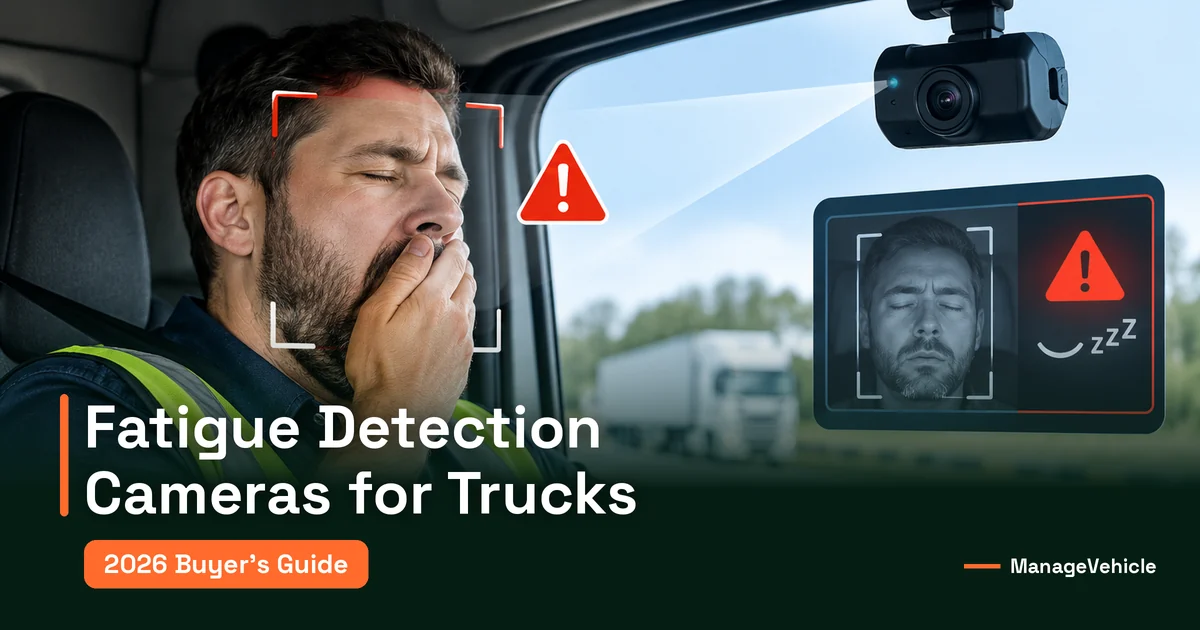
Smart dash cams detect events like harsh braking, collisions, fatigue signs (eyes closing, yawning) and distraction (phone use, looking away), and save a clip automatically. The most valuable part is the in-cab warning: an alert the driver hears in the moment, so they can pull over or refocus before anything happens.
Video quality where it counts
1080p is enough for most fleets. What matters more is night and glare performance (look for wide dynamic range), and infrared for the cab camera so it can see the driver’s face at night. Ask for sample night footage from a truck, not a car.
Built for heavy vehicles
- Hardwired power, so the camera starts with the ignition and can’t be unplugged
- Heat tolerance for Australian cabs parked in the sun
- Vibration resistance and solid mounts, so footage isn’t shaky on rough roads
- Parking mode to record bumps and break-ins while the truck is parked
- Tamper alerts if a camera is covered or disconnected
Storage and access
Check how long footage stays on the device and in the cloud, who can request footage, and how quickly you can download a clip for an insurer or a police request. Evidence you can’t find within a day is evidence you may not use.
One system, not another app
Video is most useful next to everything else you know about the trip: the GPS track, the driver’s hours, the vehicle’s defects and any incident report. A camera that lives in its own app means switching between systems every time something happens. Ask whether the cameras connect to your fleet management platform.
Dash cams for truck and trailer combinations
On a prime mover, a single windscreen camera misses most of what goes wrong: side swipes in a lane change, cyclists in the blind spot, and reversing into a dock. Multi-channel systems add side and rear cameras, and some add a camera at the back of the trailer. If you swap trailers often, choose a system where trailer cameras are wireless or on a standard connector, so a trailer swap doesn’t leave you blind.
Are driver-facing dash cams legal in Australia?
Yes, but workplace surveillance rules vary by state. NSW and the ACT have specific workplace surveillance laws that require written notice to workers before recording starts, and other states have their own surveillance and privacy rules. Whatever state you’re in, tell drivers about the cameras before they go live. Put the cameras in your policy, explain what’s recorded and who can see it, and get legal advice if you’re unsure. Our guide to the legal side of vehicle tracking technology covers the basics.
Mount cameras so they don’t block the driver’s view. Check your state road authority’s rules on windscreen-mounted devices.
Getting drivers on board
Cameras fail when drivers see them as spying. They work when drivers see them as protection. Most drivers come round once they see footage that clears them of blame after a crash that wasn’t their fault. What helps:
- Explain why before you install: safety and evidence, not catching people out
- Say clearly who can view footage, and when
- Use clips for coaching, not punishment, and share the “good catch” stories
- Involve a couple of respected drivers in the trial
How much do dash cams for trucks cost?
As a guide, a basic road-facing camera is under a few hundred dollars. A connected, multi-channel smart dash cam with driver fatigue detection is more like $350 to $500+ per unit for hardware, plus installation and a monthly subscription for the cloud service. Our GPS fleet tracking cost guide breaks down what drives those costs, and the contract traps to avoid.
Compare the total cost over three years, not the box price: hardware, installation, subscription, data, and what you’d pay to get out of the contract.
Smart dash cams and fatigue management
A fatigue alert from a camera is useful, but it doesn’t replace compliant work and rest hours. The strongest setup links them: fatigue events saved against the driver and time, next to the hours recorded in an NHVR-approved electronic work diary, so you can see whether a fatigue event happened late in a long shift. For more on fatigue cameras specifically, see our fatigue detection camera buyer’s guide.
Frequently asked questions
For a fleet, a connected dual-facing or multi-channel smart dash cam: road and cab cameras, 4G and GPS, AI fatigue and distraction alerts in the cab, hardwired power and heat tolerance, linked to your fleet management system.
Many fleets now fit them. Single road-facing cameras are common, and more fleets are adding driver-facing cameras for fatigue and distraction detection.
Most record continuously to the device while the truck is running, and upload short event clips automatically when something happens, like harsh braking, a collision or a fatigue alert.
A camera that analyses video on the device to detect events like fatigue signs, distraction, harsh braking and collisions. It warns the driver in the cab and saves a clip automatically.
Two (road and cab) suits most rigid trucks. Prime movers with trailers often need three or four, adding side, rear or trailer cameras for blind spots and reversing.
Yes. Clips with time, speed and location give insurers clear evidence of what happened, which can help claims move faster and protect drivers who weren't at fault.