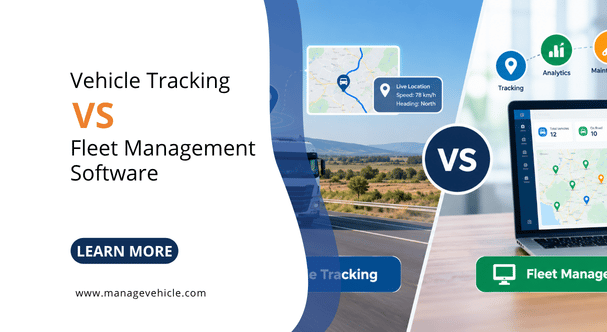
Quick answer: Fleet telematics combines GPS location data with vehicle diagnostics (engine data, fuel use, driver behaviour) transmitted in real time to a central platform. It’s broader than plain GPS tracking – telematics tells you not just where a vehicle is, but how it’s being driven, how efficiently it’s running, and increasingly, whether your fleet is compliance-audit-ready.
Telematics in fleet management combines GPS location data, vehicle diagnostics, and driver behaviour data into a single system fleet managers can act on in real time – turning a fleet from a set of vehicles you hope are doing the right thing into one you can actually see and manage.
How Fleet Telematics Actually Works
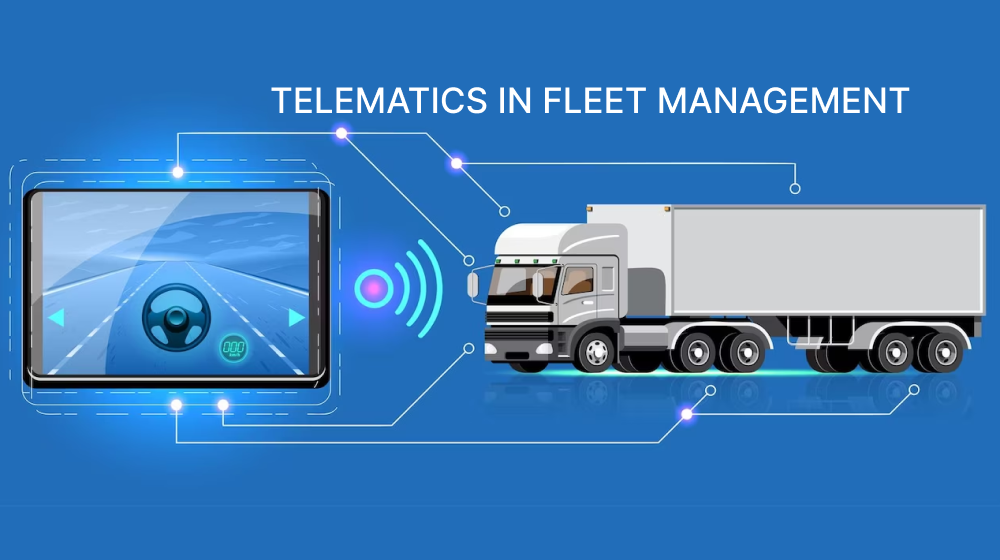
At its core, a telematics system pairs a vehicle-installed device with software that collects and processes the data it generates. The device combines GPS positioning with onboard diagnostics – engine data, speed, fuel consumption, harsh braking or acceleration – and transmits it over a cellular network to a central platform.

GPS positioning itself relies on signals from global navigation satellite systems (GNSS) – the US-operated GPS constellation is the most familiar, though modern receivers often draw on multiple systems for improved accuracy. Fleet managers view the resulting data as live maps, historical reports, and automated alerts, rather than having to physically check in with drivers or wait for a vehicle to return to base.
Types of Telematics Hardware
Not all telematics hardware works the same way, and the option that fits depends on fleet type:
- OBD-port plug-in devices – connect directly to a vehicle’s onboard diagnostics port, generally the fastest and least invasive to install, common on lighter commercial vehicles.
- Hardwired units – installed directly into the vehicle’s wiring, typical for heavy vehicles and trucks where a more permanent, tamper-resistant installation is preferred
- Asset trackers – battery-powered, non-wired devices used for trailers, equipment, and other assets that don’t have their own ignition or engine to draw power from
- Integrated in-cabin systems – combine GPS/telematics with driver-facing cameras and displays, increasingly common where fatigue and distraction monitoring is bundled with core tracking
The right hardware choice affects both installation cost and what data is actually available – a basic OBD plug-in typically can’t support the same depth of driver-facing monitoring an integrated in-cabin system can.
Truck telematics: what heavy vehicles need
A truck telematics system has more to deal with than one built for cars and vans. For heavy vehicles in Australia, look for:
- Hardwired, tamper-resistant units that start with the ignition and survive heavy vehicle vibration
- Engine data from the vehicle’s ECM or CAN bus: engine hours, odometer, fault codes and fuel use, so servicing runs on real use
- Trailers and plant on the same system, using asset trackers where there’s no power
- Regional coverage, and a clear answer on what happens to data when a truck is out of mobile range
- A link to compliance records: telematics shows when a vehicle moved; your electronic work diary shows the driver’s hours. Being able to compare the two matters under the HVNL
What Telematics Data Actually Includes
- Location and route history – where a vehicle is now and where it’s been
- Driver behaviour – speeding, harsh braking, idling, and other patterns that affect both safety and running costs
- Vehicle health – engine diagnostics that can flag maintenance needs before they become breakdowns
- Fuel consumption – actual usage patterns, not just fuel card totals
5 Ways Telematics Improves Fleet Management
1. Better Route Efficiency
Telematics doesn’t just show drivers where to go – it calculates the most efficient path based on live traffic, distance, and delivery sequence, while tracking fuel usage, idling, and driver behaviour alongside route data for a fuller picture of where time and fuel are actually being spent.
2. Lower Operating Costs
Less time in traffic and fewer unnecessary kilometres translate directly into lower fuel spend – one of the largest line items in any fleet’s operating budget. Combined with reduced idling and optimised routing, telematics gives fleet managers a concrete lever to pull on cost.
3. Stronger Customer Relationships
Accurate, telematics-backed ETAs let transport businesses commit to delivery windows with real confidence rather than best-guess estimates – predictability that compounds into customer retention over time.
4. Insurance and Risk Benefits
Insurers increasingly factor telematics data into commercial vehicle premiums – fleets that can demonstrate consistent, monitored driving behaviour are often viewed as lower risk, with fewer opportunities for the kind of incidents that drive up claims history.
5. Better-Informed Budgeting
Telematics data compounds over time – daily, weekly, and monthly records let fleet managers build budgets based on actual historical consumption and cost patterns, rather than rough estimates.
Telematics and Compliance
Beyond operational efficiency, telematics data increasingly serves as compliance evidence under the HVNL. Digital records – location history, driving hours, vehicle inspection data – are far better positioned to demonstrate an “Operating and Effective” Safety Management System under the new PSOE audit standard than paper-based logs, since they produce a genuine, timestamped record rather than a static document.
How to choose a telematics fleet management system
Most systems show a vehicle on a map. The differences show up in what happens next. Ask these questions before you sign:
| Question | Why it matters |
|---|---|
| Does it work with trackers I already have? | Starting again with new hardware adds cost and installation time |
| What engine data does it read? | Engine hours, odometer and fault codes are what make telematics useful for maintenance |
| Is telematics linked to maintenance, fuel and jobs? | Data that sits in its own app doesn’t change how you run the fleet |
| Does it support Australian compliance? | Telematics should sit next to an NHVR-approved electronic work diary and your chain of responsibility records, not in a separate system |
| Can it handle trailers and plant? | Unpowered assets need battery trackers on the same platform |
| What are the contract terms? | Long lock-ins, per-user fees and add-on modules often cost more than the headline price |
| Who supports it? | Local support matters when a truck’s tracker stops reporting |
Our guide to GPS fleet tracking costs in Australia explains the pricing traps to watch for.
Telematics in ManageVehicle
ManageVehicle’s telematics reads location, speed, engine hours, odometer and fault codes from a GPS tracker fitted to each vehicle, either bought from us or a supported device you already run (including Teltonika, Stonkam, Jimi IoT, Digital Matter and GPSWox). That data feeds the rest of the platform:
- Maintenance: service reminders triggered by real kilometres and engine hours
- Fuel and costs: cost per vehicle and per km
- Dispatch: jobs and vehicles on one map
- Safety: speeding and harsh driving events, and dashcam clips matched to location
- Compliance: vehicle movement next to drivers’ hours in MV Driver, our NHVR-approved electronic work diary
See GPS fleet tracking, vehicle telematics and the full fleet management software platform.
The Bottom Line
Telematics turns fleet management from a reactive, after-the-fact process into a live, data-driven one – with direct payoffs in cost, safety, customer experience, and now, compliance evidence. For a deeper look at how telematics specifically supports Chain of Responsibility obligations, see our guide on telematics as compliance evidence.
FAQ
Fleet telematics combines GPS location with data from the vehicle itself, like engine hours, fault codes, fuel use and driver behaviour, sent in real time to software where fleet managers can see and act on it.
Software that uses telematics data to run the fleet: live location, maintenance by real use, fuel and cost reporting, driver behaviour and compliance records, all in one platform.
A telematics system built for heavy vehicles: hardwired trackers that read engine data, cover trailers and regional routes, and link vehicle movement to compliance records like the driver's electronic work diary.
No. Telematics records how and where a vehicle moved. An electronic work diary records the driver's work and rest hours under the HVNL. ManageVehicle runs both, so you can compare them.
GPS tracking shows location only. Telematics combines GPS with vehicle diagnostics, driver behaviour, and fuel data – a much fuller picture than location alone. See how GPS vehicle tracking works for more.
Yes. Telematics data – location, driving hours, engine data – increasingly serves as digital evidence supporting Chain of Responsibility obligations and the new PSOE audit standard, which favours timestamped digital records over paper logs.
Costs vary by hardware, number of vehicles, and feature set – factor in installation, contract length, and per-vehicle scaling fees, not just the headline monthly price.
Fuel cards show spend; telematics shows the why – actual consumption per vehicle, idling time, and route efficiency – which is what lets you actually act on fuel costs rather than just observe them.
No – even small fleets benefit from route efficiency, theft/security visibility, and (increasingly) audit-ready compliance records, though the ROI scales with fleet size.
It depends on the asset – OBD plug-ins suit light commercial vehicles, hardwired units suit heavy vehicles needing tamper-resistant installation, and asset trackers suit trailers or equipment without their own power source.
GPS receivers calculate location using signals from satellites in global navigation satellite system (GNSS) constellations, timing how long each signal takes to arrive to triangulate a precise position – the same underlying technology across consumer, survey-grade, and fleet telematics devices.