

See where your vehicles are, understand what they're doing and connect location data with drivers, jobs and vehicle activity — all from one platform built for Australian transport operators.
A simpler side-by-side look at the operational changes teams notice first.
BEFORE MANAGE VEHICLE
Manual, fragmented and reactive
Ringing drivers to ask where they are
Guessing ETAs when a customer calls
No idea where a truck was last Tuesday
Finding out about speeding when the fine arrives
A vehicle moves overnight and nobody knows
AFTER MANAGE VEHICLE
Connected, live and proactive
Every vehicle live on one map
ETAs based on where the truck actually is
Trip history you can replay for any day
Speed events flagged the same day
After-hours and geofence alerts straight to your phone
What Is GPS Fleet Tracking?
GPS fleet tracking uses a vehicle GPS device or telematics integration to send location and movement data into fleet software.
GPS Device
Works out the vehicle's position from satellites.
Network
Sends position, speed and time to the platform.
Manage Vehicle
Shows it live and saves every trip.
Your Team
Sees the map, gets alerts and pulls reports.
Product experience
From live visibility to operational follow-up, the product experience is designed to help teams understand what is happening, identify what needs attention and act with better information.
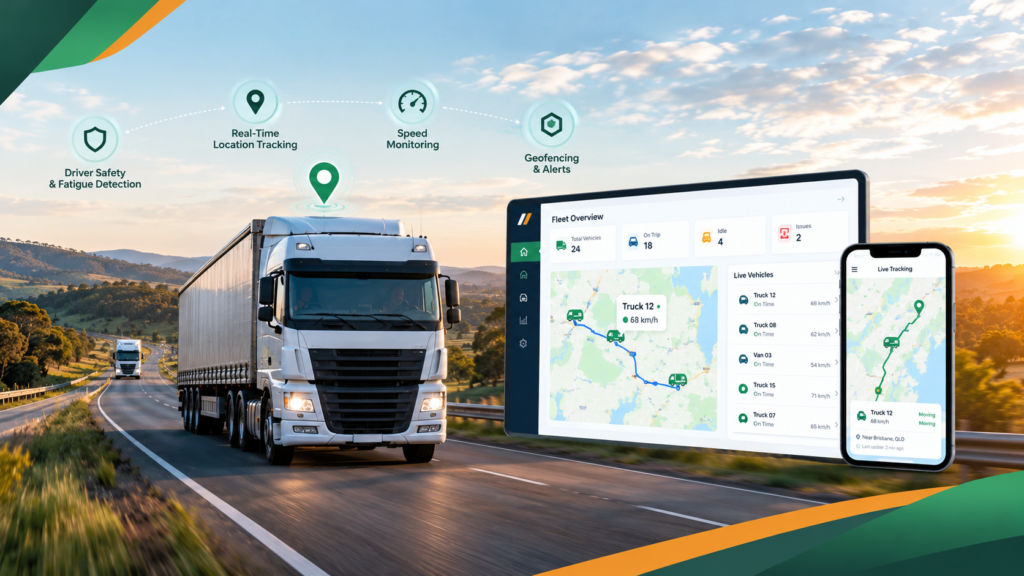
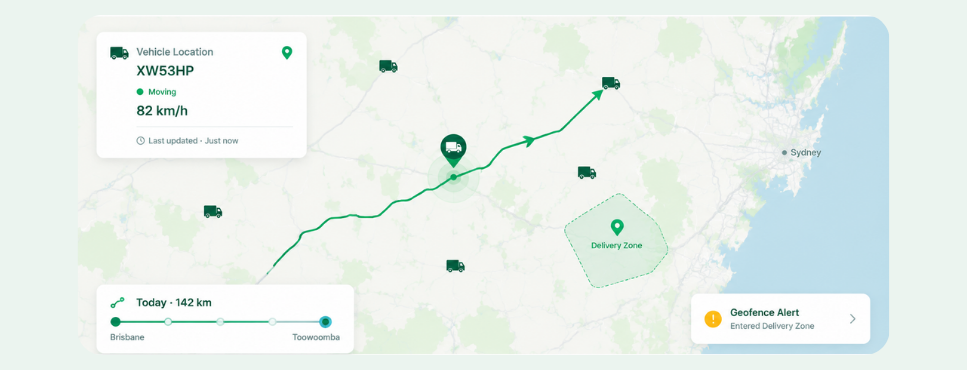
Live GPS tracking for the whole fleet
Know where everything is without picking up the phone.
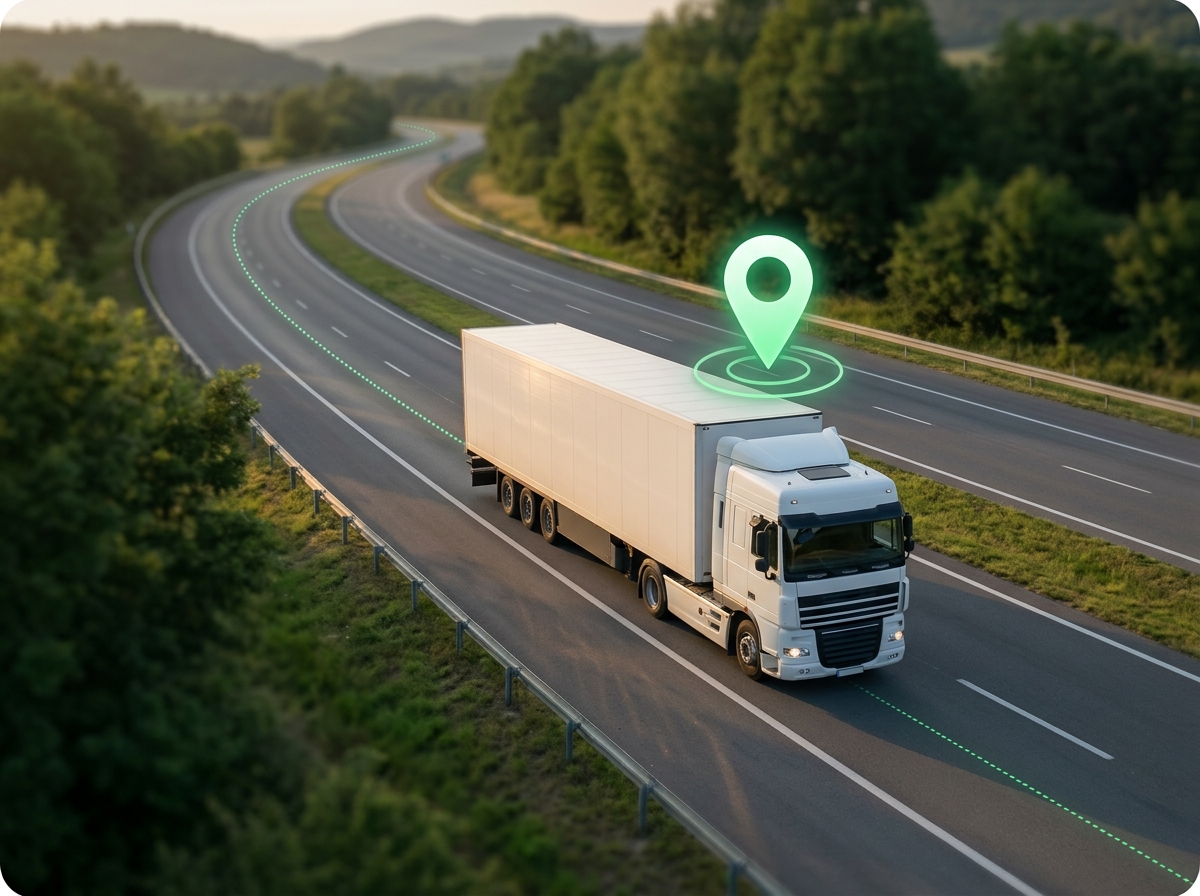
Trucks, utes, trailers and plant on one map, updating as they move. GPS truck tracking that shows status, speed and the driver at a glance.
What your team can see ?
See every vehicle live
Filter by group, depot or vehicle type
Check status, speed and driver
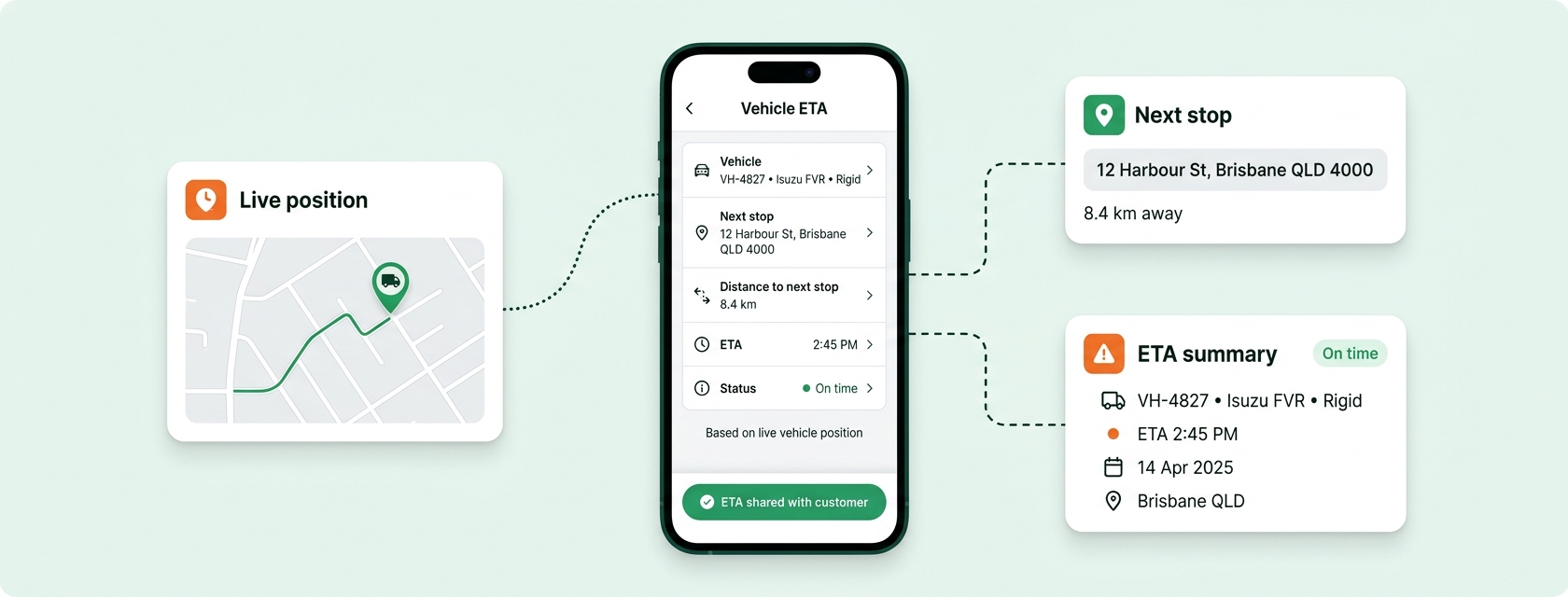
Give customers an ETA you can stand behind
Faster answers, fewer "where's my delivery?" calls.
Because you can see where the vehicle actually is, ETAs are based on real positions, not on what the driver thinks over the phone.
What your team can do:
Check distance to the next stop
Answer customer ETA questions in seconds
Spot vehicles running late fleets or operational groups
Review Every Trip in Detail
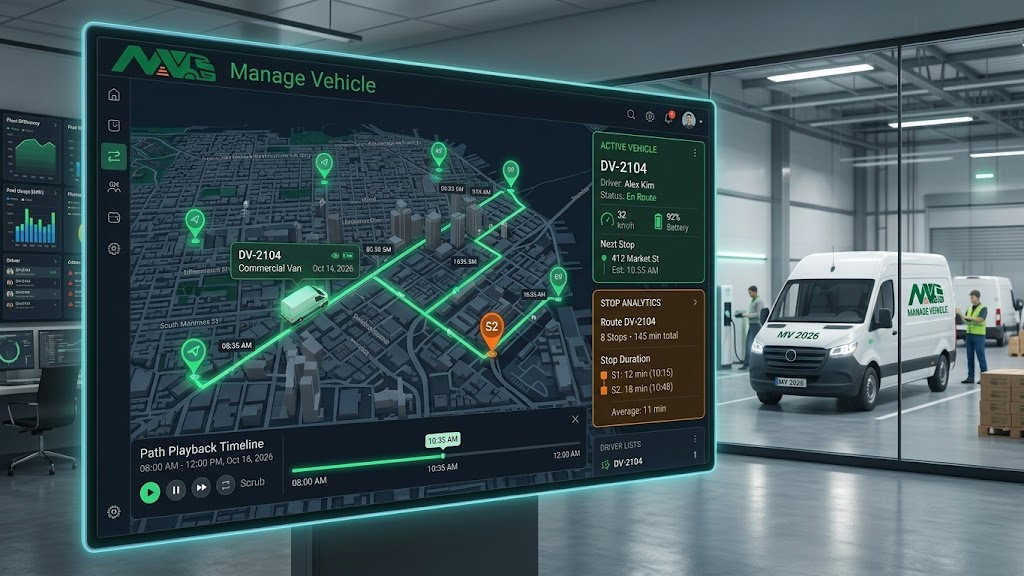
Live tracking tells you where a vehicle is now. Trip history explains what happened before.
Review previous routes, trip times, stops and available movement information to investigate customer queries or verify fleet activity.
What your team can do:
Replay trips on the mapRoutes travelled
See stops and time at each
Export trip reports
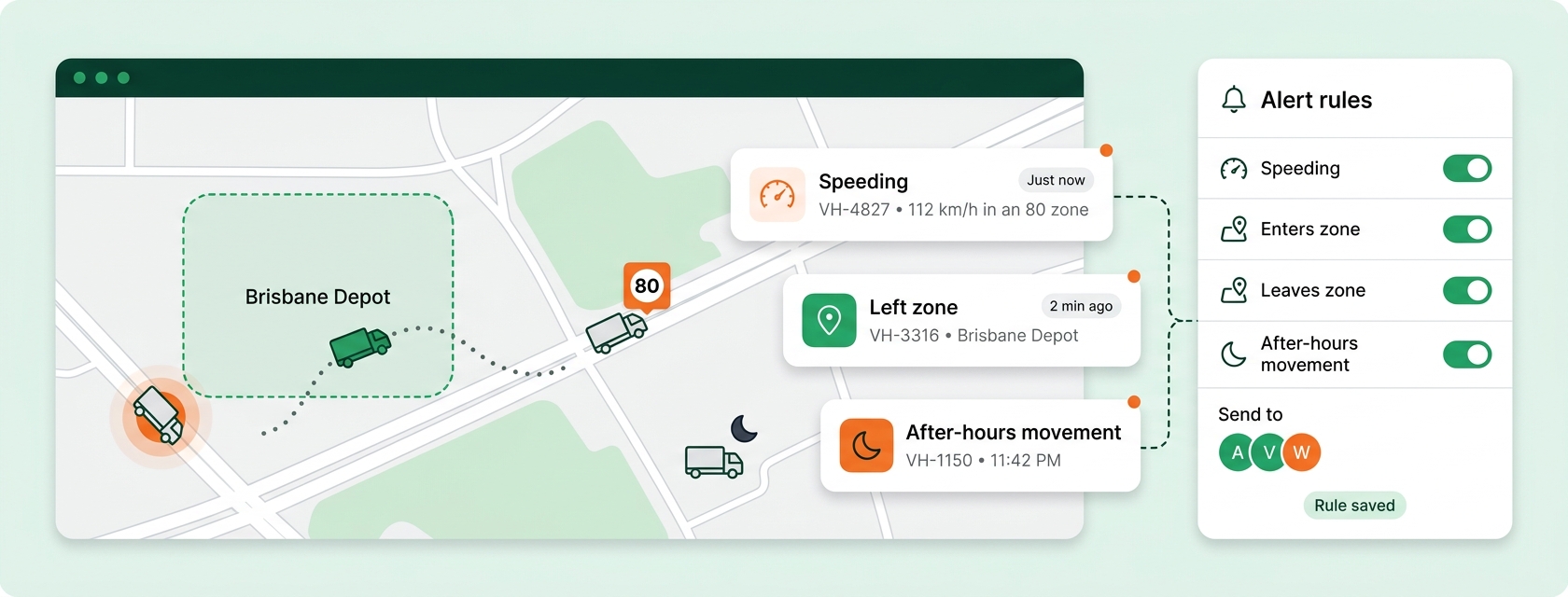
Alerts for the things that matter
Hear about problems while you can still act.
Get told when a vehicle speeds, enters or leaves a zone, or moves after hours. Choose the rules and who receives each alert.
What your team can do:
Speeding alerts
Geofence entry and exit alerts
After-hours movement alerts dwell time
Turn locations into reports you can use
The numbers behind the map.
Distance, utilisation, idle time and speed events per vehicle and driver, ready for managers, payroll or customers.
What your team can do:
Distance and utilisation and project sites
Idle time by vehicle
Speed events by driver and terminals
Stop Asking “Where's My Truck?”
The questions your team asks all day, answered on one screen.
Where's Truck 14 right now?
Check the live map.
When will it get to the customer?
See its live position and ETA.
Where was it at 2pm yesterday?
Replay the trip.
Was anyone speeding today?
Open speed events.
Did anything move overnight?
Check after-hours alerts.
Location records that hold up when someone asks
Trip history and speed records give you evidence for customer disputes, insurance claims and the reasonable steps you take under Chain of Responsibility.
Every trip on record
Route, stops, times and speed saved for every vehicle.
Speed records with context
Speeding measured against the posted limit, with time and place.
Works next to your EWD
GPS shows where. MV Driver, our NHVR-approved EWD, records work and rest. Both in one place.
Connected GPS tracking & fleet operations
Location is the starting point. Link it with jobs, cameras, driver hours and maintenance and it tells the full story.
GPS + POD
Prove Every Delivery
A connected delivery record can include
Driver and vehicle
Relevant location context
Delivery date and time
POD, signature or photos
GPS + Dashcams
Match Footage to the Map
A connected safety record can include
Dashcam footage
Route before the event
Speed at the time
Vehicle location
GPS + EWD
Check Hours Against Movement
Driver records can include
Work and rest periods
Trip start and end
Rest stop locations
Distance travelled
GPS + Maintenance
Service on Real Kilometres
Maintenance workflows can include
Odometer-based reminders
Engine hours
Defects
Service history
GPS tracking vs Fleet Management
GPS tracking explains location and movement. Fleet management software manages the wider operation around those vehicles.
GPS Tracking Software
Focuses on vehicle location, movement and tracking events.
Real operators, real problems, and what changed once everything sat in one system.
Brandon Manion Coaches
Problem
Maintenance across the bus fleet was difficult to track, with information spread across driver checks and maintenance records.
Result
Drivers complete daily inspections, record odometer readings and report faults directly in Manage Vehicle. The maintenance team has clear, up-to-date visibility of what needs attention. Better maintenance visibility. Fewer missed issues. A fleet that stays on top of its maintenance.
G & V Logistics
Problem
Limited visibility of where loads are while in transit, and difficulty quickly accessing evidence when an incident occurs.
Result
With telematics, G & V Logistics can see where their loads are in real time and share location details with clients immediately. In the event of an incident, they can quickly access and share relevant footage with insurers or other parties.
Alpine Civil Earthmoving
Problem
Limited visibility of how equipment is being used on site, making it difficult to track operating hours and actual equipment utilisation.
Result
Telematics gives Alpine Civil clear visibility of where equipment is and how long it has been operating on site. This helps them monitor utilisation, track equipment activity and better understand how their machines are being used. Better equipment visibility. Better utilisation tracking. More control over site operations.
Veera Transport
Problem
Jobs, PODs and invoicing were previously managed in batches, with the team waiting until the end of the week to collect everything and process invoices.
Result
Jobs are now allocated, driver approval is captured, PODs are recorded, and invoices are sent to the client within 15 minutes of job completion. Faster invoicing. Faster payments. Better cash flow.
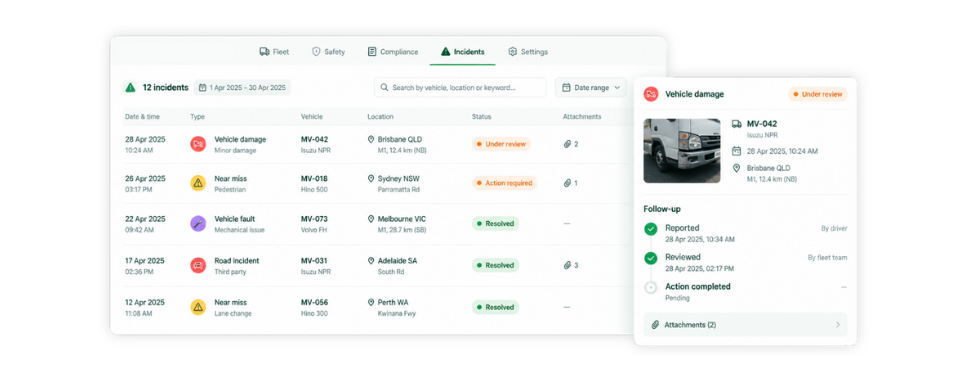
Fleet Incident Management FAQs
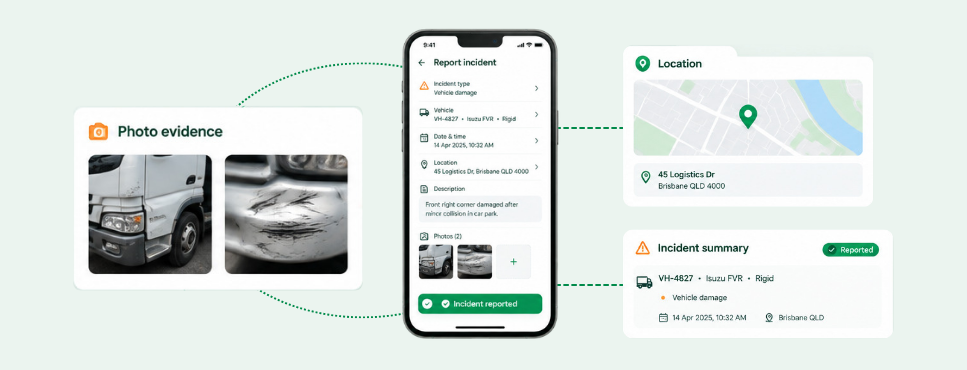
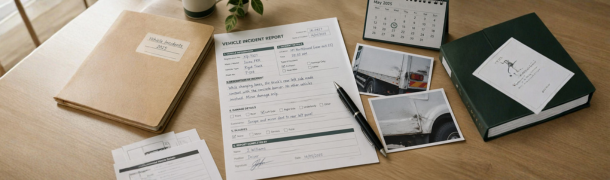
It's how you record, investigate and follow up crashes, near misses, damage and vehicle faults. ManageVehicle keeps the report, evidence and actions in one place.
Through the driver app on iOS or Android. It guides them through the details and lets them attach photos on the spot.
Yes. Near-miss reports are quick to make, and they help you spot risks before they turn into crashes.
Yes. Each incident links to the vehicle's GPS data, including location, time and speed.
Yes. If the vehicle has a smart dashcam, the clip can be added to the incident record alongside the driver's photos.
Yes. Assign actions like repairs, insurer contact or driver debriefs, and track them until the incident is closed
Yes. Incident records, photos and reports can be exported to share with insurers or auditors.
Explore More Manage Vehicle Solutions
GPS Fleet Tracking
Maximize fleet efficiency with our cutting-edge software. Real-time tracking, optimized routes, and comprehensive maintenance for seamless operations.
Get a 30-minute walkthrough of ManageVehicle set up around your fleet. We'll show you how tracking, EWD,
maintenance and risk management work together, and answer your HVNL questions on the spot.
Walkthrough based on your fleet size and setup
Your HVNL and EWD questions answered live
Local Australian support team
See ManageVehicle in action
Tell us a bit about your fleet and we'll be in touch within one business day.